Our DNA tells us what it means to be human.
If you read my previous post you will already know that I’ve been reading a lot of James Baldwin lately. And that one of the reasons his writing resonates with me is because it feels like music; specifically like jazz – which he said intentionally shaped his style. You can feel it in his cadence and phrasing; the sense of improvisation giving it an energy and freshness that continues to play across the decades and inform our present moment.
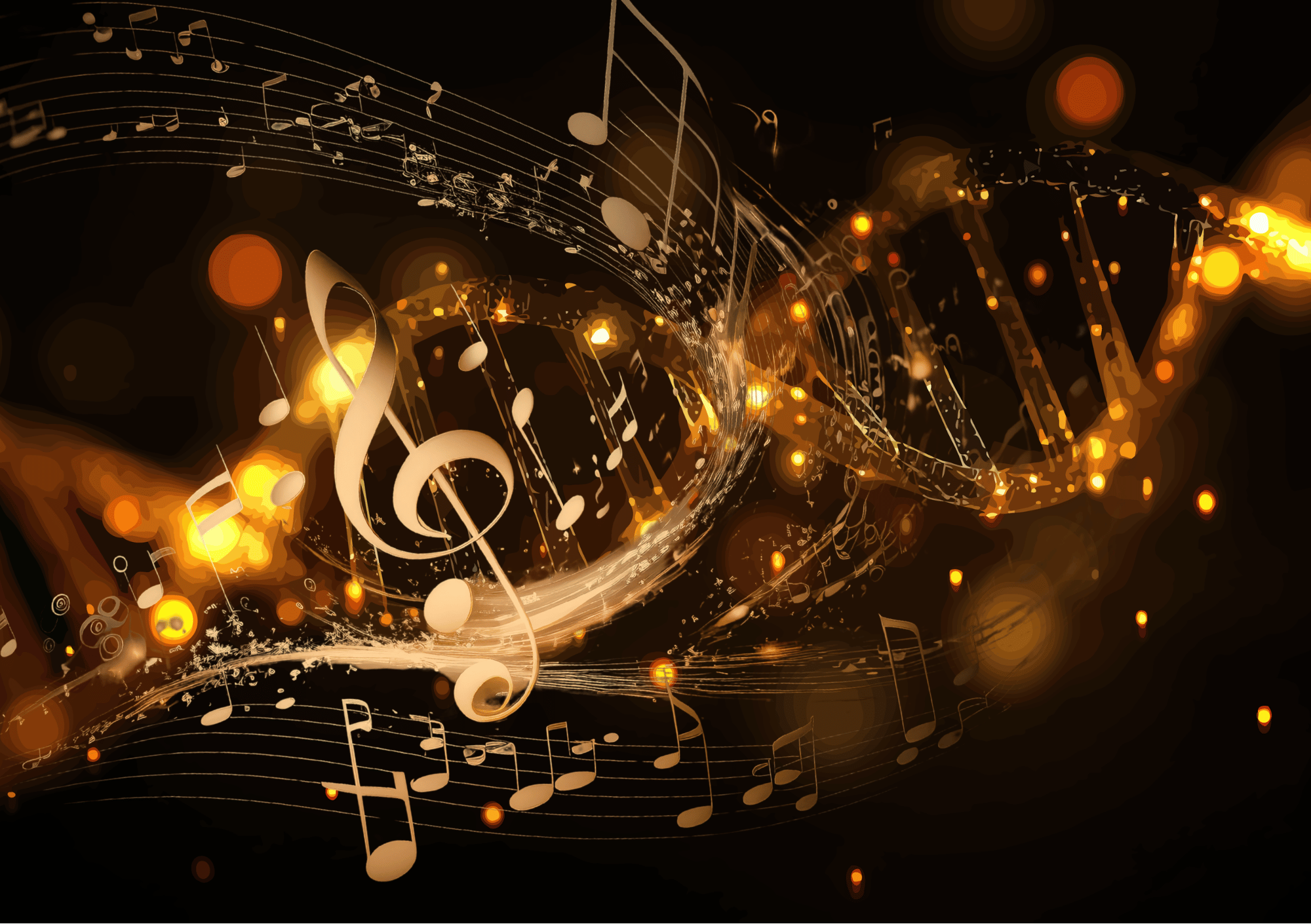
It was therefore, serendipitous (or maybe just algorithmic) when – shortly after I wrote it – I came across an article from the Institute of Art and Ideas (the people behind HowTheLightGetsIn Festival), on how music and creativity are in our very DNA. The article by molecular biologist Ewa Grzybowska, sets out how the existing paradigm for how DNA works (established by Crick and Watson), has been largely superseded in recent years.
The Science Bit
She explains that the established understanding – that DNA codes only for well-ordered, well-structured proteins is now basically redundant. And rather than a machine-like, linear, ‘1+1=2’ process (where one gene produces one structure which has one function), it is in fact something more akin to improvisation. While DNA sequences code for proteins, there are also non-coding sequences. This ‘superfluous’ genetic material was initially thought to be ‘junk DNA’ (even though this would have been jarringly inefficient for any cell to have), until its vital function was unearthed. It gets transcribed into non-coding RNA molecules which have separate functions from the RNAs involved in making the proteins themselves. And which operate as a “vast pool [of RNA]…involved in the regulation of gene expression” both before and after the DNA itself is transcribed. This, Grzybowska says, opens up the “vast new planes” of regulation and is responsible for this paradigm shift in how DNA is now understood. Meanwhile, they also found that some proteins can change their function, effectively moonlighting in other tasks; while others can change their structure, folding differently despite retaining the same genetic sequence. And then there are proteins with no stable structure at all – completely disordered, able to shape-shift according to their functionality. DNA is therefore less a blueprint and more a text to be interpreted.
What it all means
In other words, genetic material and proteins in a cell are agile; able to adapt and respond to changes in the wider environment. And rather than a production line, cell activity is “fluid, improvisational, and brimming with creative possibility”. Our DNA operates more like a live group of jazz musicians riffing and responding to each other and to what’s happening in the room.
It feels helpful to consider this when our present moment is forcing us more and more, to define what it is to be human, especially as we reckon with AI. But being human, may well come down to some very basic biological facts – the fundamentals, rather than anything high-minded or philosophical. If music and creativity are in fact coded into our very cells, what does that mean for our overall operating system as human beings? And therefore, how we can operate it well? Encoded in our DNA is this essence of creativity, immutably printed into our cells. More than that, it forms a responsive, collaborative and improvisational operating system which makes creativity central to our very lives and existence.
Creativity and being our most human
Recent studies, and books such as Art Cure by Daisy Fancourt, lend weight to the fact that we can only hack the human operating system so far. One thing we can’t get around is our need to create – to make things. Art, and creativity, in all its forms – is good for us. It is good for our basic humanity – our minds, bodies and spirits. A particularly powerful dynamic happens when we fulfil a creative idea and make it real ourselves, it might be taking a simple action, or making a drawing, painting, a piece of writing or sculpture, or anything else we might call “something we created”. When we create something with our own hands, whether it’s a paper aeroplane or an oil painting – there is an unmistakeable sense of exhilaration that accompanies that hand-eye-brain connection. And when we’re totally absorbed by it, giving it our full attention. But if we outsource our creativity entirely – both in terms of our thinking and our creative execution, to something that does it ‘for’ us, where does that leave us? We also risk missing out on the process of collaboration: the satisfaction of co-creating with others, and the joyful connection that can bring.
We need to ask ourselves what exactly are we gaining? And more critically, what are we losing? We may gain in productivity and output, but this can soon become a tyranny in itself. Sales pitches I’ve seen from AI companies are often based on a promise that their products will win us back valuable time, but this is a fallacy. Instead they drive more and more productivity. At a recent event I attended, several entrepreneurs declaimed the power of using AI agents to run parts of their businesses. Only to also confess that they were now working double their original hours, rather than using the time they’d won back for their own leisure or to be with their families. In one case, a founder said with a hollow laugh, that as a result of using AI, his 80 hour work week was now more like 160 hours.
There are already strong suggestions that AI can limit creativity and homogenise thought, if you’re in the habit of outsourcing those things to it. Though it may be wildly convenient to have the work done for you, without any of the struggle inherent in doing the work ourselves, we might be losing something more essential to our humanity in the process, injuring our capacities for genuine originality and human ingenuity. For something to feel worthwhile it often needs to cost us something – that it took some effort on our part. It’s that effort which intrinsically connects us to it. And it’s in our essential nature to create, we’re wired to make things, whether we think of ourselves as creative or not. It’s right there in our biology – in our very cells and DNA: that being human is having the ability to say: “I made that” with 100% conviction.
© Alexandra Noel 2026 All right reserved.
 Alex Noel