A New Approach to Feedback

The Creative Act: A Way of Being – written by music producer Rick Rubin – is not only beautifully designed but a unique and enlightening perspective on creativity.

Image courtesy of Penguin Press

It was also great to listen to Rick being interviewed on Jay Shetty’s On Purpose podcast. I found it inspiring stuff (also providing me with some useful thoughts for a content strategy I’m working on for a client). During their far-ranging conversation I was really pleased to be reminded of one of the best approaches to FEEDBACK I’ve ever heard.

Enabling you to “play Big”

I first came across this approach reading Tara Mohr‘s brilliant book Playing Big a few years ago. (I love these connections). The advice she gives, which Rick Rubin echoes, is this:

“Feedback doesn’t tell you about yourself. It tells you about the person giving the feedback. In other words, if someone says your work is gorgeous, that just tells you about *their* taste. If you put out a new product and it doesn’t sell at all, that tells you something about what your audience does and doesn’t want. When we look at praise and criticism as information about the people giving it, we tend to get really curious about the feedback, rather than dejected or defensive”.

Tara Mohr

Reframing Feedback

Reframing the purpose of feedback in this way makes ALL the difference. Tara offers further advice (see below) on navigating feedback in this article and in her book.

“1.  REFRAME the feedback:
 The feedback doesn’t tell you any facts about you; it tells you something about the perspective of the person giving the feedback. Reframe the feedback as information about them. What does this tell you about their priorities or preferences?

2.  Is the feedback truly RELEVANT? Women forget to ask this, and instead feel they have to incorporate all feedback. We need to ask: is this feedback essential to incorporate in order to achieve my goals? Those goals might include professional ones (like getting work published) or personal ones (like a loving relationship with family members.) If the feedback is not truly relevant to your aims, you have permission to not attend to it.

3.  REVISE your approach. If your answer to #2 is yes, then you can think about how you can revise your approach to work with/relate to this person more effectively, now that you know more about their needs and perspective. Going back to #1, the feedback isn’t a verdict on how you measure up – it just tells you how to be more impactful in your relationship with them.”

Photo by Annau00eblle Quionquion on Pexels.com

Allowing IT to Serve You

Ultimately feedback needs to serve you. So by getting curious about the person giving the feedback, and taking on board the aspects of their feedback that best serve you, you’re less likely to invest so much weight in their opinions. Effectively you ‘unhook’ from the power that either their praise or criticism might have, and you’re able to determine how best to utilise it.

© Alexandra Noel – All Rights Reserved 2023

Graduate Musings

Silhouette of four students raising their graduation hats with a sunset behind them

This is one of several articles/mini-essays I wrote when I was in my very early 20s. I recently found them, filed away in a folder of keepsakes. I was just out of university at the time and beginning to experience and process the complexities of being a grown-up. I was also dreaming of becoming a writer of some sort – maybe a food or travel writer. Anyway, these are like letters from my 20-year-old self and give some insight into one person’s thoughts in the year 2000. Instead of keeping them on file I thought it was time they finally saw the light of day – so here they are.

Silhouette of four students raising their graduation hats with a sunset behind them

Life as a graduate is an interesting mix of being glad to have shed the student skin, with all its connotations of loafing and drinking, and desperately wanting to return to something that you know and feel comfortable with. And of course navigating the shocking reality of having to get up at the same time each morning (early), with the disciplined regime of working nine-to-five.

It’s also difficult suddenly not being surrounded by people who are the same age as you, and who are all in the same time of life and dealing with the same set of challenges. There’s the possibility of being lonely; friendships become distant, people who you were friendly with at university now seem like mere acquaintances or even strangers. What drew you together in the first place – the fact that you were sharing a common experience – now seems to be one of the only reasons that you were ever friends.

It is an exciting time though, and also a daunting time. Exciting in that you finally get to do what you’ve been preparing for all these years. Education partially serves the purpose of turning out a work force that will be productive and good for the economy. Our whole lives have been geared towards reaching this point, this moment. But strangely, and somewhat tragically, many of us emerge from the other side of our education with little idea of what we want to do.

It may be a sign of the times, or a consequence of our consumerist culture. There are so many possibilities and almost every action we make is determined by a decision where multiple options have to be weighed up against each other. As humans in the face of such overwhelming choice it can seem preferable not to make any choice at all – what author Douglas Coupland aptly describes as ‘option paralysis’. We get stuck.

If we’re not alert to this, many of us will end up just drifting along, too overwhelmed to make the choices that matter for our lives, and instead existing in a haze where nothing is defined, nothing is certain, and life has happened ‘to’ us rather than us choosing it. However, the best path is there and can be chosen, and I hope that all other options will pale in comparison. Then it becomes not a just choice but a glorious inevitability.

© Alexandra Noel – All rights reserved. The Year 2000. 15th July 2021.

Where Should I Go?

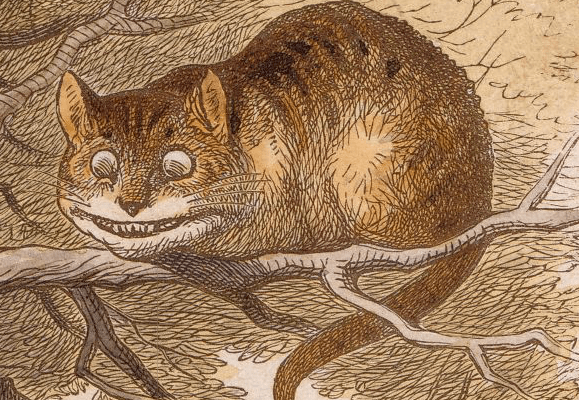
A drawing of the Cheshire Cat in a tree from Alice in Wonderland

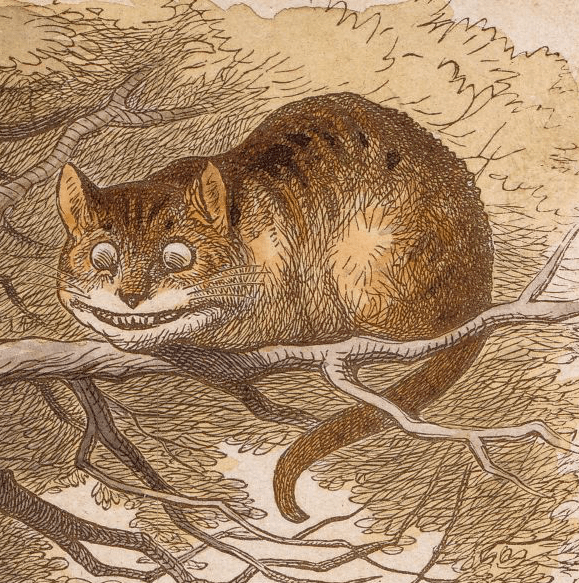
That’s the question Alice asked the Cheshire Cat in Wonderland. And it’s the same question I’ve been asking myself over the last few months. Where should I go? The Cat’s reply to Alice was, “It depends on where you want to end up”. And it’s the same answer I’m getting – which has in fact become my true question; Where do I want to end up?.

A drawing of the Cheshire Cat in a tree from Alice in Wonderland

I’ve always dreamed of doing work I love full time. By work I love I mean something that makes the best use of my favourite skills, that feels valuable, that I lose myself in, and that has meaning and purpose. Don’t we all? I’ve had jobs that have allowed me to do some of the things I love, and I’ve worked on projects that I’ve really enjoyed. But mostly, my day to day work has felt increasingly like drudgery, an endless list of tasks that need to be carried out as quickly and as efficiently as possible, a type of work that ultimately drains me and is mismatched with the core of who I am. It wasn’t that I was bad at it, in fact I was good enough, but it became clear that I would never be brilliant at it.

This is not the first time I’ve been here. Quite a few years ago I took the step of applying to do an art foundation. I’d already done a degree, but I longed to discover more about my creative side. It was a decision based on the logic that if I didn’t do it now, I’d still be wanting to do it in ten years’ time. I walked in off the street, got an interview at the college the following week and was offered a place on the spot with no portfolio to speak of. I absolutely loved it and finished with a distinction, but at times I experienced an almost crippling fear – fear of failing but also fear of being brilliant. What would happen to my world if I could actually shine at something?

Do any of us actually ‘get there’ and find that life? I think many people can and do. I certainly want to. To that end I’ve embarked on a quest to change my career and find work I love. It’s been a journey in itself even to begin, to regain a sense of value and empowerment. This blog is part of that beginning. In fact it’s one of my action points from the first of four career change workshops I’m attending at the Escape School (run by the brilliant Escape the City). There are so many people who grow up with expectations put on them that amount to jumping through a series of hoops – school, university, corporate job etc etc… a treadmill. So many of us live with unrealised dreams, and potential that we have progressively denied and squashed. As Seth Godin wrote in Tribes: We need you to lead us, ““Life’s too short” is repeated often enough to be a cliché, but this time it’s true. You don’t have enough time to be both unhappy and mediocre. It’s not just pointless, it’s painful. Instead of wondering when your next vacation is, maybe you ought to set up a life you don’t need to escape from.” 

There comes a point when you can no longer deny who you are, and you owe it to yourself to at least try to realise that person, and to allow yourself the full expression of your unique set of gifts and abilities. Anaïs Nin puts it so aptly, ‘And the day came when the risk to remain tight in a bud was more painful than the risk it took to blossom’. Here’s to blossoming.

© Alexandra Noel – All rights reserved. 8th October 2014.