A New Approach to Feedback

The Creative Act: A Way of Being – written by music producer Rick Rubin – is not only beautifully designed but a unique and enlightening perspective on creativity.

Image courtesy of Penguin Press

It was also great to listen to Rick being interviewed on Jay Shetty’s On Purpose podcast. I found it inspiring stuff (also providing me with some useful thoughts for a content strategy I’m working on for a client). During their far-ranging conversation I was really pleased to be reminded of one of the best approaches to FEEDBACK I’ve ever heard.

Enabling you to “play Big”

I first came across this approach reading Tara Mohr‘s brilliant book Playing Big a few years ago. (I love these connections). The advice she gives, which Rick Rubin echoes, is this:

“Feedback doesn’t tell you about yourself. It tells you about the person giving the feedback. In other words, if someone says your work is gorgeous, that just tells you about *their* taste. If you put out a new product and it doesn’t sell at all, that tells you something about what your audience does and doesn’t want. When we look at praise and criticism as information about the people giving it, we tend to get really curious about the feedback, rather than dejected or defensive”.

Tara Mohr

Reframing Feedback

Reframing the purpose of feedback in this way makes ALL the difference. Tara offers further advice (see below) on navigating feedback in this article and in her book.

“1.  REFRAME the feedback:
 The feedback doesn’t tell you any facts about you; it tells you something about the perspective of the person giving the feedback. Reframe the feedback as information about them. What does this tell you about their priorities or preferences?

2.  Is the feedback truly RELEVANT? Women forget to ask this, and instead feel they have to incorporate all feedback. We need to ask: is this feedback essential to incorporate in order to achieve my goals? Those goals might include professional ones (like getting work published) or personal ones (like a loving relationship with family members.) If the feedback is not truly relevant to your aims, you have permission to not attend to it.

3.  REVISE your approach. If your answer to #2 is yes, then you can think about how you can revise your approach to work with/relate to this person more effectively, now that you know more about their needs and perspective. Going back to #1, the feedback isn’t a verdict on how you measure up – it just tells you how to be more impactful in your relationship with them.”

Photo by Annau00eblle Quionquion on Pexels.com

Allowing IT to Serve You

Ultimately feedback needs to serve you. So by getting curious about the person giving the feedback, and taking on board the aspects of their feedback that best serve you, you’re less likely to invest so much weight in their opinions. Effectively you ‘unhook’ from the power that either their praise or criticism might have, and you’re able to determine how best to utilise it.

© Alexandra Noel – All Rights Reserved 2023

Look at His Noodles

A hand holding a cup of Kabuto noodles with the text 'When the character of a man is not clear to you look at his noodles'

This article was originally published in 2016 as ‘The Two-Timing Texter’ for Girl About Town on Threads UK. Read on below:

Photo by author of Kabuto Noodles advert circa 2015, and the inspiration (partly) for this article.

I was fairly late to the dating game. For a long time I believed that my future husband would just pitch up at the right moment, without much action needed from me. Not much action that is, apart from focusing on being faithful and good, and waiting patiently for Mr Right, without complaining too much.  I wasn’t hung up on it, but if I’m honest, deep down that’s what I believed.

After years of Not Much on the man front, apart from a few flirtations and a bit of heartbreak, something in me snapped. I was totally disillusioned, [as a Christian this was] mostly with God, who I thought should have brought someone along by now. I’d been good, I’d made sacrifices! And He’d let me down!  I felt disempowered. I hadn’t felt permission to try, fail, and then do better next time. I wasn’t a complete rooky, but I’d never learnt how to make confident decisions in this area of life, and I wanted to get experience. I wanted dating to feel more ‘normal’.  

So in protest I rebelled – against waiting, and against being faithful and good. It was a bit chaotic at first, but I got something out of my system. Then I became more intentional with my dating. And so I went online. I filled out my profile, then held my breath and watched to see what would happen.

I got in touch with a guy who’d sent me a great first message: a bit forward perhaps, but I liked his honesty. After a couple of failed attempts to meet up, we arranged a date for after work the next week.

I was on holiday with a big group of friends at the time, and mentioned my date with this guy, let’s call him ‘Jonny’. He even lived round the corner from my office – fancy that?!

Later that evening, a woman I’d only met that week on the holiday drew me away for a chat.

“This guy you’ve got a date with next week, he wouldn’t happen to be called Jonny Smith, would he?”

Um, yes. Why do you ask?

“Um well, I’ve been dating him for the last two months.”

Oh.

The small size of the Christian dating pool had exposed this guy’s two-timing. So what to do now?

I texted him the next day, and after a lot of excuses and wrangling I received a grovelling apology written in excellent ‘Christianese’. Words like ‘sacrifice’, ‘integrity’ and ‘altar’ featured heavily. Needless to say, I didn’t go on that date with Jonny. But he did contact me a few months later to say that he’d now broken up with the other girl, and would I meet him after all? Not a chance.

There are more stories I could tell; but after my first foray into online (Christian) dating, I’ve definitely learnt a few things and gained valuable experience. Here are a few things I’ve figured out:

• Although it’s important to get experience, dating for experience-only is not a good idea. You’re likely to make compromises with who you date, and what you expect from them. Date people who you genuinely fancy and could see a future with.

• If something doesn’t feel right, it probably isn’t. It’s important to listen to your ‘gut’. How we feel about things is valid, and can even be a warning sign. Listen to yourself and trust your instincts.

• Involve your friends. We need community – one of the catches I found with online dating is that although you get to meet a wider group of people and create more opportunities, it’s as if this takes place in a vacuum. You often only have a profile, some photos, and your limited experience of someone to go on.

• Even though someone ticks the ‘Christian’ box, and plays guitar in the worship band, and says grace before a meal, they can still lack one major thing. Character. When it comes down to the way someone behaves towards you, how much they value you, and what you can expect from them, it takes character to set someone apart from the rest. It really is as important as they say it is. Oh, and a whole lot of chemistry.

There’s a lot of good Christian teaching on this subject, but some of our understanding isn’t always 100 per cent biblical. We may have absorbed a mixture of Christian culture, interpretation and Church rhetoric as well, which has shaped our values. It’s always worth questioning things, and with the help of the Holy Spirit, weighing them against the Bible. I’m really struck by the stories of women in the Bible, and how Jesus empowered them, even if their culture didn’t. There are lots of stories of women being audacious – for their culture and their time – in their boldness. If you feel disempowered, and find yourself obligated to take a passive role in dating look again at those biblical stories.

© Alexandra Noel / Threads UK – All rights reserved. 2nd March 2016.

Where Should I Go?

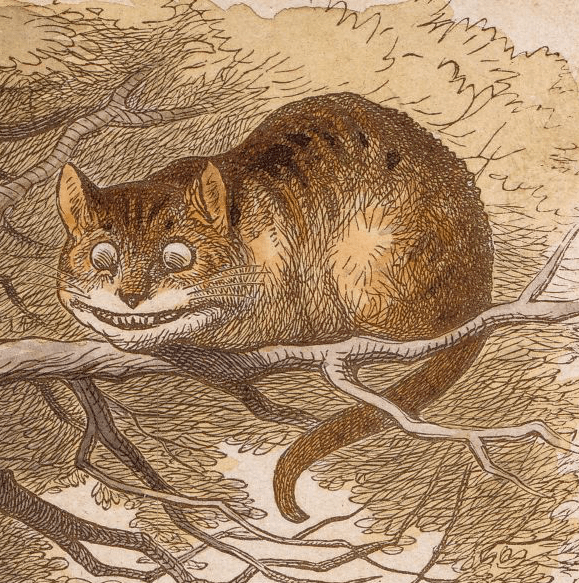
A drawing of the Cheshire Cat in a tree from Alice in Wonderland

That’s the question Alice asked the Cheshire Cat in Wonderland. And it’s the same question I’ve been asking myself over the last few months. Where should I go? The Cat’s reply to Alice was, “It depends on where you want to end up”. And it’s the same answer I’m getting – which has in fact become my true question; Where do I want to end up?.

A drawing of the Cheshire Cat in a tree from Alice in Wonderland

I’ve always dreamed of doing work I love full time. By work I love I mean something that makes the best use of my favourite skills, that feels valuable, that I lose myself in, and that has meaning and purpose. Don’t we all? I’ve had jobs that have allowed me to do some of the things I love, and I’ve worked on projects that I’ve really enjoyed. But mostly, my day to day work has felt increasingly like drudgery, an endless list of tasks that need to be carried out as quickly and as efficiently as possible, a type of work that ultimately drains me and is mismatched with the core of who I am. It wasn’t that I was bad at it, in fact I was good enough, but it became clear that I would never be brilliant at it.

This is not the first time I’ve been here. Quite a few years ago I took the step of applying to do an art foundation. I’d already done a degree, but I longed to discover more about my creative side. It was a decision based on the logic that if I didn’t do it now, I’d still be wanting to do it in ten years’ time. I walked in off the street, got an interview at the college the following week and was offered a place on the spot with no portfolio to speak of. I absolutely loved it and finished with a distinction, but at times I experienced an almost crippling fear – fear of failing but also fear of being brilliant. What would happen to my world if I could actually shine at something?

Do any of us actually ‘get there’ and find that life? I think many people can and do. I certainly want to. To that end I’ve embarked on a quest to change my career and find work I love. It’s been a journey in itself even to begin, to regain a sense of value and empowerment. This blog is part of that beginning. In fact it’s one of my action points from the first of four career change workshops I’m attending at the Escape School (run by the brilliant Escape the City). There are so many people who grow up with expectations put on them that amount to jumping through a series of hoops – school, university, corporate job etc etc… a treadmill. So many of us live with unrealised dreams, and potential that we have progressively denied and squashed. As Seth Godin wrote in Tribes: We need you to lead us, ““Life’s too short” is repeated often enough to be a cliché, but this time it’s true. You don’t have enough time to be both unhappy and mediocre. It’s not just pointless, it’s painful. Instead of wondering when your next vacation is, maybe you ought to set up a life you don’t need to escape from.” 

There comes a point when you can no longer deny who you are, and you owe it to yourself to at least try to realise that person, and to allow yourself the full expression of your unique set of gifts and abilities. Anaïs Nin puts it so aptly, ‘And the day came when the risk to remain tight in a bud was more painful than the risk it took to blossom’. Here’s to blossoming.

© Alexandra Noel – All rights reserved. 8th October 2014.