I have a theory. You can only hack the human operating system so far before you compromise it. It might be highly efficient to outsource things like writing to AI, along with other forms of creativity but at the same time these are fundamentally human-centric processes. We need to keep doing them ourselves in order to function well. What’s more, writing things down using pen and paper – rather than typing on a keyboard or using a digital interface – is where the magic can really happen.
Stephen Bartlett put it well in a social media post: “When you write things down, you turn chaos into clarity. Start untangling your thoughts, pen and paper is where order begins.”
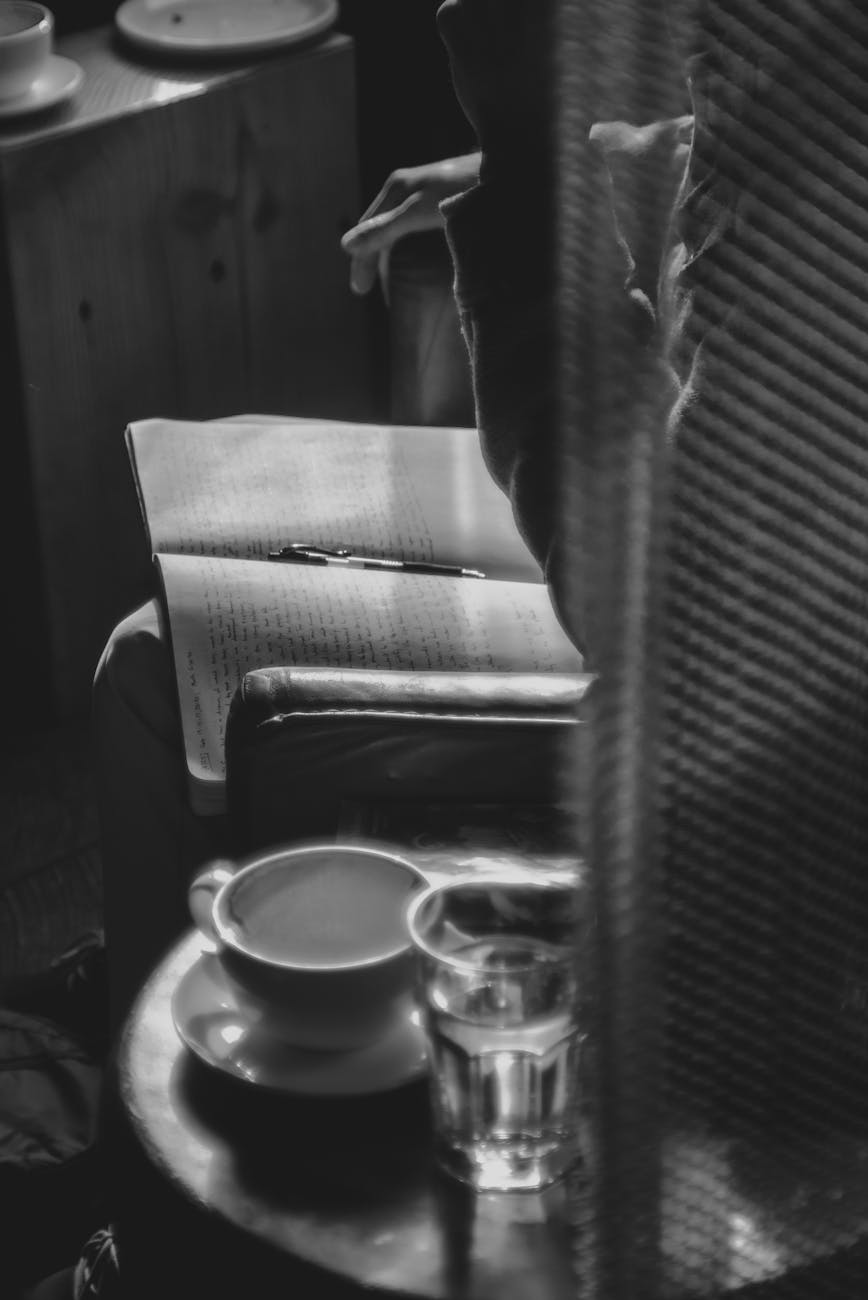
Putting pen to paper is indeed where a sense of order begins: do you have a jumbled pile of things you need to do but no idea where to start? Write them down in a list. Do you feel overwhelmed? Write everything down on paper. Or are you trying to figure out what you feel about a difficult situation? Starting journalling and see the clarity emerge as you process your experiences. Naming your emotions as you go will also help to gently pull apart the tangled knot and straighten out the various strands into clear thoughts and feelings. It is a form of literacy to know what you’re thinking and feeling.
Its effectiveness is connected to ‘mark-making’ which requires coordination between hand, eye and brain. The same is true for drawing or painting – it helps us to regulate our emotions and process our thoughts. It both embodies and externalises them. And when you read words you’ve written back to yourself, you are creating a mirror. It is here you can gain a valuable sense of perspective on the condition of your own soul and the inner workings of your own heart and mind.
I’ve lost count of the number of times I’ve arrived at the page of my journal feeling confused and burdened about a situation. But as I’ve put pen to paper, and written in longhand, it has forced me to create understanding – to make it make sense – for myself first and then for others. It’s unlikely anyone else will ever my journal unless I show them, but the result for me is being able to articulate better what I’m experiencing.
And without even trying to create meaning there’s value in doing this. Just the action of writing words on a page – even if they’re largely nonsensical is still worthwhile; as a ‘brain dump’ so to speak. This starts the flow of thoughts going so you can get to that place of understanding. Like the scum that forms when you’re boiling leftover chicken – bones and all – from Sunday’s roast dinner. As it simmers away you periodically skim it off the top to find the clear broth beneath. It’s a bit like that with journalling.
This type of journalling forms a core practice within Julia Cameron’s The Artist’s Way. She calls it the Morning Pages. The intention is to open the creative tap and clear out the stagnant water which collected in the pipes overnight (I don’t know how far I can push this metaphor to be honest). Instead of clear intelligible thoughts, what lands on the page when you’re writing the Morning Pages should be considered dross, effluvium – you’re not even meant to revisit it. But by getting the creative flow – flowing – the process promises to release the good stuff. By flushing out all the concerns and randomness that fill our minds, the deeper ideas can surface. Under all that scum is pure gold. And there might even be some random ideas that come to mind while you’re flushing everything else out. That too is gold.
It’s good to make time for drawing too (and any other creative activities that involve making things with your hands). Again, it’s putting pen (or pencil) to paper for me. This is usually simple sketches in coloured pencil – either from life, or from images or paintings. I love going to the ever-popular Drop-in Drawing events on Friday nights at the National Portrait Gallery. Those gathered draw from any number of the portraits hanging on the walls of the Gallery – in response to a brief we’re given at the beginning of the session. Each time the sessions offer a new way to engage with the artwork, to look from a different angle, and create renewed meaning. We then get to show our work and discuss it with the tutor. And while this is absolutely about catharsis, it’s also really fun – it throws me back to my art school days. I always have a sense of rightness afterwards – like I’ve done something that has cared for my emotional, mental and creative health in some way. I feel lighter, I breathe deeper, I smile. It actually feels good for me. And it is. Engagement in the arts is proven to improve health outcomes as well as our overall wellbeing (see Daisy Fancourt’s new book Art Cure for a full look at this).
That’s the thing about our hand-eye-brain connection. It’s something which is built into our human design. That’s especially true if you’re a self-confessed Creative, where things like writing, painting or drawing scratch a fundamental itch, but we all have that creative faculty within us. We all have a need to ‘make’ something in some way. In terms of the science; the tactile, connected nature of putting pen to paper has cognitive and psychological benefits for us as humans – not least for memory retention, mental clarity and focus. Wider benefits include enhancing our overall creativity. As we make those marks, we also make cross-connections in our brains which spark fresh ideas and solve problems – enhancing our lateral thinking. The tactile and physical nature of it – we can touch and feel the pen and the page – uses more of our senses (rather than converting key strokes to pixels on screen).
The way I think of creativity is changing. Rather than a luxury or optional extra – a ‘nice-to-have’, I’m now beginning to think of it as an absolutely essential thing for us as humans to do. It’s something so basic to our human operating system – body, mind, soul – and spirit – that without it we fail to function properly. And the science backs this up.
© Alexandra Noel 2026. All rights reserved.
 Alex Noel