
A Deeper Drink than Water

Listen to the talk here – recorded 18th May (NB moderate audio quality), or read below:

In John 4, Jesus is travelling through Samaria and encounters a Samaritan woman at an ancient well. Breaking all the rules to strike up a conversation, he then offers a gift she can’t turn down.

Setting the scene

John 4:1-6 describes how Jesus is travelling from Judea to the south of Samaria (which includes places like Hebron, Bethlehem and Jerusalem), to Galilee with its sea, and cities like Tiberius to the north. Samaria is not a place where Jewish people typically travelled. But the passage is simple and clear, “Now he had to go through Samaria”. So while many Jews would circumnavigate Samaria and take a longer route by the main roads (which would mean a significant diversion), Jesus simply had to go through it. We know that he was going to Galilee, and evidently by the shortest possible route – which was through Samaria. We also know that he was under pressure from the Pharisees who’d noticed that he was overtaking John [the Baptist] and therefore becoming a person of interest and possibly a threat. Time was of the essence, and conflict with the religious authorities wasn’t on the menu at that point. So let’s call this a tactical manoeuvre.

The next part of the story unfolds in John 4: 7-15:

“When a Samaritan woman came to draw water, Jesus said to her, ‘Will you give me a drink?’ (His disciples had gone into the town to buy food.) The Samaritan woman said to him, ‘You are a Jew and I am a Samaritan woman. How can you ask me for a drink?’ (For Jews do not associate with Samaritans.) Jesus answered her, ‘If you knew the gift of God and who it is that asks you for a drink, you would have asked him and he would have given you living water.’ ‘Sir,’ the woman said, ‘you have nothing to draw with and the well is deep. Where can you get this living water? Are you greater than our father Jacob, who gave us the well and drank from it himself, as did also his sons and his livestock?’ Jesus answered, ‘Everyone who drinks this water will be thirsty again, but whoever drinks the water I give them will never thirst. Indeed, the water I give them will become in them a spring of water welling up to eternal life.’ The woman said to him, ‘Sir, give me this water so that I won’t get thirsty and have to keep coming here to draw water.’”

Why stop there? (breaking social conventions)

Jesus was a rabbi, and therefore a devout Jew. People like him definitely didn’t interact with Samaritans. The Jewish people’s disapproval towards them was well documented and translated into animosity and outright hatred – they didn’t associate with each other at all. 

We can see this illustrated in Jesus’ story of the Good Samaritan elsewhere in the gospels. A Jewish man is beaten up by robbers and left on the road, not one of his fellow countrymen, not even righteous and religious men want to stop for him or risk befalling the same fate. Jesus tells this story of a good Samaritan who comes to his aid, which flies in the face of their attitudes towards this people group – a good Samaritan?! It’s an oxymoron. Let alone one who helps a Jewish man, paying for his care and tending to him. Jesus clearly wasn’t swayed or subject to the broader socio-religious-political biases towards Samaritans. And if anything he confronted them.
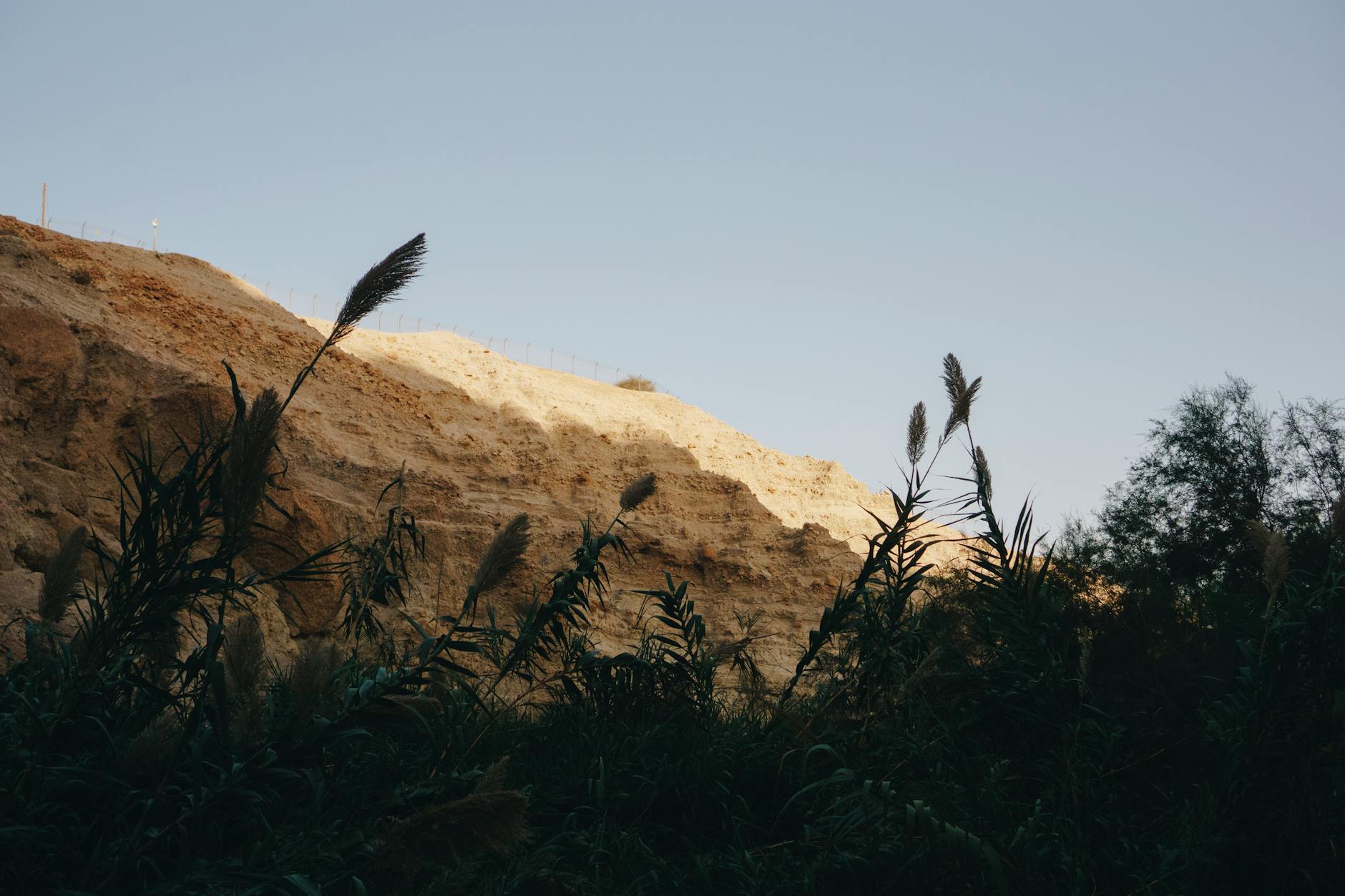
So Jesus and his disciples cut through Samaria, appearing to give it no thought. Time was short and common sense prevailed. It could cut a week off the journey between Judea and Galilee so that it took just three days instead. Perhaps they also realised that the Pharisees wouldn’t follow them through Samaria itself. And actually, I’d speculate that Jesus could have been traversing Samaria for years. He was raised in Nazareth in the north but his daily life and worship had led him to Jerusalem to the south of Samaria so it’s a route he’d very likely be familiar with already. 

For the son of God was there anywhere in Israel that he didn’t feel at home or that was off-limits?

But for Jews generally, Samaria was a place of transit – you were never stopping there, you were only ever (in extremis) passing through it. And otherwise you were going around it. Doing all you could to avoid interacting with the Samaritans. It’s human nature to avoid areas you might feel unsafe – in fact I did this the other night. Taking the long way back to the station via the main roads even though I could have cut through an estate – now that might sound sensible for a woman in London but I have no real evidence to suggest that I would have come to any harm.

Whatever the case, most interesting perhaps is the fact that:

Jesus stopped… in Samaria. 

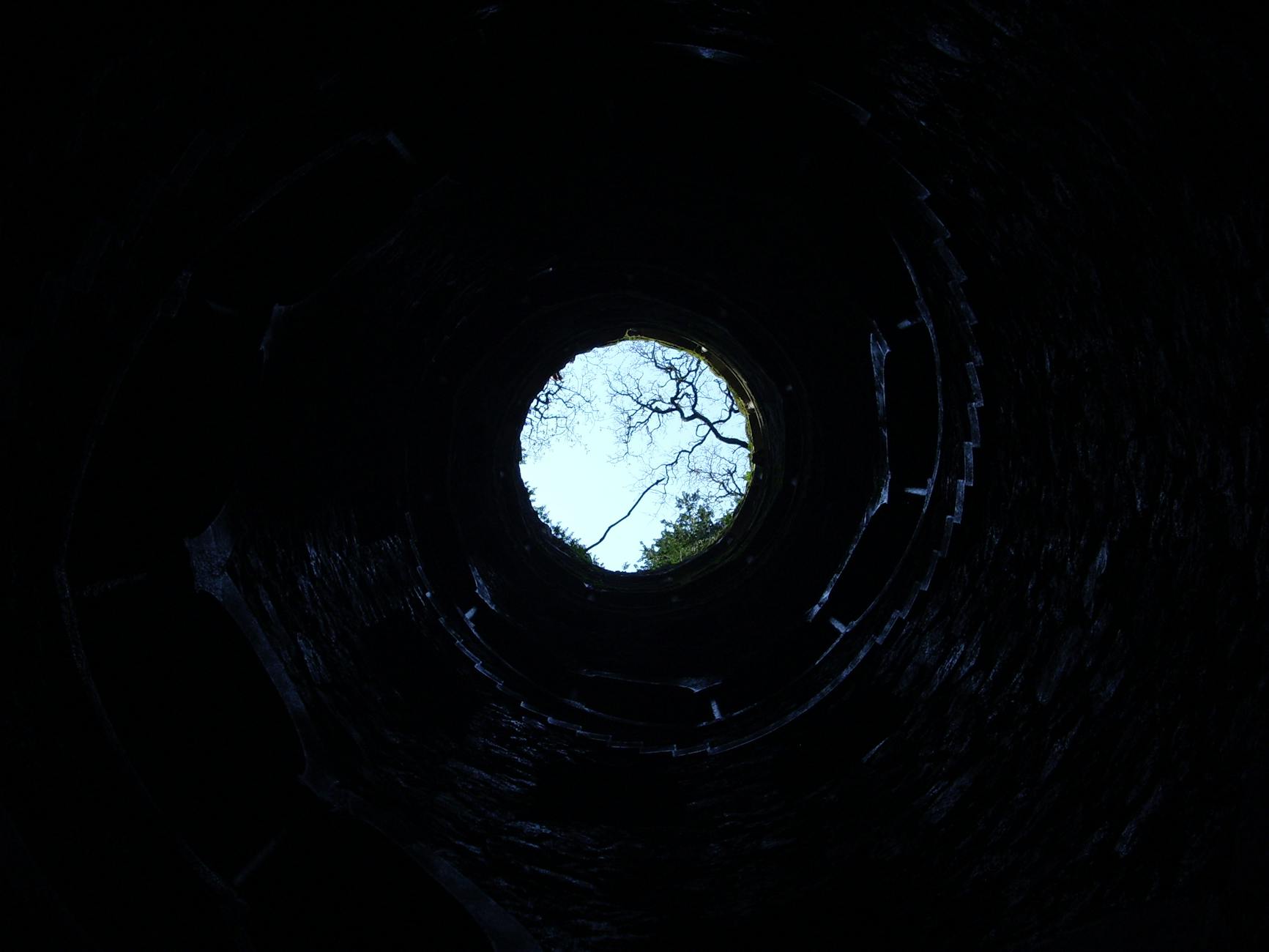
Not only that, he stopped at near Mount Gerizim at Jacob’s Well.

And he’s about to have a full conversation with a Samaritan….a Samaritan Woman.

He had already ignored several rules and social conventions that day, including those that would have led him by a different route. Now he’s sitting by a historic well in the heart of Samaria. So what’s breaking a few more?
An education in identity

It’s noticeable that she is described solely by her ethnicity and gender – the Samaritan Woman. In our climate of identity politics, these sort of identifiers – these boxes we tick, are first and foremost. Still this is a noticeably reductive description of a person – we don’t know her name, but this is highly relevant to this story because of everything that Jesus is transgressing here. He’s breaking all sorts of religious, cultural, historical and social laws here. However, he is in perfect obedience to God.

For us, what might be the equivalent? Think of those cultural norms, conventions, principles of class or gender that might influence or govern our actions or daily decisions. Maybe without even knowing it – telling you what’s appropriate or not, where to go, who to speak to and how, what to buy etc. They might make us socially acceptable to ‘people like us’ but they can tie us up when it comes to the simplicity and immediacy of obeying God.

So when he asks her for a drink, she feels duty bound to highlight this transgression and educate him – remind him – what’s appropriate: “‘You are a Jew and I am a Samaritan woman. How can you ask me for a drink?’ (For Jews do not associate with Samaritans.)” we’re told. Anyone notice that Jesus knows exactly what he’s doing in asking her for a drink. Convention requires that their different traditions are voiced and their differences which govern this are laid on the table.

Schooling the schooled

Should she be schooling a man like this, and a religious Jewish man no less? Is it even her place to do this? But he’s setting her up for it. I find myself wondering about who else is around, who else notices these two, even from afar. It would have been quiet there. Jesus is sending himself further into social impropriety by talking with this woman – a fallen woman – on his own. So to add to the growing list, he’s now transgressing approved sexual and relational conduct too. To anyone witnessing this, or anyone who heard about it he could be seen as yet another man welcoming her advances. But he gives that no mind – thinking nothing of the risk to his reputation or social standing as a rabbi. 

And this suddenly becomes a more intimate and vulnerable interaction. It becomes a genuine encounter. What is it about his demeanour that emboldens her? That gives her permission to correct him. Is she just brazen? But he’s not just another Jewish rabbi or religious man. He’s not just another Jewish man. He’s not just another… man. And this is suddenly transformed from all its impropriety into a significant, life-altering moment between two people.

We know this isn’t the only time he confronts these conventions, or breaks them. Elsewhere in the gospels he allows another ‘fallen’ woman to pour out a jar of perfume, worth a year’s wages, weeping and wiping his feet with her hair. Whilst he dines with religious leaders and influential men. Can you imagine?? Even now the wastage, the woman – weeping – and wiping of his bare feet in a formal setting, during dinner, would be shocking, or head turning at least. You can just imagine the people there voicing their disapproval, frowning or scowling or getting up to leave in protest. But he is secure, totally in the moment and most importantly in perfect obedience. 

What we often think of as right, and appropriate, and dress up as obedience to God. Is no such thing. Equally what we assume to be inappropriate, uncouth and wrong. Is no such thing before God. And this encounter – along with many others that Jesus had – demonstrates this.

Obey your Thirst

There’s lots of visual language here. So let’s visualise this. It’s noon and the sun is high overhead. It’s the heat of the day. You’re squinting against the sunlight, everything looks bleached out. You feel parched and your tongue is sticking to the roof of your mouth. You’re also tired, and heavy limbed having walked since early morning. You need to rest and eat. And you need a long drink to quench your thirst.

Jesus asks the Samaritan woman: “Will you give me a drink?” 

She counters him: “‘Sir,’ the woman said, ‘you have nothing to draw with and the well is deep’.” 

So, that’s a no. But she’s bound by convention – emphasising the proper way and this is not it. It would have been wrong for a Jew and Samaritan to draw and drink from shared cups or utensils as Samaritans were thought ritually unclean by the Jews. She’s making no concessions on this matter of religious and cultural propriety, even though she’s much more flexible in other areas of her life.

And she hadn’t heard or computed this: “Jesus answered her, ‘If you knew the gift of God and who it is that asks you for a drink, you would have asked him and he would have given you living water.’” He’s reproves her – was there a twinkle in his eye as he says this? Still, she just hasn’t heard him – she doesn’t register what he is saying. Have you ever had a conversation where you’re talking at cross-purposes. The other person simply cannot take in what you’re saying.

The contrast of Jesus’ physical thirst – he is the one in need or so we think – next to the well full of water. While she is denying Jesus a drink – bound by these customs and conventions. In fact, I don’t think she gives Jesus a drink at all in this whole passage. He’s thirsty. But what is thirst exactly? It’s a need, and a desire for water. For something that sustains life itself. If you don’t obey your thirst or hunger at some point, both of which are signalling a genuine need, you would eventually die. 

They are like mirrors – she’d denying him physical water to keep customs and conventions, while he is breaking them all to offer her living water.

we don’t just thirst for water

This woman is persona non-grata. She is a social outcast and not welcome by the other women in her community. She’s at the Well in the middle of the day, while the women and most of the community would fetch water, wash and clean in the early morning. But she’s not welcome then, or she chooses not to go. In her own life she hasn’t been drinking from her own cistern. Not belonging because she has failed to meet a social standard and code of practice that was expected of her. She’s ostracised. This isn’t just a feeling, it’s a reality and playing out in her social exclusion and isolation.

But she does has plenty of water to drink and something to draw it with (unlike Jesus which she has already pointed out). But actually it’s her whole life that is a dry and parched. She is thirsty but not for water. Her thirst is for belonging, community, for connection, and companionship. She’s thirsty for meaning, resolution, restoration. For relief from her social isolation and loneliness that brings her here in the middle of the day. And for repatriation – legitimacy as an heir of the promises to Israel too. To no longer feel sidelined from the Jewish people as a Samaritan, as she is from her own community. So her thirst cuts across every part of her identity.

And here is Jesus, coming right into her thirst. He stops and sits down in it. Having gone where no one else will travel. 

In a recent piece for Woman Alive UK I wrote about chaplains who go into strip clubs. And one of the things I found really amazing when I talked to one of these chaplains in particular; she said to me: “It’s wild that God is so present in strip clubs”. And she said the reason is that God goes whether there’s thirst, or hunger.

Jesus is drawn to the dry and parched lands. He’s drawn to the hungry, and the thirsty. Who knows why he cut through Samaria that day but to me, it’s as if his feet just walked him there. Like my feet sometimes walk me the route I used to take to school. It’s just wired into the son of God to traverse the deserted places and the abandoned places. With the voice of the Holy Spirit his guide.

heights versus depths

The Samaritans were clinging to their history in this area, and the history of the patriarchs – wanting to worship God on this mountain – (Mount Gerizim) not in Jerusalem where the temple was. It caused a rift – further compounded by their mixed ethnicity which the Jews despised. 

But here the Samaritan woman identifies herself alongside Jacob, claiming her birthright. And refuting the prejudice of devout Jews against Samaritans. She claims her patriarchal lineage. She and her people are inheritors and people of Israel too, even while those very people dismiss and disparage them. This well too, on the land Jacob bought for his burial site is an important part of that history.

When Jesus responds to her, telling her that she could ask him for living water, she challenges him, showing her loyalty to her people: “Are you greater than our father Jacob, who gave us the well and drank from it himself, as did also his sons and his livestock?’”

The answer of course is yes – he supersedes Jacob. More than that he has come to meet those ancient longings and to fulfil God’s promises to her ancestors. But not to be deterred or diverted, he stays on topic. He contextualises the good news of who he is and what he offers for her in this setting – everything around him speaking of the spiritual reality that he’s communicating.

Living Water

The living water he offers is greater than the water from this Well, given to them to nourish their people and animals for generations but that will always leaving them thirsting for more. Representative of their traditions and the significance of place. He says: “‘Everyone who drinks this water will be thirsty again, but whoever drinks the water I give them will never thirst. Indeed, the water I give them will become in them a spring of water welling up to eternal life.’”

This living water is a refrain in the bible and of Jesus’s ministry – pointed to by the prophets – Isaiah 55:1 “Come to me all how are thirsty, come to the waters” and spoken of in Revelation 21:6: ““To the thirsty I will give water without cost from the spring of the water of life.” And later in John 7, he explains: “‘Let anyone who is thirsty come to me and drink. Whoever believes in me, as Scripture has said, rivers of living water will flow from within them.’ By this he meant the Spirit, whom those who believed in him were later to receive. Up to that time the Spirit had not been given, since Jesus had not yet been glorified.”

Living water, welling up within us to eternal life – the Spirit given to sustain our whole lives saturating and hydrating us. Slaking our thirst better than any glass of water ever could. 

And it says something about the nature of the Holy Spirit. Who is a person of the Trinity. But is also often described in elemental – variously a wind, now water. So the Holy Spirit has a substance which is essential for us to live and thrive, elemental in its nature.

While they want to worship God on the mountain and on the heights, God is actually inviting her (and us) to drink from the depths. This water source is deeper than a well. In the words of David: “Deep calls to deep…”  

Despite our earnestness and properness, we can be worshipping God in all the wrong ways and all the wrong places. It might be determined by how we’ve been brought up, our conditioning or the way we’ve always done things. By misguided religious practices, by nostalgia or sentimentality even, or by traditions that are insufficient alone to hold the magnitude of what God is doing. Those ‘mountains’, in specific places, religious practices or ways we’ve met with God before aren’t invalid but in the end we can miss Jesus. There he was sitting by Jacobs’ Well, at the base of Mount Gerizim with all of it’s tradition and significance – himself the well of salvation sitting by this ancient well, offering living water. But she didn’t see him: “if you knew the gift of God” he says… until she did. Then it was a moment of the most incredible alignment, foreshadowing the outpouring of the Spirit when it will no longer be contained.

Man-made or eternal?

Lastly, there is a profound difference between a well and a spring. Wells are man-made, they are dug with effort, they are built and constructed by us – people, civilisations and religious institutions, to sustain us. And they do. They contain our [water] source, but we have to keep returning, keep drawing water. As Jesus says to the Samaritan Woman: “‘Everyone who drinks this water will be thirsty again”. 

And when we rely on our own identity – well-defended or justified as it may be, or rely on a place, history, tradition, conventions: drawing this water becomes laborious – it ultimately relies on man’s intervention and our own efforts and initiation to sustain us.

However, a spring is natural, effortless – it is self-sustaining: “whoever drinks the water I give them will never thirst. Indeed, the water I give them will become in them a spring of water welling up to eternal life.’ Imagine that. A spring that will well up, sustaining and nourishing us – welling up – producing in us eternal life – bringing our spirits to life, and nourishing our entire lives. Truly living water.

No wonder she says, “give me this living water!”

© Alexandra Noel – All Rights Reserved May 2025
Meditations on Hope

Curated thoughts on the nature of hope and why we will always need it.

in context: Faith, Hope and Love

“And now these three remain: faith, hope and love.” 1 Corinthians 13v13

What’s so special about faith, hope and love and why do they – of all things – remain? It’s intriguing. The surrounding chapters of 1 Corinthians partly answer this in talking about Completion. That when completion comes – when all is resolved at the end of days – faith, hope and love will still be there, even as other things have faded away.

Somehow faith, hope and love materially endure. There’s no sell-by date on them, no need to throw them out – they will always be valid, always be needed. So much so that they will be essential to the ‘completion of all things’ to come.

So faith, hope and love are not ephemeral ideas. They’re real things, that have substance and can be evidenced; for now and the age to come. So with that in mind, let’s consider the second of these three things. Hope.

Hope is an Anchor

Hope and anchors have a long association. I’m sure I’m not the first to have come across a pub called the ‘Hope and Anchor’ and the reason might well be this verse from the Bible.

Hebrews 6v19 says: “We have this hope as an anchor for the soul, firm and secure.”

What’s an anchor like? It’s really weighty – often being made of iron. It’s dropped into the sea, usually on a heavy metal chain or rope, attaching to the boat or ship. The anchor hooks onto the sea bed and stops the boat drifting, making it immovable. Ships without an anchor or anything else to fasten or moor them, are in trouble – if they can’t anchor they’ll drift. In choppy waters or storms especially they could come to harm, smashing up on rocks or against the cliffs. If a boat’s engine dies, or the wind suddenly drops there’s absolutely nothing to hold them fast, leaving the stranded.

And we ourselves have an anchor – which tethers the soul, attaching us to something rock-solid, immutable and immovable.

I’ve often felt God speak to me through ships. When I moved from Bristol – which is a maritime city with a harbour and docks – back to London, it was through ships that God confirmed that I needed to move. My old flatmates even got me a small piratey-style painting – drawn like a sailor’s tattoo which said ‘Homeward Bound’. This was true of our ultimate destination – heaven, as well as my home town of London! 

Hebrews 6:19 is one of my favourite verses in the Bible. I had it as the background on my old most-beloved MacBook Pro which I ended up having for 13 years! That’s 13 years of seeing that verse every time I opened my laptop – almost daily.

In this passage God is setting in stone the promise that he made to Abraham: “I will surely bless you and give you many descendants”. He had sworn an oath – swearing it by himself because there is no one higher – imagine that: “When God made his promise to Abraham, since there was no-one greater for him to swear by, he swore by himself, And so after waiting patiently, Abraham received what was promised…People swear by someone greater than themselves and the oath confirms what it said and puts an end to all argument. Because God wanted to make the unchanging nature of his purpose very clear to the heirs [that’s us too] of what was promised…he confirmed it with an oath. God did this so that, by two unchangeable things in which it is impossible for God to lie, we who have fled to take hold of the hope set before us may be greatly encouraged.” Italics mine.

Hebrews 6 goes on to explain that: “[This hope] enters the inner sanctuary behind the curtain where our forerunner Jesus has entered on our behalf. He has become a high priest forever…” 

This hope is in Jesus. It is Jesus, who has accomplished all things, and ended the old covenant which required that people made atoning sacrifices for their sin. He became that himself, a once-for-all sacrifice — removing the curtain which separates us from the Holy of Holies where God. And so restoring our relationship with him. This hope anchors us fast, so that we won’t drift. Firm and secure – the confident expectation of eternal life and salvation in Jesus Christ.

I imagine standing just outside the Holy of Holies in the tabernacle, pulling that really heavy curtain aside, feeling the weight of it, never having seen what’s behind it – not knowing what to expect, but still pulling it aside with confidence to find Jesus standing right there and being welcomed in. And of course, when Jesus died on the cross we’re told in the gospels that this very same curtain was torn from top to bottom. Forever ending our separation from God. This cannot be undone.

So this hope is an anchor for our souls.

Song Inspiration – The Anchor by Crowder

Hope is Future-Oriented Faith

I find ‘Hope’ quite difficult to articulate – it’s a feeling but it’s more than a feeling. It’s a sense of wishful thinking but it’s more tangible than that. It’s optimism but that’s insufficient to describe it. It transcends circumstances and yet it’s entirely connected to them. It’s aspirational, it’s the life we dream of – that we long for. But it’s hard to quantify and understand.

A common dictionary definition is that hope is “a feeling of expectation and desire for a particular thing to happen”. But as we’ve already seen Biblical hope by contrast is more than a feeling – it is actual confidence: it’s a sense of certainty that something good will happen.

It’s hard to know where faith ends and hope begins. I had to really do some digging as to why hope is mentioned independently of faith in 1 Corinthians 13:13. Because hope is really similar to faith, but it is distinct from it. A really helpful way to think about it is that, faith is like an umbrella term. It provides the broader context relating to our belief in God, our trust in the person of Jesus and the finished work of the cross; the faith that things exist, or happened or can happen.

While hope is part of this, incorporating many of the things that faith is, it is still separate from it. Uniquely, hope points towards the future. It is future-facing. You could think of it as future-oriented faith. While faith is substantial, hope is directional. And we’d be lost without either. So we can conclude from this, that if ‘these three remain’, future-facing faith (as in hope) is of particular importance to be named alongside the broader context of what faith is. And as part of our existential reality even in eternity, it is an important orientation and posture for us to live by.

Another way to put it is that ‘biblical hope is biblical faith in the future tense’.

Hope is in the Suffering

Hope is an unseen guide as we navigate uncertainty. When all seems lost, it is hope that intervenes; to be rewarded and fulfilled in the realisation of one’s dreams. Equally there will be parts of life where hope isn’t fulfilled – yet.

Proverbs 13:12 says: “Hope deferred makes the heart sick, but a longing fulfilled is a tree of life”. God wants to fulfil our hopes, dreams and desires. And if I have faith, that’s the substance of what I’m hoping for and those things yet unseen. It’s the evidence that they will happen.

Hebrews 11 opens with “Now faith is the substance of things hoped for and the evidence of things not yet seen.” More modern translations put it like this: “Now faith is confidence in what we hope for and assurance about what we do not see. This is what the ancients were commended for.”

And in the midst of terrible suffering, illness, bereavement; or when people have been kidnapped, held hostage, or held prisoner they often talk afterwards of how important hope was to them. For those going through famine or war or any number of dreadful, painful circumstances; hope is all you have often to enable you to keep going. Hope enables us to bear suffering and to persevere through – for the promise of what’s on the other side. And when hope is lost – it’s catastrophic. 

We saw amazing scenes at the end of January on International Holocaust Remembrance Day. During the holocaust, hope literally helped to keep people alive. It enabled them to keep going and not give up. In his book, ‘Man’s Search for Meaning‘, psychiatrist and holocaust survivor Victor Frankl observed the necessity of hope during his time as a prisoner in several concentration camps during WW2. He remembers in one camp how much they were hoping – however naively it proved to be (he acknowledges), that they would be home for Christmas, and it would all be over. When it became apparent that this wasn’t the case at all, their hopes were dashed. And seeing no reason at all to continue in the horrendous conditions, all hope was gone. At that point many gave up and died.

Hope is a Choice

Hope is a choice. It can sustain life in the most desperate of circumstances. As Victor Frankl discovered, and one writer commented: “While every external factor may root against you, one single act of internal defiance can counteract it all.” Hope is an act of defiance. Even though it has no bearing on the outcome per se, it is a vital internal shift and an attitude which arms you against things that could otherwise destroy you through despair. 

Hope can even save you but it’s based on your disposition, not whether or when it is fulfilled. It could even be called a type of stubbornness. Making the decision to choose hope is powerful. 

While hope can literally mean the difference between life and death, it can also affect all sorts of outcomes – recovering from illness or injury, or from losing someone or something, like a job. Hope is dignifying. In Victor Frankl’s own words: “Everything can be taken from a man but one thing: the last of the human freedoms—to choose one’s attitude in any given set of circumstances, to choose one’s own way.”

And though hope is fragile, it is indomitable. There are many who cite hope as a reason they survived through the worst of circumstances. Even a whisper or a glimmer – if there is still the smallest flicker of hope, God will not extinguish it.

Isaiah 42:3 says: “A bruised reed he will not break, a smouldering wick he will not snuff out.”

Emblems of Hope

This poem by Emily Dickinson conveys the fragility of hope – likening it to a bird. 

Hope is the Thing with Feathers by Emily Dickinson

Hope is the thing with feathers –
That perches in the soul –
And sings the tune without the words –
And never stops – at all –
And sweetest – in the Gale – is heard –
And sore must be the storm –
That could abash the little Bird
That kept so many warm –
I’ve heard it in the chillest land –
And on the strangest Sea –
Yet – never – in Extremity,
It asked a crumb – of me.

Birds are known to be symbols of hope: as they fly freely, survive the harshest of conditions and sing as the dawn arrives day by day they signal fresh possibilities, freedom and renewal.

In her book ‘I Know Why the Caged Bird Sings’, Maya Angelou tells the first part of her own story – of growing up in an abusive home, how she was raped at a very young age and how the trauma caused her to suffer from selective mutism. But also how she found her voice and sense of agency and freedom to become a recognised writer, speaker and poet. Through that sense of Hope she burst out of the ‘cage’ to find her own voice, liberating herself and inspiring others to do the same. Her poem ‘Caged Bird’ from which the novel takes its name also captures the sense of hope that even a bird in a cage can sing of freedom can inspire others.

Caged Bird by Maya Angelou

A free bird leaps
on the back of the wind   
and floats downstream   
till the current ends
and dips his wing
in the orange sun rays
and dares to claim the sky.

But a bird that stalks
down his narrow cage
can seldom see through
his wings are clipped and   
his feet are tied
so he opens his throat to sing.

The caged bird sings   
with a fearful trill   
of things unknown   
but longed for still   
and his tune is heard   
on the distant hill   
for the caged bird   
sings of freedom.

The free bird thinks of another breeze
and the trade winds soft through the sighing trees
and the fat worms waiting on a dawn bright lawn
|and he names the sky his own.

But a caged bird stands on the grave of dreams   
his shadow shouts on a nightmare scream   
his wings are clipped and his feet are tied   
so he opens his throat to sing.

The caged bird sings   
with a fearful trill   
of things unknown   
but longed for still   
and his tune is heard   
on the distant hill   
for the caged bird   
sings of freedom.

Someone else who became an emblem of hope for others was Corrie Ten Boom, a watchmaker who lived in Haarlem in the Netherlands. When WWII broke out, and Germany invaded; as a Christian, she and her family took God’s word over the word of the occupying forces. They gathered stolen ration cards and hid Jews in their home. When an informant tipped off the Nazis about their work, their home was raided and the family was taken to prison.  

In prison they received word via the resistance that “all the watches in your cabinet are safe”. To their great relief, those they had been hiding had been transferred to other locations and were safe.

While imprisoned, she held worship services in the camp she and her family was held in, and shared from a Bible which had been smuggled in. Corrie Ten Boom writes about this experience in her book, ‘The Hiding Place’. She consistently spoke of the hope she had – sharing it with fellow prisoners and with numerous people through her subsequent writing and speaking after the war.

Song Inspiration – Oh Hope by Joshua Luke Smith

Hope is for the Unseen

Hope wouldn’t be hope if it we could see what we were hoping for. This is a really important aspect of what hope is. Hope is contingent on us not having what we are hoping for – yet. 

Romans 8v18-35 reveals the power of hope on a cosmic scale, Paul says: “I consider that our present sufferings are not worth comparing with the glory that will be revealed in us. For the creation waits in eager expectation for the children of God to be revealed. For the creation was subjected to frustration, not by its own choice, but by the will of the one who subjected it, in hope that the creation itself will be liberated from its bondage to decay and brought into the freedom and glory of the children of God.

We know that the whole creation has been groaning as in the pains of childbirth right up to the present time. Not only so, but we ourselves, who have the first-fruits of the Spirit, groan inwardly as we wait eagerly for our adoption to sonship, the redemption of our bodies. For in this hope we were saved. But hope that is seen is no hope at all. Who hopes for what they already have? But if we hope for what we do not yet have, we wait for it patiently.”

Hope itself is a state of anticipation. Still, it can’t be separated from waiting and expectation. It is tied to waiting, and waiting patiently for what is unseen. If you have hope you will wait patiently.

Hope in the Waiting

In the Bible there are several Hebrew words which are used to describe hope. The Bible project explains these:

Yakhal – to wait for (as Noah waited for the waters to recede to reveal land while he was in the Ark)
Qavar – describes a cord, or a sense of tension while you wait, followed by release.
Elpis – describes living hope – based on Jesus resurrection, we can be reborn.

In the Old Testament, the prophet Hosea chose hope – in a time when there was nothing to be optimistic about. Israel was being oppressed by foreign empires. Like Hosea, choosing hope is part of the prophetic voice that Christians can have in society. Remembering what God had done in the past, to bring his people out of Egypt during the Exodus, Hosea applied it to the future, saying: “God could turn this valley of trouble into a door of hope.” God’s past faithfulness motivated hope for the future. We look forward by looking back – trusting in nothing other than God’s character.

Similarly, Joseph was a man of hope. For him his faith in God, translated into hope for his future. Having been sold into slavery he never gave up hope through the ups and downs, and numerous mistreatments that he suffered. And when God raised him up to be in charge of Egypt, it also had a great purpose. He had so many false starts – possibly the worst was being forgotten in prison, leaving him there even longer until – when the timing was right God had need for him. Genesis is very clear that despite his misfortune: “the Lord was with Joseph”. So hope in the waiting is also recognising that while we may not understand any of what is happening, and why, it is serving a greater purpose. Joseph saved his family, and by extrapolation, the twelves tribes of Israel.

Waiting is exhausting, both physically and emotionally. But this difference with hoping in God is that it renews our strength. And gives us supernatural strength too. It’s counterintuitive. The paradox is, as Isaiah 40: 31 says that as we hope, as we wait: “but those who hope in the Lord will renew their strength. They will soar on wings like eagles; they will run and not grow weary, they will walk and not be faint.”

Hope is in the Planning

Jeremiah 29v11: “I know the plans I have for you, says the Lord. Plans to prosper you and not to harm you, plans to give you a hope [a better life] and a future”.

A plan is a method or strategy for achieving a goal. And here Jeremiah is reassuring Israel that there a plans for a hope and a future. That hope as a tangible thing, is premeditated. It’s planned. The ball is already rolling even if nothing appears to be happening. God has a plan. Think about your last holiday – what plans did you make, to make that holiday a reality? Plans are evidence of a future reality. When you see an architects drawings, a blueprint or a business plan – that’s evidence of the future existence of the thing that you’re creating. It’s like an inheritance. There’s intention. Hope can be imagined, and imagined. 

So while it’s fullest realisation exists in the future, it also exists now as the things God has planned. God has planned our future with him. In Jesus death and resurrection – our ultimate hope was planned – it had to be. It wasn’t an accident, or an afterthought that is trying to fix a botched job. It was planned. So if you hope for something, if you have faith for it you can take is as evidence of those things: “now faith is the substance of things hoped for, the evidence of things not yet seen”.

My Hope is in You

Throughout the Psalms there is a refrain: “My hope is in God” and a phrase which urges: “Put your hope in God”. The Psalms talk a lot about hope. And it’s often hope in God. David often encourages himself and others to “put your hope in God” It is for God himself that they are waiting.

Verses of hope from the Psalms

“May your unfailing love be with us, Lord, even as we put our hope in you.” Psalms 33:22

“My integrity and uprightness protect me, because my hope, Lord, is in you.” Psalm 25:21

“But now, Lord, what do I look for? My hope is in you”. Psalm 39:7

“Be strong and take heart, al you who hope in the Lord”. Psalm 31:24

“For you have been my hope, Sovereign Lord, my confidence since my youth”. Psalm 71:5

“As for me, I shall alway have hope; I will praise you more and more”. Psalm 71:14

“Guide me in your truth and teach me, for you are God my saviour, and my hope is in you all day long”. Psalm 25:5

“Why, my soul, are you downcast? Why so disturbed within me? Put your hope in God, for I will yet praise him, my Saviour and my God”. Psalm 43:5

“Blessed are those whose help is in the God of Jacob, whose hope is in the Lord their God”. Psalm 146:3

Living Hope

And so we find that Biblical hope is based on a person. It’s different from optimism, and positive thinking. It’s not focused on circumstances and not based on things getting better.

This brings us to Living Hope –  that hope is indeed built on a person, the person of Jesus.

1 Peter 1:3 says: “Praise be to the God and Father of our Lord Jesus Christ! In his great mercy he has given us new birth into a living hope through the resurrection of Jesus Christ from the dead”.

The Resurrection is central to our sense of hope as Christians. The risen Jesus is our ultimate hope through his death on the cross and his resurrection from the dead.

At the end of the day biblical hope, that which remains is established on the finished, settled work of Jesus Christ.

Song Inspiration – Living Hope by Phil Wickham

And Hope Does not Disappoint

Romans 5:4 – “we boast in the hope of the glory of God. Not only so, but we also glory in our sufferings, because we know that suffering produces perseverance; perseverance, character; and character, hope. And hope does not put us to shame [does not disappoint us], because God’s love has been poured out into our hearts through the Holy Spirit, who has been given to us.

Jesus himself suffered on the cross because of hope: “for the joy set before him [he] endured the cross”. Have you ever imagined that Jesus was a man full of hope? Hope enabled him to endure the worst suffering on the cross. In order to become hope itself – for us.

Song Inspiration – Cornerstone by Hillsong Worship

© Alexandra Noel – All Rights Reserved. February 2025

New Year, New Identity

Listen to the talk here – recorded 19th January (NB moderate audio quality), or read below:


New Beginnings

‘New Year, new you!’ We’re really familiar with this now. And it’s everywhere at the moment.

It is true that the beginning of a new year offers us a new start. We can finally turn the page on last year, including any of its failures, embarrassments and disappointments. ‘This year is going to be different’, we tell ourselves. 

We feel hopeful for our newly adopted exercise regimes, diets, healthy eating plans, or January fasts, plus any newly discovered productivity hacks etc. So many things right now are being recommended, promoted or sold on the promise of becoming a ‘new you’. Although I think people are getting wise to these advertising strategies, we’re all yearning for a bit of self-improvement and who doesn’t want to become their ‘best self’?

A new Version of ourselves

Then there are new beginnings that require a whole new version of us. Or that a new part of ourselves emerges, or an existing part gets dialled up. New jobs will require new skills, as do new contexts – we will all at times need new ways of understanding, and new ways to communicate with people. Not to mention learning new technologies and new ways of operating – it’s something I had to do when I changed my career a few years ago.

These life-moments which produce a new version of us might include, moving house, moving to a new city, getting engaged, getting married, or having children. Those of you who are parents will probably remember how you felt when you first held your son or daughter, and in what ways being a mother or father has changed you. Similarly how marrying someone and setting up home starts to require new things of you – which can be exciting and challenging all at the same time. No matter your relationship status – single, married, divorced or widowed there are always new callings and new phases of life we have to embrace – all of which present some kind of new beginning. Asking that we become a new version of ourselves in some way. 

For all of us, living through a pandemic has changed us. As has our journey together as a church community over the last few years. As well as completing a season of life, saying farewell to friends, facing illness, caring for loved ones – these are all experiences that require us to become a new or different version of ourselves. Usually for the better, but sometimes it can feel for worse – at least for a while.

But these experiences don’t fundamentally change who we are – we might learn new habits, or ways of doing things; we may grow or expand around our circumstances but our essential personhood remains unchanged. We are still ‘us’. With our various quirks and foibles. And unfortunately our sinful natures. We’re shaped by a whole range of factors which affect the way we respond to things, our thought patterns and the conclusions we draw about ourselves and others, as we navigate life. And we get comfortable. That’s our identity – ‘it’s just who I am’, we tell ourselves. And that can be depressing. Especially when we strive to change ourselves and it doesn’t pay off. What we need is more than just a new version of ourselves – we need a new identity.

A new identity brings resistance

As we heard last week, the Exodus saw the Israelites leave Egypt where they had been enslaved for generations. They witnessed an increasingly severe set of plagues as God turned the screws on Pharaoh to let his people go. When they left Egypt they fled across the parted waters of the Red Sea, and then moved through the desert from camp to camp as they followed a pillar of cloud by day and the pillar of fire by night, for 40 years. Apparently this journey would only take 11 days if they’d walked in a straight line. But this journey was about more than covering distance, they needed to become a new people with a new identity. And they just couldn’t seem to let go of their old identity as slaves in Egypt. So much so, that when the Promised Land was so close they could touch it (literally they’d brought back samples of the produce) they couldn’t enter into it. 

When the twelve spies had gone into the land to suss it out. Ten of them spread a bad report. The people grumbled, freaked out and then even started to organise! They were not going to the Promised Land. In Numbers 14v2 they said: “If only we had died in Egypt! Or in this wilderness! Why is the Lord bringing us to this land only to let us fall by the sword!” They thought it was better to go back to Egypt, v4: “And they said to each other, “We should choose a leader and go back to Egypt”.

As they stood on the cusp of a new beginning, most were too intimidated by what stood before them and believed the negative reports of ten of the spies, spread amongst them. They looked with fear, rather than faith – at the land before them – the land that God was promising them.

A new identity produces new ways of seeing

But two of the spies saw with eyes of faith – Caleb and Joshua. Though they saw the same things there; they had an entirely different interpretation of what they saw. They urged the Israelites to have faith – they were so close! Later in Numbers 14 they said: “The land we passed through and explored is exceedingly good. If the Lord is pleased with us, he will lead us into that land, a land flowing with milk and honey, and will give it to us. Only do not rebel against the Lord. And do not be afraid of the people of the land, because we will devour them. Their protection is gone, but the Lord is with us. Do not be afraid of them.”

But it was to no avail. They refused to listen. God was exasperated at the contempt they showed for him. This was more important than his own glory. And I just want to underline the meaning of contempt because its something that God takes seriously (and so should we): the feeling that a person or a thing is worthless or beneath consideration – disregard and disobedience. These are rooted in contempt. 

God had forgiven them but there still had to be consequences. This is another example of where God has boundaries. He is a Person. “No one who has treated me with contempt will ever see [the Promised Land].” The eldest generation that left Egypt would die in the wilderness and only their children would see it. He then told them that they would spend 40 years in the wilderness, one year for every day that the spies were in the land. 

And then God said – and I think this is really critical: “But because my servant Caleb has a different spirit and follows me wholeheartedly, I will bring him into the land he went to, and his descendants will inherit it.” Numbers 14:24 NIV And then again: ““Not one of you will enter the land I swore with uplifted hand to make your home, except Caleb son of Jephunneh and Joshua son of Nun.” Numbers 14:30 NIV

The ten spies died by plague and when the Israelites tried to enter the promised land in their own strength the Amalekites and Canaanites who lived in the hill country beat them back. They didn’t succeed. And so they wandered for 40 years, that whole first generation dying in the wilderness except for Caleb and Joshua.

A different spirit means a brand new identity 

Joshua and Caleb had a different spirit and wholehearted followed the Lord. They had shed their pasts and their old identities, they were no longer slaves. They had a brand new identity.

Identity was always a struggle for ancient Israel. And it can be a struggle for us to. One of the fathers of ancient Israel was Jacob. And Jacob was a man struggling for identity. As a young man he impersonated his older brother Esau, stealing his identity – this was the original identity theft; in order to obtain his elder brother’s birthright. Then a whole set of trials and circumstances humbled him – until he could articulate his core complaint to God – the heart of the issue. It led him to a confrontation with God – wrestling him (or an angel or Jesus?) in frustration and desperation. His deepest desire/complaint was that wanted God to bless him: “I will not let go until you bless me!” Then Jacob was renamed Israel – and it’s from him whom the people of Israel took their name. 

So here they were, standing on the cusp of this realised blessing, the Promised Land. But there were still fundamental issues of identity holding many back from entering into the very blessing their forefather Jacob wrestled with God for all those years before. And I think it can be the same for us. 

My own wrestle has been with being creative. And allowing myself to embrace who God has made me to be. It wasn’t particularly validated in my family despite there being plenty of creative and its been an existential journey to step into it. I had to embrace a new identity to be who God created me to be.

The ‘new beginning’ of our promised land demands more of us, it demands not just a new version of us but that we have a new identity. And even that we are renamed. Our identity is under constant threat, and it can cost us like it did the Israelites who rebelled, so wedded were they to their old, wrong identities as slaves from Egypt.

Foreshadowing things to come

The different spirit found in Caleb and Joshua, foreshadows what the prophet Ezekiel would say many years later: “I will give you a new heart and put a new spirit in you; I will remove from you your heart of stone and give you a heart of flesh. And I will put my Spirit in you and move you to follow my decrees and be careful to keep my laws. Then you will live in the land I gave your ancestors; you will be my people, and I will be your God.” Ezekiel 36:26-29 NIV 

In turn this foreshadowed the outpouring of the Holy Spirit in Acts, as foretold by the prophet Joel: “And afterward, I will pour out my Spirit on all people. Your sons and daughters will prophesy, your old men will dream dreams, your young men will see visions. Even on my servants, both men and women, I will pour out my Spirit in those days. I will show wonders in the heavens and on the earth, blood and fire and billows of smoke. The sun will be turned to darkness and the moon to blood before the coming of the great and dreadful day of the Lord. And everyone who calls on the name of the Lord will be saved; for on Mount Zion and in Jerusalem there will be deliverance, as the Lord has said, even among the survivors whom the Lord calls.” Joel 2:28-32 NIV

What does it mean for us?

For us this means becoming as a child of God. And having our identity in Christ.

There can be many things that cause us to question our identity – rejection, struggle, our personal deserts, suffering, unemployment, heartbreak… Experiences and circumstances can force us to question ourselves – including upheavals, loss, relational issues, change – anything that destabilises us. But God’s unchanging invitation to us is to place our identity in Christ. And he will unsettle those things which we begin to form our identity around – be it a job, a person, a church, our hobbies and interests even which define us. Any answer we might provide to the question ‘Who am I?

The incredible thing about placing our identity in Christ – is that this identity supersedes every other identity we could possibly have. Be it gender, sexuality, relationship status, work, our national identity, racial identity, cultural identity, educational, denominational… who you know. It’s the most freeing thing ever to take on this brand new identity. Identities become labels, they can be reductive, they can be excuses we make: ‘that’s not me’, they can be limitations, they can be exclusionary… I’m a mum now I can’t let loose on the dance floor for fear of my ‘mum dancing’. I’m single and don’t have children – I can’t contribute to the kids ministry. I’m old, that counts me out of contributing, I’m young – what do I possibly have to say?? There is one identity that matters and that is our identity in Christ and it supersedes all others and sets the precedent; once and for all answering the question – Who am I? 

‘The Work under the work’

It’s something that Tim Keller mentions. He talks about: “the work under the work”. That in all our striving and attempts to change and improve ourselves, achieve and drive ourselves forward – become our ‘best selves’ we are trying to answer the question, Who Am I. But placing our identity in Christ takes care of our fundamental identity so that we don’t have to strive to define ourselves. 

In his letter to the Galatians, Paul explain this: “So in Christ Jesus you are all children of God through faith, for all of you who were baptised into Christ have clothed yourselves with Christ. There is neither Jew nor Gentile, neither slave nor free, nor is there male and female, for you are all one in Christ Jesus. If you belong to Christ, then you are Abraham’s seed, and heirs according to the promise.” Galatians 3:26-29 NIV

New beginnings invite us into a new identity. And the ultimate new beginning is our new identity in Christ. In so many ways that is our Promised Land.

And so rather than going back to what we knew, we move forwards, into the new things God is doing. In many ways we’re still travelling, but it’s alway from glory to glory. And so we press on because God has a higher calling for us beyond our ‘new year, new you’ goals and beyond becoming our ‘best self’. We are to become children of God through faith with a new identity in Christ. 

Isaiah 43:19 sums this up, calling back to Joshua, Caleb and the wilderness years of Israel. Our new identity is forward facing and our old identity is firmly behind us. So many times we’re told not to look back – to forget what’s behind us: “This is what the Lord says— he who made a way through the sea, a path through the mighty waters, who drew out the chariots and horses, the army and reinforcements together, and they lay there, never to rise again, extinguished, snuffed out like a wick: “Forget the former things; do not dwell on the past. See, I am doing a new thing! Now it springs up; do you not perceive it? I am making a way in the wilderness and streams in the wasteland.” Isaiah 43:16-19 NIV

And so we press on. In more words of Paul’s from his letter to the Philippians: “Brothers and sisters, I do not consider myself yet to have taken hold of it. But one thing I do: Forgetting what is behind and straining toward what is ahead, I press on toward the goal to win the prize for which God has called me heavenward in Christ Jesus.” Philippians 3:14 NIV 

And that’s a new year goal worth having.

The singer Bob Dylan is getting a lot of airtime at the moment because of the new biopic featuring Timothée Chalamet. He wrote an amazing set of gospel songs as well as his other music, and I want to play one of them to you. The version we’ll hear is sung by the Chicago Mass Choir but do listen to the original one sung by Bob Dylan too. Listen below.

© Alexandra Noel – All Rights Reserved – January 2025

A (Not So) Little Life

A Little Life, the book by author Hanya Yanagihara and now the play, directed by Ivo Van Hove, have acquired not a little notoriety. Both are sure to divide opinion and have definitely got people talking.

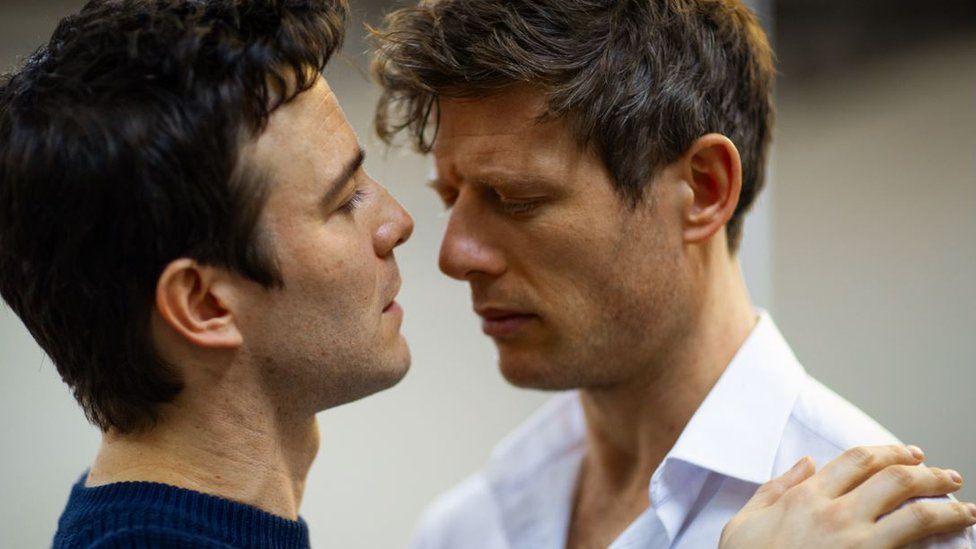
A Little Life promotional image, with James Norton.

It was with some trepidation that I agreed to go and see the play of A Little Life over Easter weekend at the Harold Pinter theatre.

The friend who invited me gave appropriate disclaimers and warnings about the content. This included the fact that the seats she’d managed to get for us would be right on the stage, front row. We would almost be part of the play ourselves.

In the name of being culturally brave I said yes. And in the face of reports of the book’s traumatising effect, which would only be heightened in the play, (plus a lot of nudity – apparently) I decided that it was All Art Anyway, and the best way to approach it was as an opportunity to have a significant life experience. Neither of us had read the book yet, so we committed ourselves to that too. We formed a book club and read the not-so-little, A Little Life. Mainly as an exercise to prepare ourselves for the play.

To my surprise I absolutely devoured the book. In spite of its size, I finished it in a little over two weeks, utterly compelled to keep reading. A Little Life is an irony; for the book is well over 700 pages long, and the story is one of enormous scope. Initially daunted I found myself skipping through the pages at pace, keenly drawn into the world of the book’s main characters; JB, Willem, Malcolm and Jude, as early 20-somethings (the book spans their lifetimes)… their flat-shares, first jobs and friendships. Seeing their lives and the self-sustaining world they are creating for themselves evolve, in a forever-noughties New York. 

The World of New York

Despite the city looming large over the book, there is nothing to anchor this story to any specific time or era as defined by the events of the wider world. These are absent and it’s only through scarce references to phones or emails (or certain expressions they have) that you have any idea as to when exactly this story is set. Even so it all feels very relatable. You can see and feel Hanya Yanagihara’s New York – as timeless as it is, thanks to the visually rich and evocative prose. In some way this insulation from the outside world reflects the insularity of the group’s story and their experience together. It sets the stage for our players. 

The narrative landscape at the outset is broad; it warmly opens windows into the lives of this circle of four young male friends. Their characters, thoughts and relationships evidencing themselves as they talk, socialise, and daydream on trains. On moving to New York, they party together, begin projects, move houses and start new jobs, all four of them firmly on a path towards success. Their lives revolve almost exclusively around each other. We see them all at various times through one another’s eyes; Jean-Baptise (JB) the painter; Willem the actor, Malcolm the architect and… Jude. 

Jude, the mystery. While his three friends are knowable – their backgrounds, ethnicities and demographies as unavoidable as open books, they in turn know nothing of Jude and his origins. It frustrates them more than it concerns them. At one point JB takes this to task saying “…we don’t know what race he is, we don’t know anything about him. Post-sexual, post-racial, post-identity, post-past…”, christening him “The Postman”. This is a postmodernist accuracy, and yet arguably wrong of Jude for whom all these are very present, as we will discover.

Jude. The ambitious and talented lawyer; working first for the US Attorney’s Office and then later ‘selling his soul’ and moving to a prestigious corporate law firm. There he develops, over time, a reputation of being both ruthless and brilliant. As notable as it is; it is not this impressive professional life that comes to matter here, but the emerging shadows and secrets from his past. And the growing dichotomy of the man he is and the man he isn’t. At one point, Harold (his adoptive father) notes that he has never known anyone so bifurcated. It is around Jude whom this story comes to revolve. Initially told from multiple perspectives, the narrative shrinks decisively as the book goes on. In concern for one very central figure, sidelining the others, it focuses its attention on one defining story. That of Jude St Francis.

Early Observers, the Artistic Eye

JB’s attention is an early portent of this. His artistic eye recognises early on the hypnotic centrality of Jude’s character to this group. He holds the role of the group’s observer, capturing and documenting the interactions between his other three friends. The photos he takes, and the paintings he makes from them, are enigmatic and wistful. While featuring his friends, they are insatiably focused on Jude. JB’s lens begins, inevitably, to expose what Jude is desperately trying to hide, much to his chagrin. Despite his ongoing attempts to keep them at bay, the shadows are creeping, and his trauma is seeping through the cracks.

Admittedly, the success these friends experience between them: Top Attorney, Celebrated Artist, A-list Actor and Brilliant Architect is rare to find in any one group alone. And yet, rather than these achievements, it is the shadows in Jude’s past that come to define them all, as it does him. He can never outrun them. Nor does he try to for his own sake, he copes, he manages. He will only attempt it for the sake of others – his best friend, Willem especially. He has imbibed his past so completely that it has become him, and despite so many good people telling him otherwise he cannot help but internalise its messages. That he is worthless and fundamentally flawed beyond redemption. The shame, and his belief that he was somehow complicit in the actions of others towards him, to the point of deserving them, have soaked him through. He is so utterly a victim of his past that he cannot separate himself from it. Not able to find even a millimetre of perspective. Or to see himself and his experiences with a modicum of self-compassion. He is subsumed and it is the trauma within him that holds everyone’s gaze, even though they don’t realise what they are looking at.

His past, we discover, is horrifying. It is relentlessly abusive. And wholly traumatising. You find yourself asking, ‘How could one person be so unlucky?’, ‘How could he attract so much malicious intent from those charged with his care?’ And ‘how could so much abuse happen to one single person’? Jude’s trauma is extreme, and dare I say it, clichéd. Yanagihara has said that Jude came to her fully formed, (and admitted that she didn’t really research his character). His trauma is equal and opposite in its extremity to the love, friendship and success he experiences with the friends around him. ‘How could one person be so fortunate in such dedicated friends?’ It would seem that this more than adequately atones for the pain and trauma in his past, but it doesn’t. Because to him it is still present – in the chronic pain and shame. And in the very identity he has formed. The resultant trauma itself is an ongoing abuse. 

The book has its share of familiar tropes, which makes it feel unreal at times. Yanagihara has commented to say that the extremes were intentional. Because of these it would almost better succeed at being a fairytale or allegory, if allowed. Good versus bad. This idea did help to reconcile what at times could feel so clumsy and far-fetched as to lack any of the nuance of real life.

Fixing Tendencies

Be warned, this story will draw out any tendencies to ‘fix’. It will simultaneously appeal to, and deeply frustrate anyone who likes tidy endings and neat closure, but isn’t that all of us? Whether a problem presents itself in the form of a person or an issue – we want to solve it. But what if it turns out to be a ‘gravity problem’ – a grander, more complex issue beyond our control? This is somehow the nature of Jude’s trauma. In truth it is beyond the experience and control of any of his friends, but somehow they keeping trying to fix it. They’re at risk of becoming enablers – his doctor, Andy, is a case in point. Stretching the boundaries of professional responsibility again and again in the name of loyalty and friendship, in the hope of being the one to offer Jude redemption.

We all long for redemption – it’s key to so many narratives. It’s so expected that sometimes we take it for granted. It is the concluding resolve we expect to hear at the end of a piece of music, or the neat conclusion at the end of a film, or a familiar bedtime story. But A Little Life has no resolution, no redemption – and this anticipation will simply not be satisfied. It is the discordant note hanging in the air. And it’s this that really makes this book get under your skin. It’s shocking and uncomfortable. As is the play – it’s exposing. I’m sure this is part of the reason for its popularity… it can’t help but divide opinion, to get people thinking and talking. Just take a look at the reviews. 

It is so tempting to think ‘If Only’. If only things could be different for the sake of Jude and his friends. If only he could make different choices, if only he could see how much he’s loved, if only he could find something worth living for. But this is not where the story is going, and as much as you try to hold it back, there is a desperate inevitability about the trajectory of Jude’s life. The reader, the viewer – this audience watching Jude’s life unfold, unwittingly find themselves colluding with his friends in their sense of defensive hope.

As much as this is a story about Jude and how his past trauma defines him, it is also about his friends. It emerges through their own stories that there are significant reasons why they are so drawn to Jude. And why they stay. This includes Harold; losing his young son due to a rare genetic condition, he has experienced a loss he has never recovered from. And in Jude he gets to make right the failures he sees in himself and attempt to change what happened. Jude himself becomes increasingly disabled as the book goes on, both because of the chronic pain he experiences and the damage done to his body by a deliberate car accident, as well as an undefined disease he lives with. And then there’s the psychological pain, and the deliberate and brutal self-harm he inflicts on himself as much as a coping mechanism as a way to act out his self-hatred. Harold holds him through all of it, never able to make it go away.

Luke Thompson and James Norton as Willem and Jude in A Little Life.

Willem, Jude’s closest friend, his confidante and later in the book, his partner, grew up with a disabled brother, who also died young. In the absence of his parents (first emotionally absent then physically) he cared for his brother, forging the strongest of bonds with him. Only to be told, tragically whilst he was away at college that he had died. It becomes clear that it was the needs of his brother that had held his family together, and linked him to his parents. Without his brother, he is cut adrift. He partly relives this connection and bond through his friendship with Jude.

We see this most poignantly in Willem and Harold, who remain closely connected to Jude’s main narrative as the book goes on, but there are other figures, always helping, always finding a way. For without the pasts they are trying to correct, there is no story. It’s a double-edged sword, they evidently love Jude and care for him, they rescue him again and again. From himself but also for themselves. He is fulfilling a need in them. How otherwise, could they have the patience or compassion to give so much to him. As he continues to reject their help and advice, while stubbornly refusing to help himself – whether unwilling or unable to do so. And so it is that the codependencies we see in this group were already formed before they met Jude. The pathways were already trodden, through other, earlier experiences that in some way they are all revisiting and attempting to resolve. 

In the end it is JB who has seen it all clearly – observing with the distance and perspective of the artist over many years, producing a vast body of work in the process. And it’s interesting that it is JB who frustrates and challenges Jude the most. He sees through him. And he won’t let Jude be a victim, he won’t pander to him. At times it seems cruel, but in doing so he just might be the one who loves Jude the most. He sees that Jude is complicit in his own suffering. Clinging to his own narratives, his own beliefs and the conclusions he has formed about himself to obscure the truth. The truth that he is valued and loved and redeemable. As a result he remains a victim and prisoner of his past. Never transitioning to become a survivor and overcomer. Either because he won’t or just can’t, and we will never know. This is the greatest tragedy of A Little Life.

Seeing the story living and breathing on the stage added solidity and shading to the characters. Sitting on the stage brought the story to life even more and dispelled some of the extremes of the book. It brought out the subtlety and nuance. These could be real people. All with their own stories, hardships and traumas. It was invigorating to be so close and feel part of it – the action so near you could reach out and touch it. The actors’ skill in portraying these characters was unmistakable. They were captivating – incarnating and inhabiting the characters, and embodying their pain and frustrations. No more than James Norton as Jude, but also Luke Thompson as Willem and Zubin Varla as Harold. While unfortunately more peripheral, but no less present; Omari Douglas as JB and Zach Wyatt as Malcolm shone in their roles too, as did the rest of the cast. The staging, and clever touches which included cooking on stage added to the sensory nature of everything happening in front of us. Which ran to the scenes of abuse which couldn’t appear more realistic.

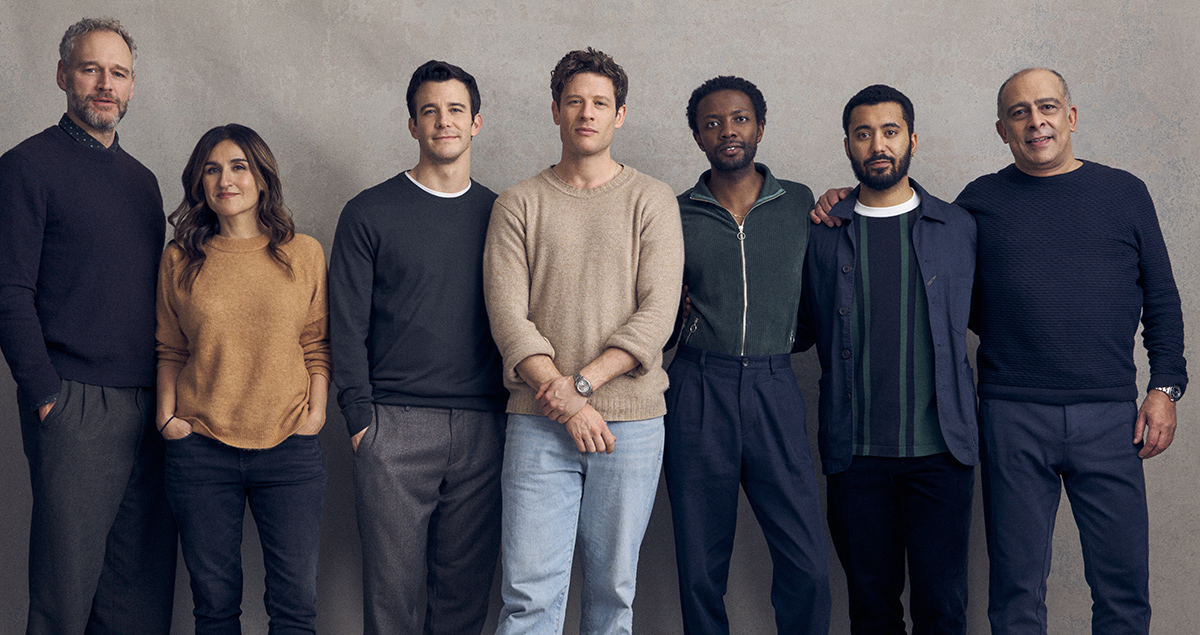
A Little LIfe cast members. L-R Elliot Cowan, Nathalie Armin, Luke Thompson, James Norton, Omari Douglas, Zach Wyatt and Emilio Doorgasingh.

Art and The Viewer

Here was a piece of Art. If treated as such, A Little Life becomes less about the integrity of the narrative and character arcs; or about the wondering Why and If Only. And more about the place and response of the ‘viewer’ in interacting with the story and its themes. Could the book be designed first and foremost to elicit a reaction, to unsettle and to cause the viewer to become uncomfortable, agitating those deeper questions and frustrations? To hold up a mirror.

In this it reminds me of artist, Anish Kapoor’s work. Marsyas, his 2002-2003 Tate Modern installation, monumentalised the disembodied sinews caused by self-flagellation. Stretching out across the huge space of the Turbine Hall, were taut ribbons of red resembling huge pieces of muscle and tissue. You could almost feel it in your body. Later his retrospective at the Royal Academy featuring malleable sculptures of red wax moving through the galleries in negative space, so viscerally representative of blood and tissue. They produced a strong, almost guttural reaction in the viewer. The associations were many and varied. A pellet of red wax fired periodically against a wall – evoked a sense of shock and associations of bodily suffering, war, death, atrocities and pain.

Is this the purpose of A Little Life? Primarily as Art, to evoke such a reaction, so visceral and bodily, to the painful results of a life of trauma that has no resolve, no possible redemption. Being beyond escape it leaves a desolate, empty aftermath where all efforts have counted for nothing. Are we in the place of Jude’s friends as they are reduced to powerless observers? Their good and desperate interventions only ever delaying the inevitable, never stopping it. The hopeless trajectory is set and in the end there is nothing they can do. There is no redemption.

A Little Life at Easter

Seeing the play over Easter weekend highlighted a poignant contrast for me. In the Christian faith Easter Saturday is traditionally the darkest day of all. Jesus lay dead in a tomb, all hope was lost. He had been whipped brutally and repeatedly, the skin ripped from his back. He had been ridiculed and abused, to then be nailed to a cross and left to die, hanging by his hands until his lungs were crushed under the weight of his own body. Crucifixion was reserved for the most despised and maligned in society. Jesus’ followers and disciples had been so full of hope, but they were left standing bereft in the bleak reality of his death – how could this be the end? So desolate, so empty, so pointless. 

In the case of A Little Life, that is the end. It offers us no redemption. And forces us to confront the reality that there are some things that cannot be rescued or redeemed, such is their inevitability. And that is true. It just makes the tragedy of Jude’s life even greater.

By contrast, Easter offers us hope and healing. Easter Sunday marks the day that every seemingly inevitable trajectory towards death and destruction was turned around. Jesus, who had died on the cross, was resurrected to life, transformed and renewed by God’s power. And because of that it fundamentally shifts the end point of our past pain and trauma. And the power it has to rob us of the goodness of life now and in the future. This may surprise you to hear but it was an unavoidable connection for me to make between the play’s conclusion and the good news of the Christian message being celebrated that weekend. 

The irony of Jude’s suffering – which served no ultimate purpose, was so jarring against the passionate death of Jesus. Who chose to suffer and died willingly, giving up his life for our ultimate redemption. Then against the odds, rising again, carrying us with him in his resurrection to renewed life.

© Alexandra Noel – All Rights Reserved 2023

Human Desire: Approach with Wisdom

We all have human desires; some are good, some not-so-good. But they are often unwieldy. Trying to be wise in our approach to them can really help us and benefit those around us. But what is wisdom? Read on below.

Or you listen to the audio – this is a talk is from the ‘Get Wisdom’ series at St Albans, Fulham – a church community seeking to follow Jesus and better understand how to live like him.


What is Desire?

What does the word ‘desire’ mean to you? Desire is definitely a strong feeling. It makes me think of old movies – something about those clinching embraces. To desire something is to want it strongly, ardently. It’s wishing for and hoping for something to happen. It’s a longing and a yearning for something or someone. It’s deep, and it impels us and motivates us to take hold of what we want. It’s often shows us what we’re living for. Desire like that can be really good for us.

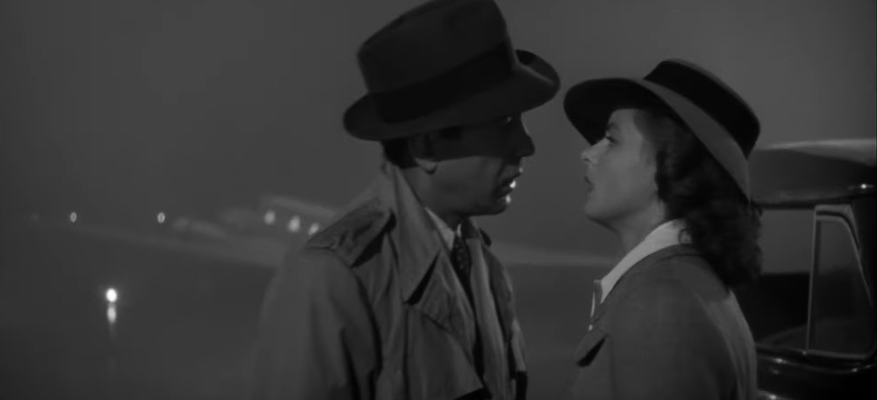
A black and white film still from Casablanca. A man desires a woman: they face either other wearing 1940s hats and clothes looking longingly into each others' eyes.
Film still from ‘Casablanca’ featuring Humphrey Bogart and Ingrid Bergman

But as good as our desires can be, they can also become corrupted or misdirected. Or they can originate from our earthly, sinful natures – our flesh. [Note: In Christian thought our tendency as humans is towards being entirely self-orientated: to the cost of ourselves and others. It is referred to in the Bible as ‘sin’ or our ‘flesh’, earthly not heavenly. These are seemingly out-dated concepts, but can explain how it’s possible to live devoid of higher ideals unless we discover a better, transcendent purpose for our lives and existence.] Rather than a longing or yearning to be fulfilled by God, we harbour desires where instead we crave or lust after something or someone. Wanting to obtain these things and take hold of them for ourselves. And it leads us into sin (which takes us away from God), which is not good for us. We need wisdom to control them.

What Are You living for?  

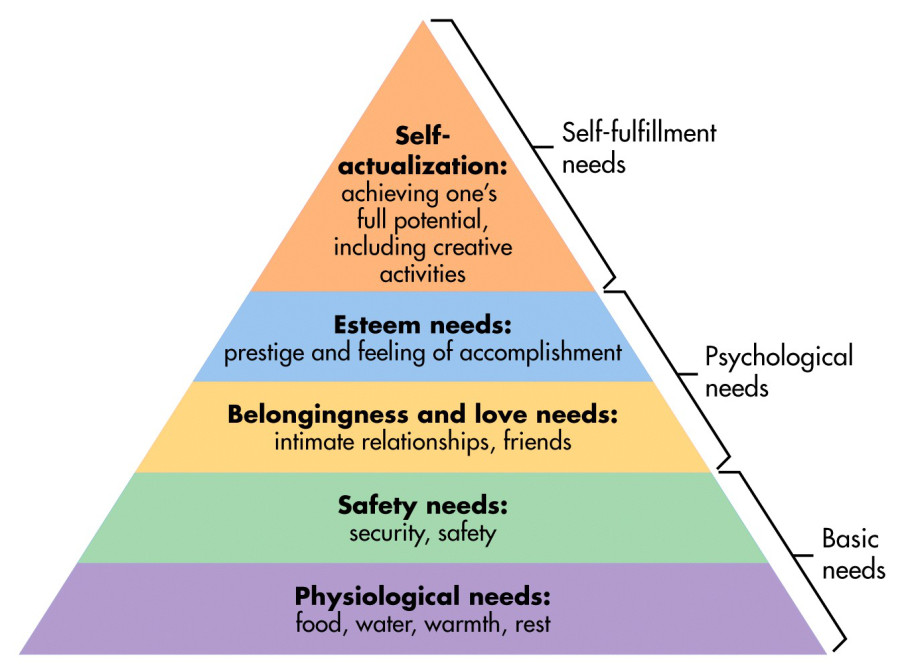
A graphic showing a multi-coloured stratified pyramid. The levels depict Maslow's Hierarchy of Needs. Image credit: the School of Life.

You may be familiar with Maslow’s hierarchy of needs. Abraham Maslow was an American psychologist practising in the mid 20th century. He came up with this idea in psychology called his ‘theory of human motivation’. It explains that people are motivated to meets their needs in a particular order, depicted as a pyramid. You have physiological needs first; food, water, warmth, rest. Then safety and security, belonging and love (friendships and relationships). Then self-esteem, prestige and feelings of accomplishment. And at the top of the pyramid we reach ‘Self-Actualisation’. Where we fulfil our potential, becoming our truest selves. The theory is that we are driven forward in life by this desire to self-actualise.

I’m no psychologist, and I’m not sure that this can be applied universally. But it’s certainly a motivation for many people, especially in our culture. Companies make their marketing and advertising appeals based on this intrinsic desire and motivation. That in buying their product, or ‘doing their thing’, we’ll fulfil our desires. And we’ll affirm or become our truest selves. 

Two Types of Chaos

In school I learnt that entropy is when particles (because they have their own energy) diffuse from high density to low density. From being very close together to being very spread out. That’s how your air freshener spreads through the house. More specifically, entropy is a measure of disorder. It measures the capacity of particles to assume any number of disordered and chaotic possibilities. 

Chaos is one way to describe the nature of sin. Through sin, one type of chaos entered the world. One which is constantly dismantling the good order of the universe [which Christians believe was] created by God. Sin’s chaotic end point is disorder, destruction and death. 

In the beginning God’s good creation started with another type of chaos – the early ‘chaos’ of the cosmos. Like having a great idea and scribbling everything in your head onto a piece of paper, before bringing shape to it.

This creative chaos was symbolised by the ‘waters’. And [in the story of Creation told in Genesis] the Holy Spirit was brooding over them. It was a pregnant chaos, full of divine energy, potential and possibility. The energy of this chaos was driving towards order, not disorder. Growing more organised, gaining clarity, structure, shape and form. It was multiplying for good, and building the good things of God.

But chaos isn’t easy to control, whether constructive or destructive. It has its own energy. And I think it’s similar with our desires, they have their own energy. Our combined desires can be a positive or negative force for our lives, driving us towards God’s good order or towards disorder. But ultimately directing our lives and our futures.

The Heart of the Matter

[The Bible’s] wisdom cautions us: ‘Above all else, guard your heart, for everything you do flows from it’ – Proverbs 4:23

In his autobiography, Surrender, Bono – lead singer of Irish rock band, U2 – describes having life-saving heart surgery. In his words they needed to fix a blister on his aorta and a heart valve gone wrong. Both of which threatened to end his life if not treated quickly. His simple explanation made me think; he says “The aorta is… your lifeline, carrying the blood oxygenated by your lungs and becoming your life”. And what pumps this life around your body? Your heart.

Both Bono and the writer of this proverb show us how critical our hearts are, albeit in different ways. The Message version says to ‘Keep vigilant watch over your heart, that’s where life starts’. In the same ways, our desires originate in our hearts, the centre of our beings. And they become our life. Your very life, eternal – flows out from there. And God places the utmost priority on it.

Our desires – the things we hope for – are meant to be satisfied too, through Jesus. [Note: Christians believe that Jesus is God’s son, who died, and was resurrected by God’s power; overcoming the disorder, destruction and death wrought by sin]. We don’t guard our hearts to lock down our desires, but to curate them, (like precious pieces of art).

Proverbs 13:12 says: ‘Hope deferred makes the heart sick…. Without our hopes and desires being fulfilled our hearts will sicken and suffer, God knows this. This proverb develops the idea further saying, ‘but a longing fulfilled is a tree of life’. 

A tree of life – it calls us back to Genesis. A longing fulfilled is Eden; it’s how things were created to be. And what else is a tree of life? Wisdom is a tree of life. Fulfilled longings, Wise Living – this is God’s original design, and it’s the redeemed heaven and earth – the ‘Kingdom of God’. [Note: this is a way the Bible and Christians describe God’s intended way of life].

‘Hope deferred makes the heart sick, but a longing fulfilled is a tree of life.

Proverb 13:12

Desire Gone Wrong

Desires can go wrong – we can overlay wrong desires onto some very genuine and legitimate needs. We can turn our desires into entitlements. A desire that started as something supple can become rigid and calcified, demanding and lustful. Desires are also subjective, they are different from person to person. And a presenting desire – might actually be driven by a need for something else, like connection, or understanding perhaps.

We’re to exercise wisdom, not foolishness. Although sin plays a significant part in desire-gone-wrong, being foolish isn’t necessarily sin. But the ultimate folly is to allow sin to rule our desires. That’s why we are to guard our hearts so carefully.

Like Adam and Eve, in the abstract, it’s perfectly easy to accept God’s wisdom and guidelines without question. We earnestly pay lip service to it. If we’re Christians, we believe that we believe it! And we want to obey it. But what’s more difficult is when we’re faced with a situation when we know what the wise thing is, but our not-so-good desires get in the way. We can unwittingly entertain evil desires. So that in the moment, rather than making a wise choice, we make a foolish choice.

James 1:14 captures the conflict we find ourselves in ‘…but each person is tempted when they are dragged away by their own evil desire and enticed. Then, after desire has conceived, it gives birth to sin; and sin, when it is full-grown, gives birth to death’. 

He goes on to remind us that when faced with that choice we’re not to be deceived (as Adam and Eve were). God does give us good gifts, to satisfy us and fulfil our longings. He hasn’t suddenly changed, he’s not going to leave us in the lurch. No matter how persuaded we might be. 

Don’t be deceived, my dear brothers and sisters. Every good and perfect gift is from above, coming down from the father of the heavenly lights, who does not change like shifting shadows“.

James 1:16

Foolishness Can FEEL Like Wisdom

There’s another problem here as well.

In Genesis, the enemy threw God’s wisdom into doubt. He twisted it, framing it as something negative that withheld truth and prevented insight. What a snake! He cast aspersions on God’s nature, suggesting: “How can He be generous and giving? No, He’s mean and miserly!” He enticed them: if they ate the fruit of the tree of knowledge, they could be the ones to decide what wisdom looked like, not God. They could be all-knowing, they could be equal to God. They could be gods themselves. He succeeded in convincing Adam and Eve to turn their backs on God’s wisdom and the good order of his creation.

That’s human nature isn’t it? We want to be the ones to decide how we live, we want to determine what’s good for us, and what is wise. The Bible warns us against this: Proverbs 26:12 says ‘Do you see a person wise in their own eyes? There is more hope for a fool than for them’. 

So you might say that to be wise in your own eyes is the most foolish thing of all.

Come With Me to Corinth

New Testament Corinth was a Brave New World. It was a modern capital in the ever-expanding Roman Empire. The Corinthians were certainly ‘wise in their own eyes’. They were full-out living their own wisdom and living it to the max. It was a lifestyle, an art-form even. The attitudes of today, pale in comparison to the Corinthians. Even to people of the time, Corinth was morally off the chart, the word to ‘Corinthianise’ literally means to live a promiscuous life, which gives you an idea of their lifestyles.

Into this context, steps Paul. He arrived to visit the newly formed Corinthian church, and to encourage the believers there. What he found was that for all their human wisdom and sophistication at the time, the Corinthians were being foolish. Paul knew it. One of the major mindsets he confronted was in their sense of self-determination, the right to do what they wanted. Their mantra was “I have the right to do anything”. And though they were exercising a type of freedom, Paul challenges them that the choices they were making were not actually beneficial to them. They weren’t wise. There was more to freedom than a technicality. They were not living in their freedom wisely or well, they were being foolish.

The book cover for Brave New World by Aldous Huxley, with bold graphics and a swirling red design.

He reflects this to them saying: ‘”I have the right to do anything”, you say – but not everything is beneficial. “I have the right to do anything” – but I will not be mastered by anything. You say “Food for the stomach, and the stomach for food, and God will destroy them both”. The body, however is not meant for sexual immorality but for the Lord, and the Lord for the body’. 1 Corinthians 6:12

The new Christians in the church at Corinth hadn’t shaken off the values of the surrounding culture. Underpinning their ‘right to do anything’ was not freedom. They were enslaved to the culture – to individualism. They lived a hedonistic lifestyle, verging on being nihilistic. In Corinth, the believers were living out of step with their professed Hope in Jesus. There was so much more to life and they were in danger of becoming enslaved all over again, this time to their own desires. 

I wonder if into the culture had seeped a pervasive belief; What does it matter what I do with my body if it’s just going to be destroyed? What does it matter if all I really am is firewood? I’ll rather invest in the mind, in ideas, and my body can do whatever it likes.

You see, Corinth had had a chequered past. In 146 BC it had been torched, burned to the ground and laid to waste – its inhabitants either killed or sold as slaves. It was a city destroyed. In 44 BC, desolate, it was colonised by Julius Caesar who rebuilt it to became the capital of the Roman province of Achaia. In a relatively short amount of time Corinth had become a major port, place of trade, and cultural centre – to become a very wealthy city. 

Corinthians and Culture

The culture was shaped by ancient worship of Aphrodite, the greek Goddess of love, beauty, pleasure and procreation. And though Aphrodite’s temple had been destroyed, it was rebuilt in Roman times – its culture of promiscuity along with it. In terms of religion Corinth had gone from pantheism to a fusion, which combined the worship of the twelve Olympians of the Greeks, with the paganism of the Romans. Add to that the fact that Corinth was a melting pot of every culture that the Roman empire had conquered and you have a very heady mix.

Although they venerated intellect and learning in the ancient Greek tradition, alongside this ran a belief that the body was of minimal importance, they reduced it to something carnal and animalistic, whose appetites must be fed. Keep the body’s desires satisfied, well-fed and quiet so we can focus on bigger things. This was considered morally correct as you pursued higher things like knowledge and the teachings of the philosophers. But this was a foolish approach.

This holds up a mirror to our own culture. We tend to say now, “it’s fine as long as it doesn’t hurt anybody”. Parents teach their children this, this is our moral compass in this society. Where the Corinthians said “I have the right to do anything”. We might say “You do you”. We consider there being nothing wrong with this. No harm no foul. But the Bible makes the point that if it’s hurting you, it is a problem. And that includes your eternal soul. You may not be sinning against others but it is foolish to be sinning against yourself. [In the context of the prevailing culture and presenting issues at the time] Paul urged the Corinthians to ‘Flee from sexual immorality. All other sins a person commits are outside the body, but whoever sins sexually, sins against their own body’. And what you’re doing might be technically permitted, it may not be sinful, you may even be doing it with the best of intentions but is it wise in the end?

While the Corinthian believers were continuing to live in light of their culture, Paul was passionate about them living in light of eternity. Jesus was resurrected body, soul and spirit and we are saved, and will be resurrected body, soul, and spirit. God considers the body to be as holy and precious as our eternal souls, which he died for. [In the biblical and hebraic worldview we are one within ourselves,] those parts are indivisible, we are integrated beings. Paul knew that as believers, our context is eternity, and the thing the Jesus prized most highly, dying so we could have it was eternal life. So for the Corinthians to live with the belief that their bodies were nothing more than firewood didn’t align with the awesome reality of resurrection.

Plant Your Flag

A man stands on a mountain rock, holding a red flag.

Mountaineers have a practice of planting a flag to show how high they’ve climbed, and to mark how far they’ve come on the journey. We can think of the Christian life as a journey to the summit of a mountain. And it can feel like a long, arduous journey. The problem with trying to control and manage our desires, with their chaos, is that it gets tiring. Sometimes we just want to set up camp rather than keep going. Here and no further, thank you very much. I’m not prepared for it to cost me any more, I’m not going to give up the chance to have what I desire now. I’m not going any further. 

And so, even though we’re called to reach the summit, we risk settling.

Where would you plant your flag? What are your non-negotiables? When it really comes to it what desires are driving your life? Wanting a relationship, to be married, sex, the fulfilling job, recognition, a big salary, ease, comfort, being right, holding onto that grudge, staying in unforgiveness or self-pity, the excuse of your past failures, getting the last word, that habit. There are many who decide that there are things they just will not give up or lose, they plant their flags on any number of things – some are good, but just at the wrong time, or in the wrong order.

Mark 8:36 says ‘What good is it for someone to gain the whole world, yet forfeit his soul’.

If we recognise any of these things the good news is that Jesus is faithful to forgive us and restore us.

So what’s the solution?

We’re Not Meant to Control Our Desires

You may know C.S Lewis’s book ‘The Great Divorce’. It’s set in a dream which starts in a joyless city, a ‘Grey Town’, where passengers are boarding a bus, before it heads off into the sky. When they get to their destination, they realise they are in a beautiful country. And we discover that they are in fact ghosts. The country is so solid and shining and real that the grass hurts their feet. Many can’t bear it, and in the end almost all of them decide to turn around to go back ‘home’.

Towards the end of the book we meet a character who is caught in indecision. He has a desire to press on, to be all he could truly be, and he is so close. But he can’t enter into this fulfilment without making a choice. He is very attached to a small red lizard that sits on his shoulder, it’s been there a long time. It constantly whispers lustful things into his ear. The man can’t continue onwards if the lizard stays with him, it’s just not possible. The lizard must die. An angel standing opposite him offers to kill the lizard, and there ensues a long conversation back and forth between them about why he doesn’t think it’s a good idea for the angel to kill the lizard, while the angel tries to reason with him. The man just can’t live without it. Eventually the angel persuades him, and though it hurts him it has the most amazing effect. He’s made a wise choice. And something extraordinary happens. The man is transformed into a huge shining, solid person, he’s no longer a ghost – he’s like the people in this beautiful land, and the lizard, thought dead comes to life as a beautiful solid stallion.

Colossians 3:5 says: ‘Put to death, therefore, whatever belongs to your earthly nature: sexual immorality, impurity, lust, evil desires and greed, which is idolatry. Because of these, the wrath of God is coming. You used to walk in these ways, in the life you once lived. But now you must also rid yourselves of all such things as these: anger, rage, malice, slander, and filthy language from your lips. Do not lie to each other, since you have taken off your old self with its practices and put on the new self, which is being renewed in knowledge in the image of its Creator.’

An illustration showing part of the CS Lewis's Great Divorce, where the man with a red lizard on his shoulder encounters an angel. In the background is a silhouette of hills and Jesus on the cross.
Illustration depicting a scene from The Great Divorce.

Wisdom is putting to death whatever belongs to our earthly natures. We can’t control the chaos of our desires, but we can control this choice. We can choose to ‘crucify our flesh,’ and our competing desires. To end the chaos, placing ourselves in God’s redemptive order. Where are you coddling your flesh, rather than crucifying it? 

But we don’t crucify our earthly desires to end up with nothing. We do so, because God wants to give us something far better in place of them. To put them to death is to allow God to resurrect our desires, to rescue them from being the insubstantial versions we thought were so satisfying, utterly transforming them. A stallion just doesn’t compare to a lizard, it’s completely different. Unless we let go of our old selves and take up our new selves, we can’t fulfil our God-given potential.

Flip the pyramid

Returning to Maslow’s hierarchy of needs: Jesus turns this on its head.

He starts with our desire for self-actualisation, and all the ways we pursue that through our desires good and bad. He transforms it, and in turn our potential, ridding us of the chaos caused by sin and competing desires. He re-establishes his good created order in our lives, resurrecting our desires. He fulfils our longings so they become a tree of life, and shows us how to live wisely.

Our salvation through Jesus fulfils our deepest longings and changes the paradigm we’re living in. Jesus prioritises the resurrected, eternal life over everything else. He came to give us life, and life in abundance. We don’t self-actualise through finding ourselves, but through finding Him. And not through holding onto our lives with their desires, but in letting them go, so they can die and be raised to life. It was only by being crucified and dying that Jesus was able to be resurrected to eternal life, and us with him. We become our truest selves. 

And rather than the ever-narrowing pyramid where we’re driven towards self-actualisation, we find that eternal life flows from us and multiplies out exponentially, as we continue to seek first His kingdom and his righteousness. Having been crucified with him, along with our desires, we now radiate out his resurrection life. We are solid, real people. And the picture looks very different from here.

In Conclusion

I’m going to borrow a quote here. Last week I was at an event for founders and entrepreneurs, and the keynote speaker, quoted Jamal Edwards MBE, who was a British music entrepreneur and DJ. He tragically died in 2022 leaving an incredible legacy, having done an incredible amount of good for his community and beyond, inspiring many many people. He said this:

“Set goals so high they demand an entirely different version of you.”

Jamal Edwards MBE

And hearing that while I was working on this talk just made me think. God has such a vision for us and our lives that it demands an entirely different version of us. One that we find when we are crucified with him, and when we let go of our desires, releasing them so he can transform them and us with his resurrection power into something extraordinary. 

That is wisdom.

© Alexandra Noel – All Rights Reserved 2023

Still Waiting For Christmas?

Animated image of Jesus asleep in a manger with Jerusalem in Israel in the background

We might spend all year waiting for Christmas. When Jesus was born on the first ever Christmas, Israel had already waited years for the gift of their Messiah.

Read article below or listen to the audio of the talk (delivered on Christmas morning 2022 at St Albans, Fulham):

I spent part of my childhood in Australia – on the other side of the world, and where currently it is summer not winter. Barbie on the beach anyone? When I was there, there was a children’s TV character called Mr Squiggle. In each show he would draw a picture which started out being totally unrecognisable. You’d wait with great anticipation, guessing ‘Is it a this?’ and ‘is it a that?’. If you were lucky you might guess it, but often it just looked like a jumble of lines. That was until, at the very end he would turn it upside down, and you would realise what the picture was that he had been drawing all along.

Israel was waiting for the picture in front of them to make sense. The Messiah they were longing for, the promised deliverer of Israel, wasn’t forthcoming at all. On top of years and years of division and battles, displacement and oppression, their story was continuing to play out in the worst possible way – Israel was now under occupation by a foreign power. And Israel was longing for a Saviour to come and dramatically overthrow the occupying Romans – gloriously emancipating them from the years of oppression, delivering them to live in their own land again, freely and peacefully. This hope was a nation-state scale hope – they wanted a mighty leader to politically and militarily liberate them – for all to see. Hadn’t Isaiah’s prophecy promised this? Didn’t it say that David’s throne would be restored? All those victories, their heroic warrior King – the glory days of Israel restored again.

But, the fulfilment of this promise was nowhere to be found at this Macro level. Instead: down and down, smaller and smaller, focussing finer and finer into the Micro, something was happening at the cellular level of Israel. Because quietly, anonymously, invisibly… in a hidden corner of the nation a young, inconsequential woman discovered she was pregnant with a microscopic foetus, suspended in secret. In her womb was the Son of God, the Saviour of Israel. The gargantuan hopes of a whole nation, a multitude of people with a long complicated history had not only been turned upside down but completely inverted. Their Saviour hadn’t arrived to dramatic fanfare in public glory, but into secret obscurity and vulnerability, and circumstantially, into shame. 

Not that they knew it at the time but their actual Saviour had arrived. Not as Powerful but powerless, not as Visible but invisible, not as Glorious but as shameful, not as Famous but as obscure, not from Without but from within. They couldn’t imagine this, let alone see it, but their hope for a Saviour was being fulfilled… it was nascent, in the form of an utterly dependent baby.

An animation still showing a sleeping Baby Jesus in a manger under a starry sky, with buildings in the foreground, telling the Christmas story.
The first Christmas: The Birth of Jesus: Luke 1-2 by The Bible Project.

What Israel was imagining its Saviour to be was perhaps a projection on to those ancient prophecies of some very human desires… of greatness and vindication and a grand notion of their identity, of Who they wanted to be, and How they wanted those hopes fulfilled. However, had the promise they were waiting for been fulfilled in the way they were imagining, their saviour would have been born of the same substance as the years of trouble they’d already endured. It’s likely their saviour would have been vainglorious, proud and insufficient to resolve their deepest longings. Disappearing as quickly as he had appeared, failing as quickly as he had succeeded, falling as quickly as he had risen. It’s likely this would have been a fragile, brittle, precarious answer to Israel’s predicament at best.

While the nation of Israel’s hopes for a saviour had grown nebulous and distorted over their years of waiting; their actual Saviour was multiplying and growing with purpose inside that young, pregnant woman. She was being enlarged in quite another way as she waited for Jesus to be born. Not only was her body being physically enlarged by her pregnancy as his life literally multiplied and grew inside her, but her very real sense of expectancy, and joy was increasing every day, along with God’s vision for the life planted within her. Israel’s Saviour would be born of an entirely different substance, of heaven and human humility. 

Because only this could really save Israel… because Israel actually needed saving from themselves. From their pride, rebellion and sinful humanity.  The ultimate answer to Israel’s predicament was the inverse of everything they were imagining. In order to truly deliver them, their Saviour would need to redeem them from the oppression of sin, rescue them from themselves, and transform their lives from within. His kingdom would multiply through surrendered lives, expanding horizons, as light does in the darkness – into all the earth and on into eternity. 

Though unaware, somewhere in Israel, a young woman was patiently waiting, incubating a Saviour, an answer, a solution… for Israel, and for the World. At a time when their own land felt so reduced and shrunken under occupation, and at a time of great distress; in the words of Isaiah, God had in fact, paradoxically ‘enlarged their nation and increased their joy’. He was enlarging Israel, along with Mary, in pregnant expectation. Their joyful expectation increasing while they wait for the time that Jesus is born, to them – when they finally recognise the picture that God has been drawing all along. Waiting for Christmas; the birth of Jesus – the Saviour of the World.

So, what are you waiting for? Waiting is often the incubator for God’s solution to our problems. For our redemption, and for His full answer to our predicament. It’s where our human desires are reckoned with. And it’s where, if we choose to surrender to the process, God refines us and aligns us with his redemptive purpose; enabling us to see what he’s doing. It’s where he enlarges our capacity to hold what he’s giving us and where he maximises the joy we’ll experience when it arrives. So whatever you are waiting for, be encouraged, because as Romans says ‘ …the longer we wait, the larger we become, and the more joyful our expectancy’. 

© Alexandra Noel – All rights reserved. 25th December 2022