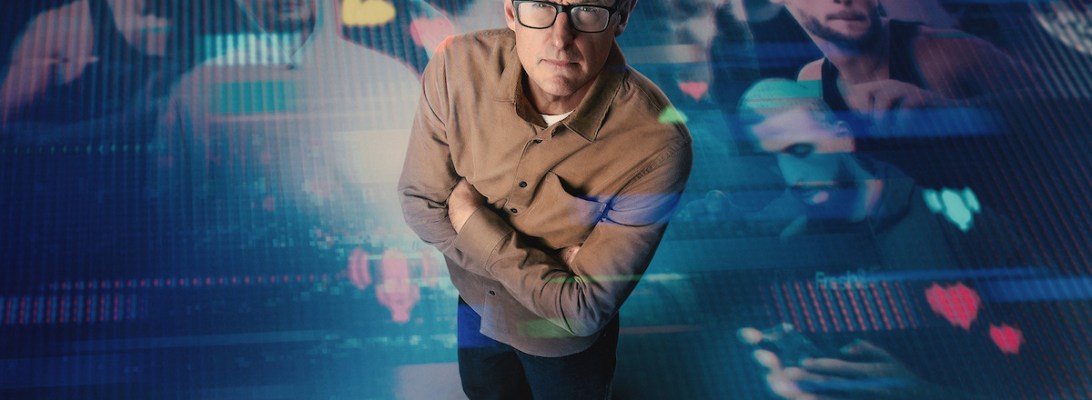
“Louis Theroux’s documentary Inside the Manosphere sheds an uncomfortable light on the male influencers known for disseminating misogynistic content across social media channels, podcasts and websites. Its main proponents include figures like Andrew Tate, as well as a whole host of others who are just as notorious, at least within the Manosphere itself. Drawing heavily on the film The Matrix for its central idea, this inspires the term ‘red-pilled’, which means to wake up to the realities of the world as the Manosphere sees them. Namely, that men are oppressed by women and therefore unable to succeed within this paradigm.” Read more at Woman Alive magazine…
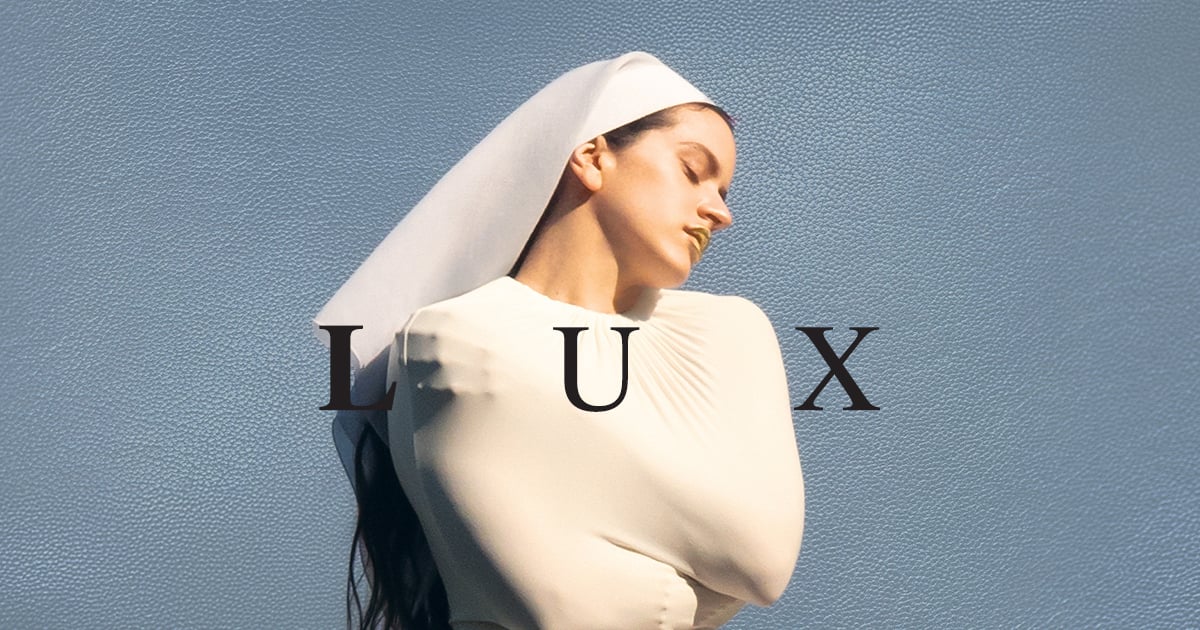
Rosalìa’s new album, LUX, is one to inspire devotion
“If there was ever an album to inspire devotion, it would be LUX by Rosalía. Since its release on November 7th, it has been received to rapturous applause. And not for the reasons you might expect. LUX (which means ‘light’ in Latin) doesn’t tick a set of boxes guaranteed to win over audiences or aim to please an algorithm…” Read more at Woman Alive magazine.
Boyfriends just aren’t cool anymore, says British Vogue
“In a recent viral article for British Vogue; writer Chanté Joseph asked the question; Is it embarrassing to have a boyfriend now? The article has provoked a huge response, both positive and negative, and is basically a meme now. As it continues to spark discussion and debate, it’s fair to say that we are standing in the midst of a cultural moment…” Read more at Woman Alive Magazine.
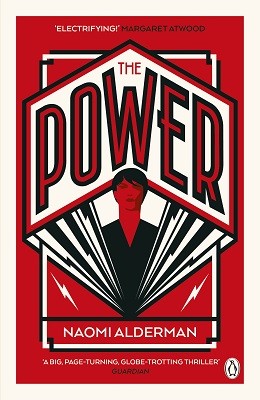
It’s no small coincidence that having devoured every episode so far of Succession’s final season, with its jostling for position and power-games, that I would be in mind for a bit more. As I was scrolling through a myriad of options for Something Great to Watch, I came across The Power. Released on Prime at the end of March, it’s the TV adaptation of Naomi Alderman’s brilliant book of the same name, which I read a few years ago.
Where Succession deals with posturing for control of the Roy family’s patriarchal media empire, The Power charts the complete undoing of patriarchal society as we know it. Set in a dystopian future, this piece of speculative fiction follows the unfolding events of a global crisis, happening in the wake of an unconventional women’s uprising.
The Power on Amazon Prime trailer, starring Toni Collette and John Leguizamo among others
To say that I am excited to watch the TV adaptation is an understatement, and judging from the trailer (above) it looks like pretty compelling viewing. But however faithful it is to the book, by all accounts, The Power really benefits from being read. Not only to experience its characters in more depth, but to properly digest its details and themes. And so as not to miss the challenges and implications of what it explores, despite its unmistakeable entertainment value. Read my thoughts on the book below – warning: some spoilers ahead.
The Story of The Power
I initially dismissed The Power by Naomi Alderman as popular fiction. I thought it was a sort of feminist chick-lit, which I wasn’t particularly interested in (the chick-lit that is, not the feminism). Thankfully, a friend strongly recommended I read it, lending me her book, so I had no excuse.
It turned out to be a great recommendation. As I often gravitate towards books about politics and society, philosophy and spirituality, whether fact or fiction, this was right up my street. Incidentally I also enjoy crime novels and thrillers, sci-fi (within reason) and the classics. (And a good autobiography never goes amiss). I really like dystopian fiction – probably because it draws on so many of these elements, arranging them in such a way that it brings a new perspective on current circumstances.
And I’m a firm believer that any creative work, whether it’s a book, film, art, spoken word or music has the potential to speak into the issues of life and society. In a way that often cuts through the noise and rhetoric, getting straight to the heart of the issue. In this, The Power has already made a significant impact. It was described by one critic as “one of those essential feminist works that terrifies and illuminates, enrages and encourages.”
The story is set in a near future. In the best tradition of dystopian fiction it is a world that is at once foreign and familiar, new and relatable. This, along with Alderman’s writing, helps to make the circumstances and premise of the book oddly plausible. Within the first chapter I’d already accepted its dystopian ‘reality’ without much argument. Women discovering that they have the capacity to generate electricity thanks to a vestigial muscle, an electrical ’skein’ on their collar bones, seemed reasonable enough.
This new ‘power’ is awakened in a sort of adolescent coming-of-age which gives women and girls a new and shocking ability (literally). Once they come to terms with this electrical upgrade in their bodies, they discover its potential as an in-built self-defence mechanism and even a weapon, putting them on a physical par with their male counterparts.
It empowers many to address ingrained fears and imbalances. Suddenly aware of a subtle, second-nature timidity in themselves they have never questioned until now. By learning to harness this new ability they realise they can combat their intimidation and address the oppression they experience from the men and society around them.
The Power interweaves the stories of several female characters in whom this new ability has suddenly awakened. In the book, Alison escapes an abusive home by electrocuting her uncle while he assaults her. She befriends Roxy, the tough-as-nails daughter of a London crime family. Who, in spite of her inner strength and resolve, becomes one of the most vulnerable in this new reality. Margot is a government official who is grasping to maintain her position and tow the party line (while struggling to keep her emergent power under wraps). And her daughter, Jocelyn, is right in the midst of her teenage angst, never mind everything else that’s going on.
There’s also Tunde, a male journalist who follows the ensuing uprising across the globe in the wake of what is coined ‘The Day of the Girls’.
The book isn’t just about how this new-found power impacts relationships with men though. It explores this, but in addition it looks at how this power changes women themselves and how they relate to each other. There’s a religious angle too. One character believes she can channel a deity figure called Mother Eve, inspiring devotion from thousands of women as the antithesis of a patriarchal god. It gives them a new found sense of purpose and calling. Despite this hopeful transcendence, there is a dangerous and sinister side to the origin of this figure. You wonder at its true agenda and how trustworthy it is as it marshals women to become increasingly militant. The transformation of society is near total but unsettlingly it mirrors the characteristics of patriarchy, now in female form.
The Power (And Power Itself)
The Power goes beyond simplistically confirming the potential seen as inherent in women’s feminism. And does more than explore its imagined capacity to overthrow established male power structures. It actually asks some really difficult questions about the nature of power itself.
The chaos that ensues after the ‘Day of the Girls’ is also the book’s challenge. The issue isn’t just about who holds power. It’s not simply about men abusing positions of authority or the patriarchy being at fault. That’s not to say that these systems (and the individuals within them) aren’t capable of doing egregious harm. But the books posits that a total transfer of power from men to women wouldn’t create the easy utopia one might imagine either. It is about the nature of power itself and its ability to corrupt whomever holds it. Along with the systems established to operate it.
For me, the book is a brilliant exercise in challenging perception. It does this by totally upending what we experience in society, and know to be the status quo. The Day of the Girls is no gradual or incremental change towards equality. It is a sudden and overwhelming shift to an opposite, providing the starkest of contrasts. To imagine a world where women hold the utmost power and what kind of society it would create for us is extraordinary to consider. Not least because it highlights how much we continue to accept as normal. And quite how much remains unchallenged in what is essentially still a patriarchy. As a woman, to imagine myself in a situation where I have complete societal superiority and advantage is mind-blowing. Yet also extremely discomforting as I consider all the pitfalls that holding power has. Those which society bears witness to on an almost daily basis.
I found myself asking, ‘What would I do if patriarchy was completely overturned?’ If women were suddenly, by default superior and in charge, by some unearned biological advantage, as the book explores. Could we be just as susceptible to the misuse of power? Just as likely to subjugate and do harm to those who have less or no power at all? It’s a sobering thought. Our human commonality making us all vulnerable to this regardless of gender.
It underlines that any kind of ‘-archy’ (that is, ‘system of governing rule’), regardless of how it is organised and who’s in charge, is open to corruption and abuse of power. The historian and moralist, known as Lord Acton, expressed this opinion in a letter to Bishop Mandell Creighton in 1887. It forms the basis of the well-known proverb:
“Power tends to corrupt, and absolute power corrupts absolutely.
Lord Acton
With this in mind it can seem that creating a genuinely fair and equal society for all is an unachievable utopia. Despite the checks and balances that exist in the constitution and through the law, in parliamentary processes and in democratic procedures, power is always prone to corrupt those who hold it. At large and small scales, and in every sphere.
But there is an alternative to the idea of overturning established power structures, and the corrupting nature of power itself. One which doesn’t end in one group or gender gaining superiority over another. It would take the mechanism designed to overthrow established power and turns it upside down and inside out…
Putting Power Aside
During the recent crowning of King Charles III, (go with me on this) there was a part which seemed like something of an irony. Whatever you may think about the monarchy; at his coronation, the new king made a disarmingly profound statement. He pledged that “I don’t come to be served but to serve”. In doing this, he committed himself to an important principle; that his rule and reign would be underpinned by service to others. This intention means that he doesn’t assume power because of his privilege and position as king. Instead he is responsible to lay these things aside and prioritise serving others. He doesn’t expect people to serve him. The idea is that it’s volitional and reciprocal.
This is inspired by Jesus, and taken from his words in the Bible, something which infused much of the coronation service. Mark 10:41-45 says, “Even the Son of Man [how Jesus often referred to himself] did not come to be served, but to serve, and to give his life as a ransom for many”. By way of explanation: Philippians 2:6-11 says, “Who, being in very nature God, [he] did not consider equality with God something to be used to his own advantage; rather, he made himself nothing by taking the very nature of a servant, being made in human likeness. And being found in appearance as a man, he humbled himself by becoming obedient to death— even death on a cross!”
The determination to put power aside and serve other offers us the ultimate solution. It neutralises the self-interest inherent in the corrupting forces of power, and renders them inert. Instead of power being something lauded over others, grasped or wielded, it becomes a creative medium; something that is generative and multiplying. It makes it a force for the good of others, serving their best interests, enabling them to flourish. By adopting this approach to power we’re not assuming or jostling for position, because it removes the need for competition and one-upmanship. There is nothing to overthrow or invert because no-one is claiming power as their own in the first place. And I wonder what that world would look like.
Remember that break-up letter you wrote (or thought of writing) but never sent – which served as catharsis and closure, more than as a means of communication? After that bad relationship ended (badly) which you knew you never should have been in.
And remember that feeling you had deep down, that told you so clearly that something wasn’t right, but you couldn’t quite prove it. Literally it ‘told you so’.
All the things you wish you could have said with calm certainty at the time but couldn’t. Well, here’s how that might go…
Dear Ex,
I’ve seriously wondered whether I should write to you, but I’ve decided it’s important to bring things to light. I’ve realised that I was intuitively aware at the end of our relationship, and with increasing clarity since we broke up; that you had been seeing other women while we were still together. Obviously I can’t know the details without you telling me but my guess is that it started in early December and culminated with our break up. I was highly conscious that the dynamic between us was changing during December and that things increasingly didn’t add up. Then the energy and connection suddenly disappeared in early January, of course this was because you had rejected me and become involved with someone else or were in a new relationship – before we had officially broken up.
As part of exploring a relationship and dating I thought I had been completely honest and upfront about communicating my values and expectations. While you did indicate your own approach, I didn’t receive the same level of openness from you. We always seemed to find communication difficult, and we often got caught in a cycle of talking about our opposing perspectives, with no resolution; rather than being able to openly establish if we were compatible and a relationship was viable. In hindsight it now seems like this was a smokescreen to avoid dealing with any sensible talk and exploration of compatibility and commitment.
You turned on me after Christmas, pushing me away, provoking me in order to force a break up and then finally using the argument we had where I laid reality for us on the table, against me. You blamed me for your withdrawal of affection, using me as a scapegoat – rather than taking any responsibility for yourself. In the few weeks that followed you used your new involvement/relationship to taunt me and deliberately wound me – you wanted me to know that I had been replaced. I not only found this incredibly devious, but also cruel. I never meant you any harm, and in fact against my better judgment I chose to think the best of you right up to the end. I now realise that this was a big mistake.
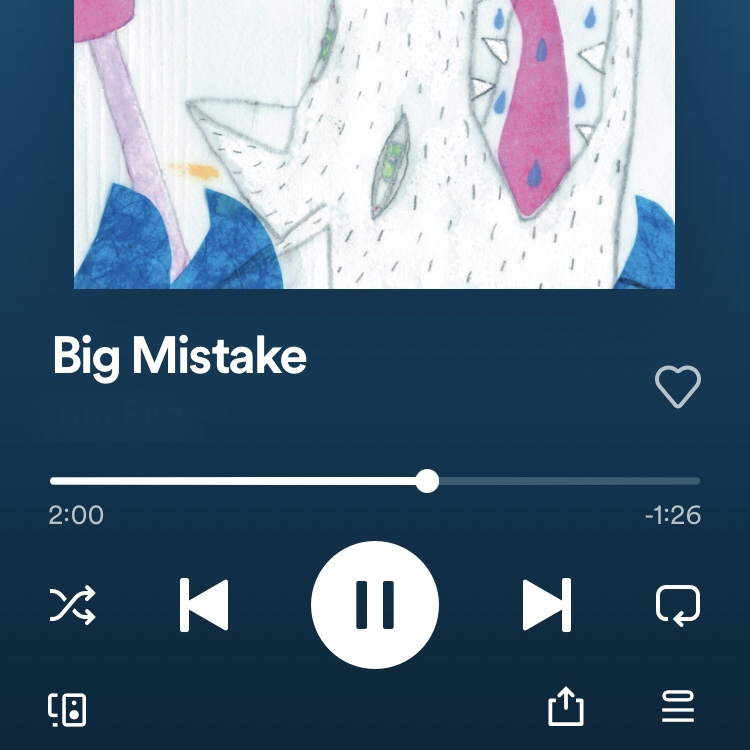
Spotify artwork (edited by author) for ‘Big Mistake’ by Tim Fite.
We were probably both aware that a relationship between us wasn’t going anywhere, and that as well as having little in common, we also had very different values and perspectives on life and relationships. With this in mind I find it even more difficult to understand why you didn’t simply end things when you realised it wasn’t going anywhere for you and had begun to explore other options. For my part, although I was still hopeful something might change, I could have acted sooner to end things. I just had so much on my plate with a new job, moving house etc that I couldn’t really face a break up as well until the new year.
However, all this would have been nothing compared to the sting in the tail that it was to realise with absolute clarity that you had cheated on me, had overlapped me. The fact that things weren’t going well anyway doesn’t serve as an adequate excuse and although this might be normal for you, I see it as cowardly to end a relationship in this way; it goes against basic human decency, maturity and respect. It was deeply hurtful.
I hope that in future you can find it in yourself to treat the women you date, and break up with, better. But I also want you to know that despite the pain you have caused me and the lack of closure it produced, I forgive you, and in all sincerity I hope you find what you’re looking for, and can be happy. Given all this, friendship isn’t an option, so I respectfully ask that you don’t contact me again, unless it is to apologise.



 Alex Noel