“That absence makes the heart grow fonder is arguably as true for love, as it is for music. Think of that song – the one that defined a particular era of life: hearing it again can stop you in your tracks. The same is true for a favourite artist or band; whose album you listened to on repeat, imbibing every phrase and refrain. When they finally release new music or go on tour again; our heart-fluttering excitement tells us how much we have missed them, how truly we love them.” Read more at Seen & Unseen.
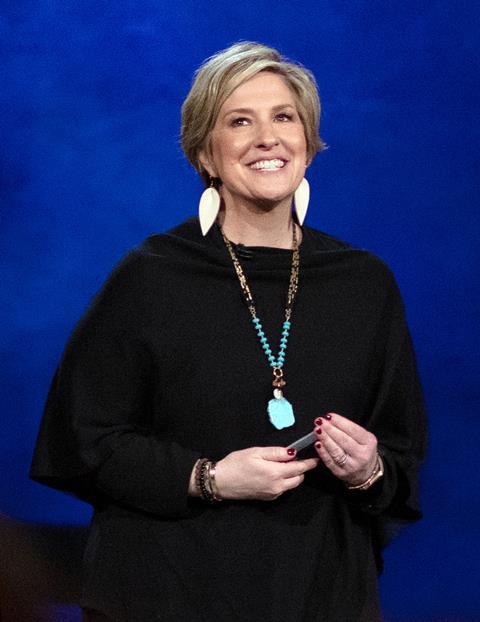
“Interviewed recently on Steven Bartlett’s podcast The Diary of a CEO, Brené Brown (his most requested guest ever) reflected that, of all her books, Braving the Wilderness was “the only prophetic book that I think I’ve ever written”…” Read more at Woman Alive magazine.
Rosalìa’s new album, LUX, is one to inspire devotion
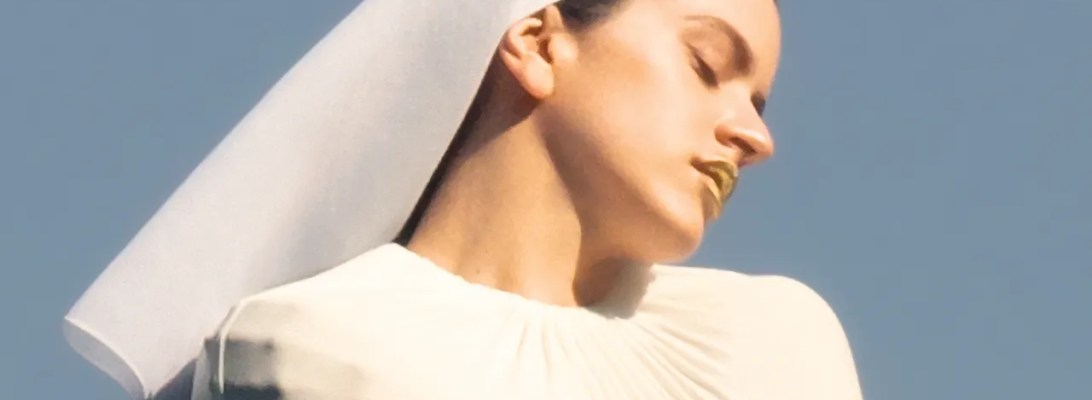
“If there was ever an album to inspire devotion, it would be LUX by Rosalía. Since its release on November 7th, it has been received to rapturous applause. And not for the reasons you might expect. LUX (which means ‘light’ in Latin) doesn’t tick a set of boxes guaranteed to win over audiences or aim to please an algorithm…” Read more at Woman Alive magazine.
Boyfriends just aren’t cool anymore, says British Vogue
“In a recent viral article for British Vogue; writer Chanté Joseph asked the question; Is it embarrassing to have a boyfriend now? The article has provoked a huge response, both positive and negative, and is basically a meme now. As it continues to spark discussion and debate, it’s fair to say that we are standing in the midst of a cultural moment…” Read more at Woman Alive Magazine.
‘Nobody wants to organise a funeral’ – interview with Ali Gillum
“Tavola is the Italian word for table. It is around this – with all that it represents – that Ali Gillum has built her business, Tavola Events. Through it she ‘sets a table’ for clients who want to celebrate the joyous moments and milestones of life, and now increasingly for those going through the heartache of death.” Read more at Woman Alive Magazine…
Stepping out in faith and taking August off as a freelancer changed everything
“This year I decided to take the whole of August off. It’s something I’ve never done before as a working adult, thinking it the preserve of wealthy company executives, or continental Europeans (a longstanding tradition in France, Spain and Italy especially). But definitely not for me.” Read more at Woman Alive Magazine…
How to build resilience and really flourish – interview with Valorie Burton
“Valorie’s new book shares ways to build resilience to counteract the stressors and challenges that come with adversity: “[but] it’s also needed when we’re dealing with opportunity and positive things that happen, because change requires resilience [too]”.” Read more at Woman Alive Magazine…
Jesus and the Samaritan woman break all the rules for a glass of water
Listen to the talk here – recorded 18th May (NB moderate audio quality), or read below:
In John 4, Jesus is travelling through Samaria and encounters a Samaritan woman at an ancient well. Breaking all the rules to strike up a conversation, he then offers a gift she can’t turn down.
Setting the scene
John 4:1-6 describes how Jesus is travelling from Judea to the south of Samaria (which includes places like Hebron, Bethlehem and Jerusalem), to Galilee with its sea, and cities like Tiberius to the north. Samaria is not a place where Jewish people typically travelled. But the passage is simple and clear, “Now he had to go through Samaria”. So while many Jews would circumnavigate Samaria and take a longer route by the main roads (which would mean a significant diversion), Jesus simply had to go through it. We know that he was going to Galilee, and evidently by the shortest possible route – which was through Samaria. We also know that he was under pressure from the Pharisees who’d noticed that he was overtaking John [the Baptist] and therefore becoming a person of interest and possibly a threat. Time was of the essence, and conflict with the religious authorities wasn’t on the menu at that point. So let’s call this a tactical manoeuvre.
The next part of the story unfolds in John 4: 7-15:
“When a Samaritan woman came to draw water, Jesus said to her, ‘Will you give me a drink?’ (His disciples had gone into the town to buy food.) The Samaritan woman said to him, ‘You are a Jew and I am a Samaritan woman. How can you ask me for a drink?’ (For Jews do not associate with Samaritans.) Jesus answered her, ‘If you knew the gift of God and who it is that asks you for a drink, you would have asked him and he would have given you living water.’ ‘Sir,’ the woman said, ‘you have nothing to draw with and the well is deep. Where can you get this living water? Are you greater than our father Jacob, who gave us the well and drank from it himself, as did also his sons and his livestock?’ Jesus answered, ‘Everyone who drinks this water will be thirsty again, but whoever drinks the water I give them will never thirst. Indeed, the water I give them will become in them a spring of water welling up to eternal life.’ The woman said to him, ‘Sir, give me this water so that I won’t get thirsty and have to keep coming here to draw water.’”
Why stop there? (breaking social conventions)
Jesus was a rabbi, and therefore a devout Jew. People like him definitely didn’t interact with Samaritans. The Jewish people’s disapproval towards them was well documented and translated into animosity and outright hatred – they didn’t associate with each other at all.
We can see this illustrated in Jesus’ story of the Good Samaritan elsewhere in the gospels. A Jewish man is beaten up by robbers and left on the road, not one of his fellow countrymen, not even righteous and religious men want to stop for him or risk befalling the same fate. Jesus tells this story of a good Samaritan who comes to his aid, which flies in the face of their attitudes towards this people group – a good Samaritan?! It’s an oxymoron. Let alone one who helps a Jewish man, paying for his care and tending to him. Jesus clearly wasn’t swayed or subject to the broader socio-religious-political biases towards Samaritans. And if anything he confronted them.
So Jesus and his disciples cut through Samaria, appearing to give it no thought. Time was short and common sense prevailed. It could cut a week off the journey between Judea and Galilee so that it took just three days instead. Perhaps they also realised that the Pharisees wouldn’t follow them through Samaria itself. And actually, I’d speculate that Jesus could have been traversing Samaria for years. He was raised in Nazareth in the north but his daily life and worship had led him to Jerusalem to the south of Samaria so it’s a route he’d very likely be familiar with already.
For the son of God was there anywhere in Israel that he didn’t feel at home or that was off-limits?
But for Jews generally, Samaria was a place of transit – you were never stopping there, you were only ever (in extremis) passing through it. And otherwise you were going around it. Doing all you could to avoid interacting with the Samaritans. It’s human nature to avoid areas you might feel unsafe – in fact I did this the other night. Taking the long way back to the station via the main roads even though I could have cut through an estate – now that might sound sensible for a woman in London but I have no real evidence to suggest that I would have come to any harm.
Whatever the case, most interesting perhaps is the fact that:
Jesus stopped… in Samaria.
Not only that, he stopped at near Mount Gerizim at Jacob’s Well.
And he’s about to have a full conversation with a Samaritan….a Samaritan Woman.
He had already ignored several rules and social conventions that day, including those that would have led him by a different route. Now he’s sitting by a historic well in the heart of Samaria. So what’s breaking a few more?
An education in identity
It’s noticeable that she is described solely by her ethnicity and gender – the Samaritan Woman. In our climate of identity politics, these sort of identifiers – these boxes we tick, are first and foremost. Still this is a noticeably reductive description of a person – we don’t know her name, but this is highly relevant to this story because of everything that Jesus is transgressing here. He’s breaking all sorts of religious, cultural, historical and social laws here. However, he is in perfect obedience to God.
For us, what might be the equivalent? Think of those cultural norms, conventions, principles of class or gender that might influence or govern our actions or daily decisions. Maybe without even knowing it – telling you what’s appropriate or not, where to go, who to speak to and how, what to buy etc. They might make us socially acceptable to ‘people like us’ but they can tie us up when it comes to the simplicity and immediacy of obeying God.
So when he asks her for a drink, she feels duty bound to highlight this transgression and educate him – remind him – what’s appropriate: “‘You are a Jew and I am a Samaritan woman. How can you ask me for a drink?’ (For Jews do not associate with Samaritans.)” we’re told. Anyone notice that Jesus knows exactly what he’s doing in asking her for a drink. Convention requires that their different traditions are voiced and their differences which govern this are laid on the table.
Schooling the schooled
Should she be schooling a man like this, and a religious Jewish man no less? Is it even her place to do this? But he’s setting her up for it. I find myself wondering about who else is around, who else notices these two, even from afar. It would have been quiet there. Jesus is sending himself further into social impropriety by talking with this woman – a fallen woman – on his own. So to add to the growing list, he’s now transgressing approved sexual and relational conduct too. To anyone witnessing this, or anyone who heard about it he could be seen as yet another man welcoming her advances. But he gives that no mind – thinking nothing of the risk to his reputation or social standing as a rabbi.
And this suddenly becomes a more intimate and vulnerable interaction. It becomes a genuine encounter. What is it about his demeanour that emboldens her? That gives her permission to correct him. Is she just brazen? But he’s not just another Jewish rabbi or religious man. He’s not just another Jewish man. He’s not just another… man. And this is suddenly transformed from all its impropriety into a significant, life-altering moment between two people.
We know this isn’t the only time he confronts these conventions, or breaks them. Elsewhere in the gospels he allows another ‘fallen’ woman to pour out a jar of perfume, worth a year’s wages, weeping and wiping his feet with her hair. Whilst he dines with religious leaders and influential men. Can you imagine?? Even now the wastage, the woman – weeping – and wiping of his bare feet in a formal setting, during dinner, would be shocking, or head turning at least. You can just imagine the people there voicing their disapproval, frowning or scowling or getting up to leave in protest. But he is secure, totally in the moment and most importantly in perfect obedience.
What we often think of as right, and appropriate, and dress up as obedience to God. Is no such thing. Equally what we assume to be inappropriate, uncouth and wrong. Is no such thing before God. And this encounter – along with many others that Jesus had – demonstrates this.
Obey your thirst
There’s lots of visual language here. So let’s visualise this. It’s noon and the sun is high overhead. It’s the heat of the day. You’re squinting against the sunlight, everything looks bleached out. You feel parched and your tongue is sticking to the roof of your mouth. You’re also tired, and heavy limbed having walked since early morning. You need to rest and eat. And you need a long drink to quench your thirst.
Jesus asks the Samaritan woman: “Will you give me a drink?”
She counters him: “‘Sir,’ the woman said, ‘you have nothing to draw with and the well is deep’.”
So, that’s a no. But she’s bound by convention – emphasising the proper way and this is not it. It would have been wrong for a Jew and Samaritan to draw and drink from shared cups or utensils as Samaritans were thought ritually unclean by the Jews. She’s making no concessions on this matter of religious and cultural propriety, even though she’s much more flexible in other areas of her life.
And she hadn’t heard or computed this: “Jesus answered her, ‘If you knew the gift of God and who it is that asks you for a drink, you would have asked him and he would have given you living water.’” He’s reproves her – was there a twinkle in his eye as he says this? Still, she just hasn’t heard him – she doesn’t register what he is saying. Have you ever had a conversation where you’re talking at cross-purposes. The other person simply cannot take in what you’re saying.
The contrast of Jesus’ physical thirst – he is the one in need or so we think – next to the well full of water. While she is denying Jesus a drink – bound by these customs and conventions. In fact, I don’t think she gives Jesus a drink at all in this whole passage. He’s thirsty. But what is thirst exactly? It’s a need, and a desire for water. For something that sustains life itself. If you don’t obey your thirst or hunger at some point, both of which are signalling a genuine need, you would eventually die.
They are like mirrors – she’d denying him physical water to keep customs and conventions, while he is breaking them all to offer her living water.
More than water
This woman is persona non-grata. She is a social outcast and not welcome by the other women in her community. She’s at the Well in the middle of the day, while the women and most of the community would fetch water, wash and clean in the early morning. But she’s not welcome then, or she chooses not to go. In her own life she hasn’t been drinking from her own cistern. Not belonging because she has failed to meet a social standard and code of practice that was expected of her. She’s ostracised. This isn’t just a feeling, it’s a reality and playing out in her social exclusion and isolation.
But she does has plenty of water to drink and something to draw it with (unlike Jesus which she has already pointed out). But actually it’s her whole life that is a dry and parched. She is thirsty but not for water. Her thirst is for belonging, community, for connection, and companionship. She’s thirsty for meaning, resolution, restoration. For relief from her social isolation and loneliness that brings her here in the middle of the day. And for repatriation – legitimacy as an heir of the promises to Israel too. To no longer feel sidelined from the Jewish people as a Samaritan, as she is from her own community. So her thirst cuts across every part of her identity.
And here is Jesus, coming right into her thirst. He stops and sits down in it. Having gone where no one else will travel.
In a recent piece for Woman Alive UK I wrote about chaplains who go into strip clubs. And one of the things I found really amazing when I talked to one of these chaplains in particular; she said to me: “It’s wild that God is so present in strip clubs”. And she said the reason is that God goes whether there’s thirst, or hunger.
Jesus is drawn to the dry and parched lands. He’s drawn to the hungry, and the thirsty. Who knows why he cut through Samaria that day but to me, it’s as if his feet just walked him there. Like my feet sometimes walk me the route I used to take to school. It’s just wired into the son of God to traverse the deserted places and the abandoned places. With the voice of the Holy Spirit his guide.
Heights versus depths
The Samaritans were clinging to their history in this area, and the history of the patriarchs – wanting to worship God on this mountain – (Mount Gerizim) not in Jerusalem where the temple was. It caused a rift – further compounded by their mixed ethnicity which the Jews despised.
But here the Samaritan woman identifies herself alongside Jacob, claiming her birthright. And refuting the prejudice of devout Jews against Samaritans. She claims her patriarchal lineage. She and her people are inheritors and people of Israel too, even while those very people dismiss and disparage them. This well too, on the land Jacob bought for his burial site is an important part of that history.
When Jesus responds to her, telling her that she could ask him for living water, she challenges him, showing her loyalty to her people: “Are you greater than our father Jacob, who gave us the well and drank from it himself, as did also his sons and his livestock?’”
The answer of course is yes – he supersedes Jacob. More than that he has come to meet those ancient longings and to fulfil God’s promises to her ancestors. But not to be deterred or diverted, he stays on topic. He contextualises the good news of who he is and what he offers for her in this setting – everything around him speaking of the spiritual reality that he’s communicating.
Living water
The living water he offers is greater than the water from this Well, given to them to nourish their people and animals for generations but that will always leaving them thirsting for more. Representative of their traditions and the significance of place. He says: “‘Everyone who drinks this water will be thirsty again, but whoever drinks the water I give them will never thirst. Indeed, the water I give them will become in them a spring of water welling up to eternal life.’”
This living water is a refrain in the bible and of Jesus’s ministry – pointed to by the prophets – Isaiah 55:1 “Come to me all how are thirsty, come to the waters” and spoken of in Revelation 21:6: ““To the thirsty I will give water without cost from the spring of the water of life.” And later in John 7, he explains: “‘Let anyone who is thirsty come to me and drink. Whoever believes in me, as Scripture has said, rivers of living water will flow from within them.’ By this he meant the Spirit, whom those who believed in him were later to receive. Up to that time the Spirit had not been given, since Jesus had not yet been glorified.”
Living water, welling up within us to eternal life – the Spirit given to sustain our whole lives saturating and hydrating us. Slaking our thirst better than any glass of water ever could.
And it says something about the nature of the Holy Spirit. Who is a person of the Trinity. But is also often described in elemental – variously a wind, now water. So the Holy Spirit has a substance which is essential for us to live and thrive, elemental in its nature.
While they want to worship God on the mountain and on the heights, God is actually inviting her (and us) to drink from the depths. This water source is deeper than a well. In the words of David: “Deep calls to deep…”
Despite our earnestness and properness, we can be worshipping God in all the wrong ways and all the wrong places. It might be determined by how we’ve been brought up, our conditioning or the way we’ve always done things. By misguided religious practices, by nostalgia or sentimentality even, or by traditions that are insufficient alone to hold the magnitude of what God is doing. Those ‘mountains’, in specific places, religious practices or ways we’ve met with God before aren’t invalid but in the end we can miss Jesus. There he was sitting by Jacobs’ Well, at the base of Mount Gerizim with all of it’s tradition and significance – himself the well of salvation sitting by this ancient well, offering living water. But she didn’t see him: “if you knew the gift of God” he says… until she did. Then it was a moment of the most incredible alignment, foreshadowing the outpouring of the Spirit when it will no longer be contained.
Man-made or eternal?
Lastly, there is a profound difference between a well and a spring. Wells are man-made, they are dug with effort, they are built and constructed by us – people, civilisations and religious institutions, to sustain us. And they do. They contain our [water] source, but we have to keep returning, keep drawing water. As Jesus says to the Samaritan Woman: “‘Everyone who drinks this water will be thirsty again”.
And when we rely on our own identity – well-defended or justified as it may be, or rely on a place, history, tradition, conventions: drawing this water becomes laborious – it ultimately relies on man’s intervention and our own efforts and initiation to sustain us.
However, a spring is natural, effortless – it is self-sustaining: “whoever drinks the water I give them will never thirst. Indeed, the water I give them will become in them a spring of water welling up to eternal life.’ Imagine that. A spring that will well up, sustaining and nourishing us – welling up – producing in us eternal life – bringing our spirits to life, and nourishing our entire lives. Truly living water.
Curated thoughts on the nature of hope and why we will always need it
“And now these three remain: faith, hope and love.” 1 Corinthians 13v13
What’s so special about faith, hope and love and why do they – of all things – remain? It’s intriguing. The surrounding chapters of 1 Corinthians partly answer this in talking about Completion. That when completion comes – when all is resolved at the end of days – faith, hope and love will still be there, even as other things have faded away.
Somehow faith, hope and love materially endure. There’s no sell-by date on them, no need to throw them out – they will always be valid, always be needed. So much so that they will be essential to the ‘completion of all things’ to come.
So faith, hope and love are not ephemeral ideas. They’re real things, that have substance and can be evidenced; for now and the age to come. So with that in mind, let’s consider the second of these three things. Hope.
Hope is an Anchor
Hope and anchors have a long association. I’m sure I’m not the first to have come across a pub called the ‘Hope and Anchor’ and the reason might well be this verse from the Bible.
Hebrews 6v19 says: “We have this hope as an anchor for the soul, firm and secure.”
What’s an anchor like? It’s really weighty – often being made of iron. It’s dropped into the sea, usually on a heavy metal chain or rope, attaching to the boat or ship. The anchor hooks onto the sea bed and stops the boat drifting, making it immovable. Ships without an anchor or anything else to fasten or moor them, are in trouble – if they can’t anchor they’ll drift. In choppy waters or storms especially they could come to harm, smashing up on rocks or against the cliffs. If a boat’s engine dies, or the wind suddenly drops there’s absolutely nothing to hold them fast, leaving the stranded.
And we ourselves have an anchor – which tethers the soul, attaching us to something rock-solid, immutable and immovable.
I’ve often felt God speak to me through ships. When I moved from Bristol – which is a maritime city with a harbour and docks – back to London, it was through ships that God confirmed that I needed to move. My old flatmates even got me a small piratey-style painting – drawn like a sailor’s tattoo which said ‘Homeward Bound’. This was true of our ultimate destination – heaven, as well as my home town of London!
Hebrews 6:19 is one of my favourite verses in the Bible. I had it as the background on my old most-beloved MacBook Pro which I ended up having for 13 years! That’s 13 years of seeing that verse every time I opened my laptop – almost daily.
In this passage God is setting in stone the promise that he made to Abraham: “I will surely bless you and give you many descendants”. He had sworn an oath – swearing it by himself because there is no one higher – imagine that: “When God made his promise to Abraham, since there was no-one greater for him to swear by, he swore by himself, And so after waiting patiently, Abraham received what was promised…People swear by someone greater than themselves and the oath confirms what it said and puts an end to all argument. Because God wanted to make the unchanging nature of his purpose very clear to the heirs [that’s us too] of what was promised…he confirmed it with an oath. God did this so that, by two unchangeable things in which it is impossible for God to lie, we who have fled to take hold of the hope set before us may be greatly encouraged.” Italics mine.
Hebrews 6 goes on to explain that: “[This hope] enters the inner sanctuary behind the curtain where our forerunner Jesus has entered on our behalf. He has become a high priest forever…”
This hope is in Jesus. It is Jesus, who has accomplished all things, and ended the old covenant which required that people made atoning sacrifices for their sin. He became that himself, a once-for-all sacrifice — removing the curtain which separates us from the Holy of Holies where God. And so restoring our relationship with him. This hope anchors us fast, so that we won’t drift. Firm and secure – the confident expectation of eternal life and salvation in Jesus Christ.
I imagine standing just outside the Holy of Holies in the tabernacle, pulling that really heavy curtain aside, feeling the weight of it, never having seen what’s behind it – not knowing what to expect, but still pulling it aside with confidence to find Jesus standing right there and being welcomed in. And of course, when Jesus died on the cross we’re told in the gospels that this very same curtain was torn from top to bottom. Forever ending our separation from God. This cannot be undone.
So this hope is an anchor for our souls.
Song Inspiration – The Anchor by Crowder
Hope is Future-Oriented Faith
I find ‘Hope’ quite difficult to articulate – it’s a feeling but it’s more than a feeling. It’s a sense of wishful thinking but it’s more tangible than that. It’s optimism but that’s insufficient to describe it. It transcends circumstances and yet it’s entirely connected to them. It’s aspirational, it’s the life we dream of – that we long for. But it’s hard to quantify and understand.
A common dictionary definition is that hope is “a feeling of expectation and desire for a particular thing to happen”. But as we’ve already seen Biblical hope by contrast is more than a feeling – it is actual confidence: it’s a sense of certainty that something good will happen.
It’s hard to know where faith ends and hope begins. I had to really do some digging as to why hope is mentioned independently of faith in 1 Corinthians 13:13. Because hope is really similar to faith, but it is distinct from it. A really helpful way to think about it is that, faith is like an umbrella term. It provides the broader context relating to our belief in God, our trust in the person of Jesus and the finished work of the cross; the faith that things exist, or happened or can happen.
While hope is part of this, incorporating many of the things that faith is, it is still separate from it. Uniquely, hope points towards the future. It is future-facing. You could think of it as future-oriented faith. While faith is substantial, hope is directional. And we’d be lost without either. So we can conclude from this, that if ‘these three remain’, future-facing faith (as in hope) is of particular importance to be named alongside the broader context of what faith is. And as part of our existential reality even in eternity, it is an important orientation and posture for us to live by.
Another way to put it is that ‘biblical hope is biblical faith in the future tense’.
Hope is in the Suffering
Hope is an unseen guide as we navigate uncertainty. When all seems lost, it is hope that intervenes; to be rewarded and fulfilled in the realisation of one’s dreams. Equally there will be parts of life where hope isn’t fulfilled – yet.
Proverbs 13:12 says: “Hope deferred makes the heart sick, but a longing fulfilled is a tree of life”. God wants to fulfil our hopes, dreams and desires. And if I have faith, that’s the substance of what I’m hoping for and those things yet unseen. It’s the evidence that they will happen.
Hebrews 11 opens with “Now faith is the substance of things hoped for and the evidence of things not yet seen.” More modern translations put it like this: “Now faith is confidence in what we hope for and assurance about what we do not see. This is what the ancients were commended for.”
And in the midst of terrible suffering, illness, bereavement; or when people have been kidnapped, held hostage, or held prisoner they often talk afterwards of how important hope was to them. For those going through famine or war or any number of dreadful, painful circumstances; hope is all you have often to enable you to keep going. Hope enables us to bear suffering and to persevere through – for the promise of what’s on the other side. And when hope is lost – it’s catastrophic.
We saw amazing scenes at the end of January on International Holocaust Remembrance Day. During the holocaust, hope literally helped to keep people alive. It enabled them to keep going and not give up. In his book, ‘Man’s Search for Meaning‘, psychiatrist and holocaust survivor Victor Frankl observed the necessity of hope during his time as a prisoner in several concentration camps during WW2. He remembers in one camp how much they were hoping – however naively it proved to be (he acknowledges), that they would be home for Christmas, and it would all be over. When it became apparent that this wasn’t the case at all, their hopes were dashed. And seeing no reason at all to continue in the horrendous conditions, all hope was gone. At that point many gave up and died.
Hope is a Choice
Hope is a choice. It can sustain life in the most desperate of circumstances. As Victor Frankl discovered, and one writer commented: “While every external factor may root against you, one single act of internal defiance can counteract it all.” Hope is an act of defiance. Even though it has no bearing on the outcome per se, it is a vital internal shift and an attitude which arms you against things that could otherwise destroy you through despair.
Hope can even save you but it’s based on your disposition, not whether or when it is fulfilled. It could even be called a type of stubbornness. Making the decision to choose hope is powerful.
While hope can literally mean the difference between life and death, it can also affect all sorts of outcomes – recovering from illness or injury, or from losing someone or something, like a job. Hope is dignifying. In Victor Frankl’s own words: “Everything can be taken from a man but one thing: the last of the human freedoms—to choose one’s attitude in any given set of circumstances, to choose one’s own way.”
And though hope is fragile, it is indomitable. There are many who cite hope as a reason they survived through the worst of circumstances. Even a whisper or a glimmer – if there is still the smallest flicker of hope, God will not extinguish it.
Isaiah 42:3 says: “A bruised reed he will not break, a smouldering wick he will not snuff out.”
Emblems of Hope
This poem by Emily Dickinson conveys the fragility of hope – likening it to a bird.
Hope is the Thing with Feathers by Emily Dickinson
Hope is the thing with feathers – That perches in the soul – And sings the tune without the words – And never stops – at all – And sweetest – in the Gale – is heard – And sore must be the storm – That could abash the little Bird That kept so many warm – I’ve heard it in the chillest land – And on the strangest Sea – Yet – never – in Extremity, It asked a crumb – of me.
Birds are known to be symbols of hope: as they fly freely, survive the harshest of conditions and sing as the dawn arrives day by day they signal fresh possibilities, freedom and renewal.
In her book ‘I Know Why the Caged Bird Sings’, Maya Angelou tells the first part of her own story – of growing up in an abusive home, how she was raped at a very young age and how the trauma caused her to suffer from selective mutism. But also how she found her voice and sense of agency and freedom to become a recognised writer, speaker and poet. Through that sense of Hope she burst out of the ‘cage’ to find her own voice, liberating herself and inspiring others to do the same. Her poem ‘Caged Bird’ from which the novel takes its name also captures the sense of hope that even a bird in a cage can sing of freedom can inspire others.
Caged Bird by Maya Angelou
A free bird leaps on the back of the wind and floats downstream till the current ends and dips his wing in the orange sun rays and dares to claim the sky.
But a bird that stalks down his narrow cage can seldom see through his wings are clipped and his feet are tied so he opens his throat to sing.
The caged bird sings with a fearful trill of things unknown but longed for still and his tune is heard on the distant hill for the caged bird sings of freedom.
The free bird thinks of another breeze and the trade winds soft through the sighing trees and the fat worms waiting on a dawn bright lawn |and he names the sky his own.
But a caged bird stands on the grave of dreams his shadow shouts on a nightmare scream his wings are clipped and his feet are tied so he opens his throat to sing.
The caged bird sings with a fearful trill of things unknown but longed for still and his tune is heard on the distant hill for the caged bird sings of freedom.
Someone else who became an emblem of hope for others was Corrie Ten Boom, a watchmaker who lived in Haarlem in the Netherlands. When WWII broke out, and Germany invaded; as a Christian, she and her family took God’s word over the word of the occupying forces. They gathered stolen ration cards and hid Jews in their home. When an informant tipped off the Nazis about their work, their home was raided and the family was taken to prison.
In prison they received word via the resistance that “all the watches in your cabinet are safe”. To their great relief, those they had been hiding had been transferred to other locations and were safe.
While imprisoned, she held worship services in the camp she and her family was held in, and shared from a Bible which had been smuggled in. Corrie Ten Boom writes about this experience in her book, ‘The Hiding Place’. She consistently spoke of the hope she had – sharing it with fellow prisoners and with numerous people through her subsequent writing and speaking after the war.
Song Inspiration – Oh Hope by Joshua Luke Smith
Hope is for the Unseen
Hope wouldn’t be hope if it we could see what we were hoping for. This is a really important aspect of what hope is. Hope is contingent on us not having what we are hoping for – yet.
Romans 8v18-35 reveals the power of hope on a cosmic scale, Paul says: “I consider that our present sufferings are not worth comparing with the glory that will be revealed in us. For the creation waits in eager expectation for the children of God to be revealed. For the creation was subjected to frustration, not by its own choice, but by the will of the one who subjected it, in hope that the creation itself will be liberated from its bondage to decay and brought into the freedom and glory of the children of God.
We know that the whole creation has been groaning as in the pains of childbirth right up to the present time. Not only so, but we ourselves, who have the first-fruits of the Spirit, groan inwardly as we wait eagerly for our adoption to sonship, the redemption of our bodies. “For in this hope we were saved. But hope that is seen is no hope at all. Who hopes for what they already have? But if we hope for what we do not yet have, we wait for it patiently.”
Hope itself is a state of anticipation. Still, it can’t be separated from waiting and expectation. It is tied to waiting, and waiting patiently for what is unseen. If you have hope you will wait patiently.
Hope in the Waiting
In the Bible there are several Hebrew words which are used to describe hope, explained in this video from the Bible Project:
Yakhal – to wait for (as Noah waited for the waters to recede to reveal land while he was in the Ark)
Qavar – describes a cord, or a sense of tension while you wait, followed by release.
Elpis – describes living hope – based on Jesus resurrection, we can be reborn.
In the Old Testament, the prophet Hosea chose hope – in a time when there was nothing to be optimistic about. Israel was being oppressed by foreign empires. Like Hosea, choosing hope is part of the prophetic voice that Christians can have in society. Remembering what God had done in the past, to bring his people out of Egypt during the Exodus, Hosea applied it to the future, saying: “God could turn this valley of trouble into a door of hope.” God’s past faithfulness motivated hope for the future. We look forward by looking back – trusting in nothing other than God’s character.
Similarly, Joseph was a man of hope. For him his faith in God, translated into hope for his future. Having been sold into slavery he never gave up hope through the ups and downs, and numerous mistreatments that he suffered. And when God raised him up to be in charge of Egypt, it also had a great purpose. He had so many false starts – possibly the worst was being forgotten in prison, leaving him there even longer until – when the timing was right God had need for him. Genesis is very clear that despite his misfortune: “the Lord was with Joseph”. So hope in the waiting is also recognising that while we may not understand any of what is happening, and why, it is serving a greater purpose. Joseph saved his family, and by extrapolation, the twelves tribes of Israel.
Waiting is exhausting, both physically and emotionally. But this difference with hoping in God is that it renews our strength. And gives us supernatural strength too. It’s counterintuitive. The paradox is, as Isaiah 40: 31 says that as we hope, as we wait: “but those who hope in the Lord will renew their strength. They will soar on wings like eagles; they will run and not grow weary, they will walk and not be faint.”
Hope is in the Planning
Jeremiah 29v11: “I know the plans I have for you, says the Lord. Plans to prosper you and not to harm you, plans to give you a hope [a better life] and a future”.
A plan is a method or strategy for achieving a goal. And here Jeremiah is reassuring Israel that there a plans for a hope and a future. That hope as a tangible thing, is premeditated. It’s planned. The ball is already rolling even if nothing appears to be happening. God has a plan. Think about your last holiday – what plans did you make, to make that holiday a reality? Plans are evidence of a future reality. When you see an architects drawings, a blueprint or a business plan – that’s evidence of the future existence of the thing that you’re creating. It’s like an inheritance. There’s intention. Hope can be imagined, and imagined.
So while it’s fullest realisation exists in the future, it also exists now as the things God has planned. God has planned our future with him. In Jesus death and resurrection – our ultimate hope was planned – it had to be. It wasn’t an accident, or an afterthought that is trying to fix a botched job. It was planned. So if you hope for something, if you have faith for it you can take is as evidence of those things: “now faith is the substance of things hoped for, the evidence of things not yet seen”.
My Hope is in You
Throughout the Psalms there is a refrain: “My hope is in God” and a phrase which urges: “Put your hope in God”. The Psalms talk a lot about hope. And it’s often hope in God. David often encourages himself and others to “put your hope in God” It is for God himself that they are waiting.
Verses of hope from the Psalms
“May your unfailing love be with us, Lord, even as we put our hope in you.” Psalms 33:22
“My integrity and uprightness protect me, because my hope, Lord, is in you.” Psalm 25:21
“But now, Lord, what do I look for? My hope is in you”. Psalm 39:7
“Be strong and take heart, al you who hope in the Lord”. Psalm 31:24
“For you have been my hope, Sovereign Lord, my confidence since my youth”. Psalm 71:5
“As for me, I shall alway have hope; I will praise you more and more”. Psalm 71:14
“Guide me in your truth and teach me, for you are God my saviour, and my hope is in you all day long”. Psalm 25:5
“Why, my soul, are you downcast? Why so disturbed within me? Put your hope in God, for I will yet praise him, my Saviour and my God”. Psalm 43:5
“Blessed are those whose help is in the God of Jacob, whose hope is in the Lord their God”. Psalm 146:3
Living Hope
And so we find that Biblical hope is based on a person. It’s different from optimism, and positive thinking. It’s not focused on circumstances and not based on things getting better.
This brings us to Living Hope – that hope is indeed built on a person, the person of Jesus.
1 Peter 1:3 says: “Praise be to the God and Father of our Lord Jesus Christ! In his great mercy he has given us new birth into a living hope through the resurrection of Jesus Christ from the dead”.
The Resurrection is central to our sense of hope as Christians. The risen Jesus is our ultimate hope through his death on the cross and his resurrection from the dead.
At the end of the day biblical hope, that which remains is established on the finished, settled work of Jesus Christ.
Song Inspiration – Living Hope by Phil Wickham
And Hope Does not Disappoint
Romans 5:4 – “we boast in the hope of the glory of God. Not only so, but we also glory in our sufferings, because we know that suffering produces perseverance; perseverance, character; and character, hope. And hope does not put us to shame [does not disappoint us], because God’s love has been poured out into our hearts through the Holy Spirit, who has been given to us.
Jesus himself suffered on the cross because of hope: “for the joy set before him [he] endured the cross”. Have you ever imagined that Jesus was a man full of hope? Hope enabled him to endure the worst suffering on the cross. In order to become hope itself – for us.
Song Inspiration – Cornerstone by Hillsong Worship


















 Alex Noel