Determining a Creative Practice

In my work as a writer I’ve been going through a phase of trying to identify my PRACTICE. That’s Practice with a capital ‘P’. This is because I’m often not sure whether to call myself a Creative, an Artist, a Writer, or a Journalist. Or all of the above. I operate in all of these modes interchangeably – sometimes at the same time. A couple of people I’ve mentioned this quandary to have countered with “Does it matter what you call yourself?” And they’re right; it doesn’t matter. But then, it matters enough for me to want to know what I am in my own mind. This is about trying to capture my own approach and answer that dreaded question ‘What do you do?’ without fumbling. Because, it feels inherently linked to a process. And instead of feeling assured, my answer is usually a sequence of stilted semi-ramblings because I don’t have a coherent answer.

Perhaps it’s about identity too – a ‘Who Am I’ big life question. The truth is of course, that you can be several things at once. I’m a writer and I’m also an artist – both involve a certain shared perspective – looking at the world from the outside-in. You’re an observer trying to make things make sense; steering a course through a set of fractures and connections. And as you articulate what you see, you are hopefully helping others to articulate things for themselves too. Sometimes I’m writing opinion pieces and sometimes I’m reporting as a journalist, sometimes my writing is expansive and descriptive, sometimes it’s taut and to the point. And most often it is realised through the Media – published in physical magazines and on digital platforms.

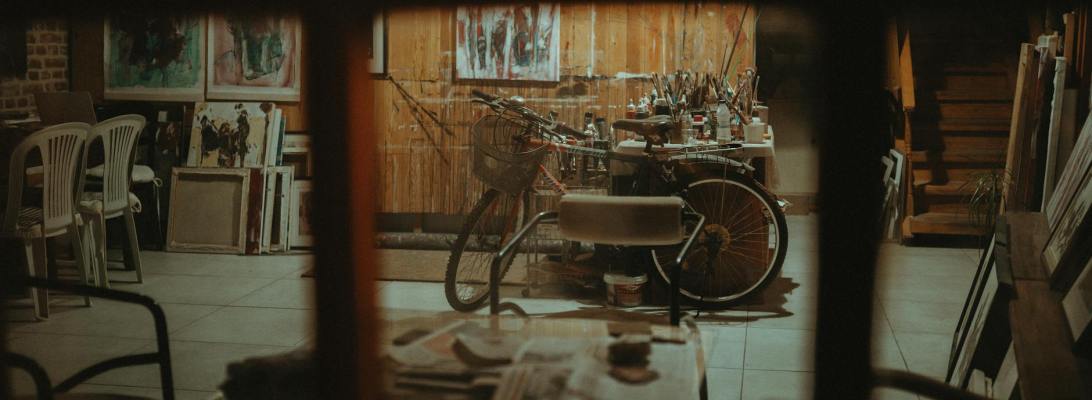
An art studio or workshop with a bike whether creative practice is carried out.
Photo by Berkay Mavral on Pexels.com

It’s easier than ever for people to present themselves as experts, as a recent HBR article on thought-leadership versus ‘thought-doership‘ explores. A few prompts into an LLM, can throw up a suite of expertise to call one’s own – except that ‘this’ expertise was never actually discovered through experience or won through the school of hard knocks. Whether using AI or not to conjure expertise, theories need to work in practice. So we might as well make sure they do. Because if they don’t they’re of little use. And so it is, that in this AI age, having a Practice – the all-important ‘doership’ of putting theory into practice has never been more important. For example, a neat and tidy principle for how to fix the team dynamics at work – however groundbreaking as an idea, might turn out to be a dud in practice, and God-forbid, make things worse. Experience and knowledge straight from ‘the coal face’ will stand out amongst the untested and unsubstantiated advice presented as second-hand theory. The advice people offer from lived experience keeps us grounded too – it’s humbling for someone to have to speak from their own successes and failures, and that is exactly what gives people authenticity. It also underpins any genuine sense of authority. In terms of my writing, I want my words to have had a real physical life before they hit the page. I’m convinced that having a real world, lived Practice is creatively vital and leads to our best work.

At a recent three-day course I attended, I saw firsthand the importance that having a sense of Practice makes in the context of leadership. One speaker amongst several contributors stood out particularly because everything she spoke about was rooted in her own day-to-day on-the-ground experience. And this wasn’t an average role. – Nikki Marfleet had been (until recently) the Governor of one of Britain’s high-security men’s prisons – HMP Woodhill, where violence, drug-issues and safety were everyday challenges. Here the importance of effective leadership was vital for her team and the 800 prisoners in her charge. She had done an art degree (before also studying criminology) and it was both amazing – and a little surprising – to hear how she brought her creativity into her role as a prison Governor. A seemingly simplistic approach but incredibly effective: was to make handmade cards for staff which included personal messages offering encouragement. This could be taken as naive but the result was that it really helped staff to feel seen and valued. And with some more imaginative problem-solving she set out to improve prisoners’ experiences by planting trees in the grounds so that they could see the changing seasons from inside, which helped their mental health. Taking action like this began to give staff and prisoners alike a more positive outlook. It was still a high security prison but in terms of her leadership it was a game-changer, improving the overall wellbeing of staff and prisoners alike.

When writing, ‘Be better, be punk’ I really started to notice how my Creative Practice is developing. The piece had a momentum of its own right from the beginning – as if it was a story that wanted to be written. I kept finding myself, over and again, in the right place at the right time. From the initial idea, to the experiences and interviews along the way and the conversations it sparked with people after it was published – it was a living and breathing entity captured in words on a page. It had its own life. And I felt alive too. I suddenly noticed the things I already do very naturally, and when I feel at my best. It was a signal to me of the wider creative process I was participating in as I ‘made’ the article. Importantly, it relied on my being ‘out there’ and engaging myself – being present and active in the world. And I found that my Practice is very much rooted in these things, which contribute to the wider work of researching and developing the idea – exploring a hunch and being really inquisitive and curious. My Practice felt like I was hosting a wider conversation with every person I met along the way. This threw open new avenues and made me realise that as long as I continue to write I’ll be having an ongoing conversation with the world.

An example of this was at a networking evening: I had written on the sticky label I was given to wear: “My name is: Alex Noel… Talk to me about: Punk Spirituality”. It was far better than inviting people to talk to me about writing, which has never gone particularly well. I would get questions about whether I still even have a job (I do, by the way). It was fascinating to discover how many places Punk has reached into as it has pervaded our culture over the last 50 years. From design principles of ‘punk production’ to Punk’s DIY ethos influencing leadership and coaching, and then further insights into my particular focus for this piece of punk spirituality.
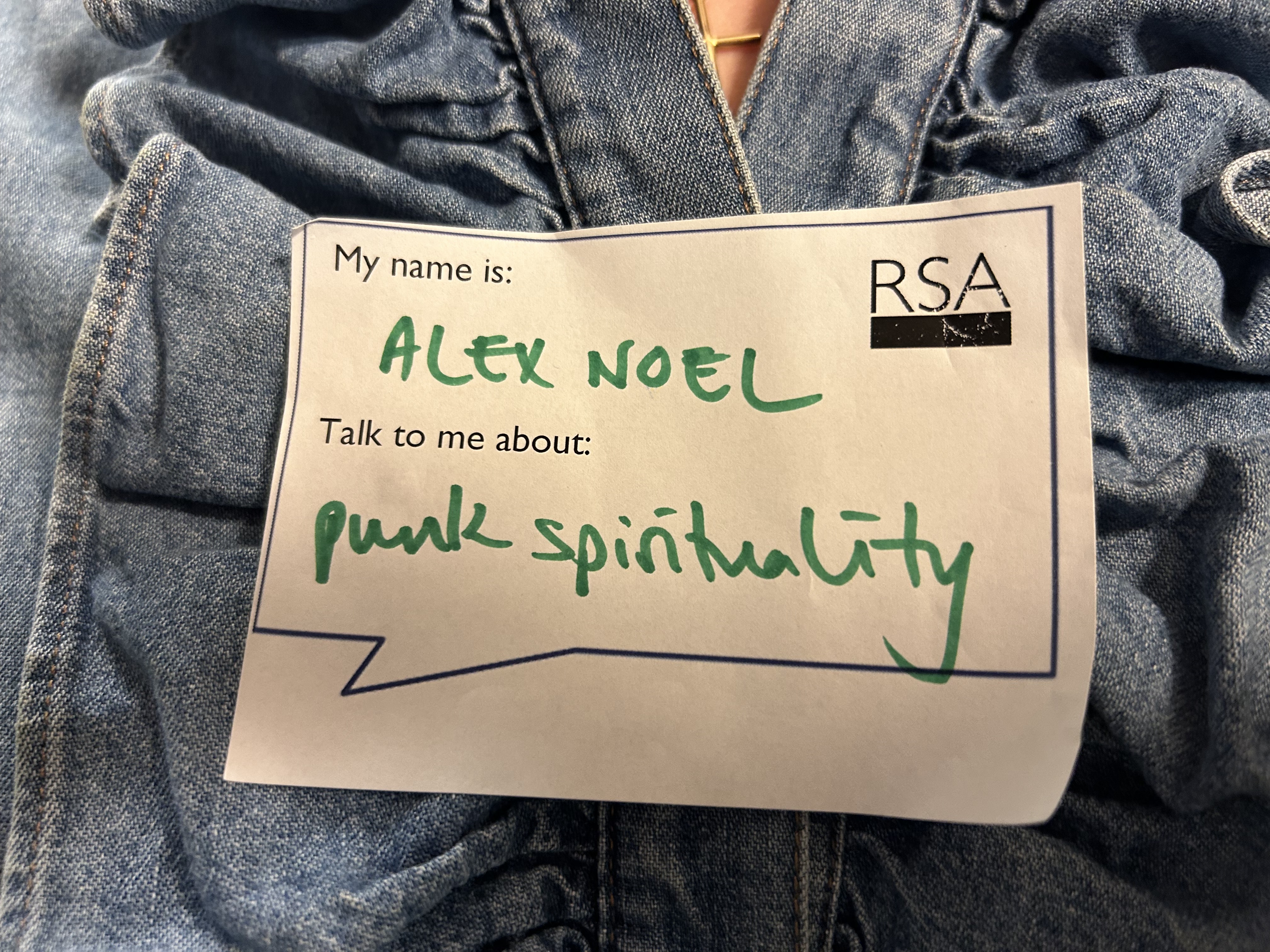
A sticker on a shirt saying: My name is Alex Noel, talk to me about Punk Spirituality. With the RSA (Royal Society of Arts) logo.
Talk to me about punk spirituality, and anything else intriguing!

In that sense, my Creative Practice, is about fieldwork – talking to people, finding out what they think, connecting with them. It becomes a whole dialogue where ideas and points of view can flourish and flow. This is most true in person but I also want it to be true for how I engage online. I think making that shift is really important for engaging well with people. And always remembering that an audience is made up of individuals, each with their own stories and experiences. Recording my experiences diligently is all part of that Practice, whether in note-form, with audio or photography together with other research – it forms part of my ‘field notes’ which has a similar function to an artist’s sketchbook – tracking the evolution of the idea and deciding how best to communicate it. It’s a work in progress but this is what I’m realising as I go.

I would also be lost without having read The Pyjama Myth; The Freelance Writer’s Survival Guide by Sian Meades-Williams. Although I’ve got this far, I have been largely making things up as I go along ever since I launched as a Freelance Writer three years ago, and I felt so seen when I read her book. It was brilliantly practical and no-nonsense. And it was both validating – I was getting some things right – and challenging; I needed to make some changes and upgrades to how I work. 

So this is my Creative Practice, which, as I’ve now come to understand forms ‘the architecture of my creative voice’. The more I lean into it, the more momentum and clarity and opportunities I create. And the more confident I’m becoming – having the framework there, gives me freedom.

© Alexandra Noel 2026. All rights reserved.
My Google Up-skilling Story

as shared with AllBright’s Reignite Programme

I first shared my up-skilling story at an online ‘INSPIRE’ event for the 50 learners on the 2023 Google x AllBright Reignite programme (where I was later to become Course Mentor). The group was working their way through the same Digital Marketing and E-Commerce Google professional certificate that I had completed in late 2022.

At the event I spoke with Ella Vize, then Head of Academy at AllBright. This article captures what I shared.

Tell us about yourself and your up-skilling journey.

My professional background is within creative, marketing and project management; working for corporates, charities, and with entrepreneurs and creative founders. I’d been part of companies’ marketing functions before – both in client services and managing creative teams – so after a career hiatus and lots of soul-searching I had decided that I wanted to go back into marketing. This seemed like a good route without having to completely start again. But this time I wanted to be a practitioner. Once I’d made my decision and started taking action, one thing after another opened up.

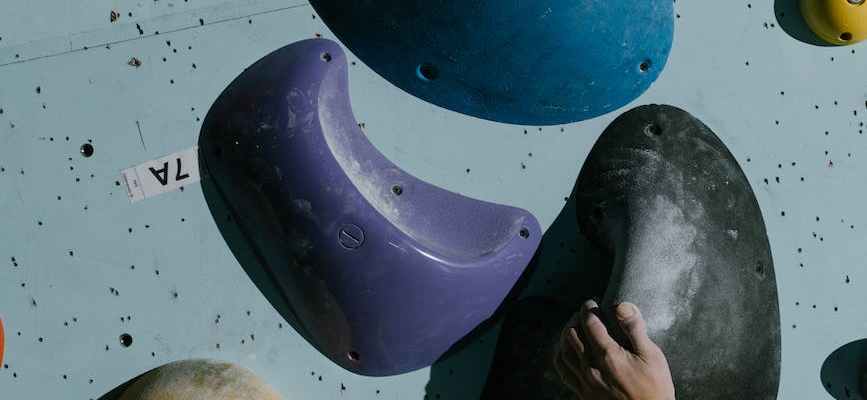
Woman plans her route on a climbing wall.

You had a break in your career prior to undertaking the Google certificate course, can you tell us a bit about your personal experience and career break.

My career break wasn’t exactly by choice. I didn’t decide to go travelling or anything like that. ‘Life’ happened. In mid-2021, just as it seemed we were coming out of the Pandemic, with things opening up and life getting back to normal: both my parents caught Covid. My mum wasn’t as bad but my dad became very very ill. There were multiple complications which meant he had five separate periods in hospital. At the time he was also my Mum’s main helper as she had struggled increasingly with her mobility over the preceding few years. It was definitely a crisis: I shelved any plans I had for my career and turned to looking after my parents. In the end it took about a year for them to get back on track and rehabilitate which I was closely involved in. Now they have a good set up and are doing well.

I realised afterwards that these kind of experiences aren’t divorced from our professional lives. Whether it’s caring for our elderly parents, raising children, or navigating personal challenges; we’re made, as people, ‘in the trenches’ of daily life. It forms character, it forms the ability to fully take responsibility and it forms leadership. Even that phrase we have: ‘taking time out of work to…. [fill in the blank]’ is an inaccuracy. We are far more integrated than that. So the experience you gain in your ‘off’ seasons contributes to your ‘on’ seasons in terms of professional work, and vice versa. It’s all experience – work is work, whether it’s professional (and paid), or not.

How did you come to find the Google certificate course? 

I first came across Google Professional Certificates at a jobs fair. At first glance it looked great but I wasn’t sure there was anything for me specifically. After making my decision to return to marketing I looked again at the courses on offer and to my amazement they’d added Digital Marketing and E-Commerce. It was a no-brainer – exactly what I was looking for at the right time. I had the chance to revisit first principles and to up-skill in things I’d never done before. The Google Professional Certificate in Digital Marketing and E-Commerce enabled me to do both – I completed the course in November 2022.

During the course I learnt so much. The self-paced format meant I could fit it around my schedule and do more whenever I had the chance. I was hungry to get on with it. I was learning a huge amount and reinforcing some really important professional foundations. There were parts where I had more innate knowledge and ability, and parts that were completely new. There were things I loved and breezed through, and areas that were more challenging. Ironically mastering the more difficult sections has served me particularly well. For example the metrics and analytics module was the most intense to get through but now I have it I use this almost on a daily basis and it’s really enjoyable.

I loved hearing the stories of Google professionals – I was so encouraged by the different paths they had taken. So many career trajectories are non-linear and it was both fascinating and encouraging for me to realise that many of those featured, who had found their way into Digital Marketing had done so via a really unusual and interesting route. No one story was typical. I also really enjoyed the energy and encouragement of the trainers. In addition to what I was learning and practising, at that point in my life I really needed a ‘Hype Man’ or ‘Hype Woman’ and they certainly delivered. I started to feel more excited about the future and about the possibilities this would create. It has helped me rebuild my career and get my confidence back.

Indoor female climber decides which route to take similar to upskilling or making a career change.

What has your career journey been like pre and post completing your Google certificate course? 

Before upskilling I was definitely faltering a bit in my career. Even before the Pandemic (which was something in itself to navigate) I’d already lost a bit of direction. I’d had some big successes but I’d also had some major professional setbacks. And I’d tried a couple of avenues since which weren’t getting any ‘traction’. So my confidence had been battered. I was burnt out and beginning to wonder if this was it?

Also, I still hadn’t found a way to reconcile the two different parts of my skillset – being analytical on the one hand and creative on the other. Most of all I needed to acknowledge my creative side which I’d mostly put on the back burner in favour of more ‘sensible’ jobs. The Pandemic presented the opportunity to explore my creativity. And up-skilling in digital marketing has brought everything together. It has united my analytical and creative skillsets which has been one of the biggest game changers.

The course has been integral to my career journey since. I quickly got on with setting up a freelance business which has been a great way to test out my new-found skills. I designed my own website – which has opened up opportunities to do it for other people. I launched as a freelance Digital Marketer and Writer at the beginning of 2023. I started earning immediately; I found clients through my network and have continued working and gaining further experience. It’s been great to have this set of skills which enable me to help solve people’s problems. I’ve had some really interesting clients and projects and been able to incorporate other skills such as my coaching, project management and consultancy. Nothing is wasted.

Has completing the course boosted your confidence in your career and or skills & knowledge?

Yes. It absolutely has. I’ve gained a really holistic sense of confidence. It’s a confidence in my skills and knowledge which only continues to grow the more I do the work. It’s a confidence in my ability to learn and bounce back – there’s a proven sense of resilience there.

A game changer for me was adopting a growth mindset. Rather than feeling stuck I began seeking out more learning opportunities. I realised that one of the most important abilities I had was the ability to learn. This makes me excited for the future and how my career would develop from here – never stop learning.

I also began to shake off some of the negative messaging I’d taken on from the experiences and setbacks I’d had. Rather than believing I was a failure – I was able to reframe this: perhaps things had failed for good reason, and I could use them as a signpost towards new opportunities. I was able to repurpose negative feedback I’d received in a way that meant I could determine what I took on board: only accepting things that would actually be helpful for my growth, and leaving the rest.

Along the way too I learnt that it was important for me not to give myself away and rely on others for validation and approval. Instead I needed this from myself, and from people I really trusted – who I knew had my back. It felt like an important shift in terms of how I built a sense of confidence. I’ve gained a great deal of self-belief and self-confidence in being able to navigate challenging situations, find a way through and come out the other side. I now know I can trust myself to handle whatever comes my way.

© Alexandra Noel – All rights reserved. February 2024

A New Approach to Feedback

The Creative Act: A Way of Being – written by music producer Rick Rubin – is not only beautifully designed but a unique and enlightening perspective on creativity.

Image courtesy of Penguin Press

It was also great to listen to Rick being interviewed on Jay Shetty’s On Purpose podcast. I found it inspiring stuff (also providing me with some useful thoughts for a content strategy I’m working on for a client). During their far-ranging conversation I was really pleased to be reminded of one of the best approaches to FEEDBACK I’ve ever heard.

Enabling you to “play Big”

I first came across this approach reading Tara Mohr‘s brilliant book Playing Big a few years ago. (I love these connections). The advice she gives, which Rick Rubin echoes, is this:

“Feedback doesn’t tell you about yourself. It tells you about the person giving the feedback. In other words, if someone says your work is gorgeous, that just tells you about *their* taste. If you put out a new product and it doesn’t sell at all, that tells you something about what your audience does and doesn’t want. When we look at praise and criticism as information about the people giving it, we tend to get really curious about the feedback, rather than dejected or defensive”.

Tara Mohr

Reframing Feedback

Reframing the purpose of feedback in this way makes ALL the difference. Tara offers further advice (see below) on navigating feedback in this article and in her book.

“1.  REFRAME the feedback:
 The feedback doesn’t tell you any facts about you; it tells you something about the perspective of the person giving the feedback. Reframe the feedback as information about them. What does this tell you about their priorities or preferences?

2.  Is the feedback truly RELEVANT? Women forget to ask this, and instead feel they have to incorporate all feedback. We need to ask: is this feedback essential to incorporate in order to achieve my goals? Those goals might include professional ones (like getting work published) or personal ones (like a loving relationship with family members.) If the feedback is not truly relevant to your aims, you have permission to not attend to it.

3.  REVISE your approach. If your answer to #2 is yes, then you can think about how you can revise your approach to work with/relate to this person more effectively, now that you know more about their needs and perspective. Going back to #1, the feedback isn’t a verdict on how you measure up – it just tells you how to be more impactful in your relationship with them.”

Photo by Annau00eblle Quionquion on Pexels.com

Allowing IT to Serve You

Ultimately feedback needs to serve you. So by getting curious about the person giving the feedback, and taking on board the aspects of their feedback that best serve you, you’re less likely to invest so much weight in their opinions. Effectively you ‘unhook’ from the power that either their praise or criticism might have, and you’re able to determine how best to utilise it.

© Alexandra Noel – All Rights Reserved 2023