The Flimsy of “Wuthering Heights”

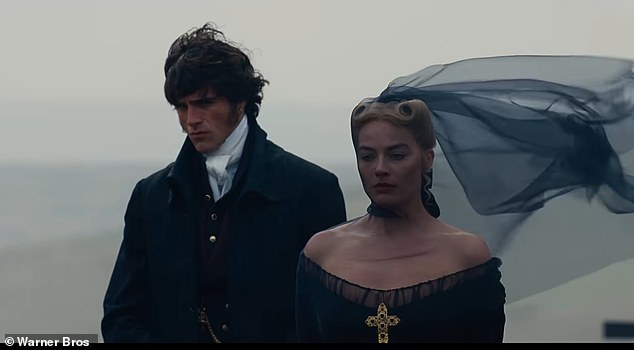
Jacob Elordi and Margot Robbie in Wuthering Heights wearing black in Yorkshire.

All that wind might blow Wuthering Heights away

On a very wet and blustery Sunday afternoon I went to see Emerald Fennell’s “Wuthering Heights”, which opened in UK cinemas on Valentine’s Day. And let me tell you; those quotation marks, insinuating its loose affiliation to the original book, are absolutely necessary. In this article I’m sharing my immediate impressions of the film. There’s at least one more article coming which looks at other aspects in greater depth.

Interpreting the text

Firstly, if you have never read the book, it doesn’t matter – because this film bears little resemblance to it. I had this fact quickly corroborated by the two young women sitting in the audience next to me when I asked them for their opinion. And then later when I reviewed and checked the plot when nothing seemed to… check out. But “Wuthering Heights” is not designed to be an accurate adaptation. It is entirely Fennell’s own interpretation of Emily Brontë’s book. And based – as I can well imagine – on a particular way it made her feel as a young person. So in that respect at least, it is entirely faithful to her experience. She has said in interview that this is the film her 14-year-old self would have made. And honestly, it shows. It is full of nostalgia for the crushes and dreams and whimsy that play like a collection of posters on a teenage girl’s bedroom wall; the excitedness of sleepovers, coming-of-age films and emotive chart songs… and boys.

It is also perhaps the story a 14-year-old would have wanted to read. Instead of its bleak reality which never satisfies Catherine and Heathcliff’s obsessive longing for each other, meaning their love is never consummated – not even close. Fennell’s decision to gratify many-a-reader’s own longing and deliver up the passionate love affair that never actually happened, changes things entirely. In that sense, this film is a total revision of Wuthering Heights, imagining a parallel world for these two unrequited lovers. It’s very Sliding Doors. To help achieve this she has removed certain characters, changed timelines and focused only on Volume 1 of the book. In Fennell’s version, the romance-that-never-happened is now vital and centred, and propelling the characters towards the same star-crossed doom as Romeo and Juliet. And altogether avoiding the novel’s deeper message and significance.

Music montages and big feelings

One of many things I wasn’t expecting was that a large portion of the film would dispense with any meaningful plot development. And be given over to a series of montages – styled in a way that can only be described as ‘1980s music-video’. It’s probably no accident that Charli xcx’s album which accompanies the film is full of synths and breathy, choral sounds – think Enya or T’Pau. Montages aim to cover a lot of storytelling in a short time – but the film relies heavily on these to convey the pair’s desperate desire for each other, as well as its consummation. The music videos of those aforementioned artists, plus the Bangles, Madonna and others (Billy Idol even), offer up the right type of romance thanks to their billowing curtains, countless candles, and studio backlighting – as well as overacting those Big Feelings. In the end, it was beginning to feel a bit like a parody, and the much-lauded eroticism of the sex scenes seemed to fall flat. Frankly it left me cold.

Then there are other moments which, for me, evoke 80s films like The Never Ending Story, itself traumatising a whole generation of children just as much as the Brontë sisters’ work – Jane Eyre anyone? And also The Princess Bride. And of course, Kate Bush is in the mix too. Her own avant garde interpretation of the book gave us her song by the same name. But she too – according to the women I spoke to after watching the film – had mis-sold them on the romance of the book. 

Aesthetics and religious overtones

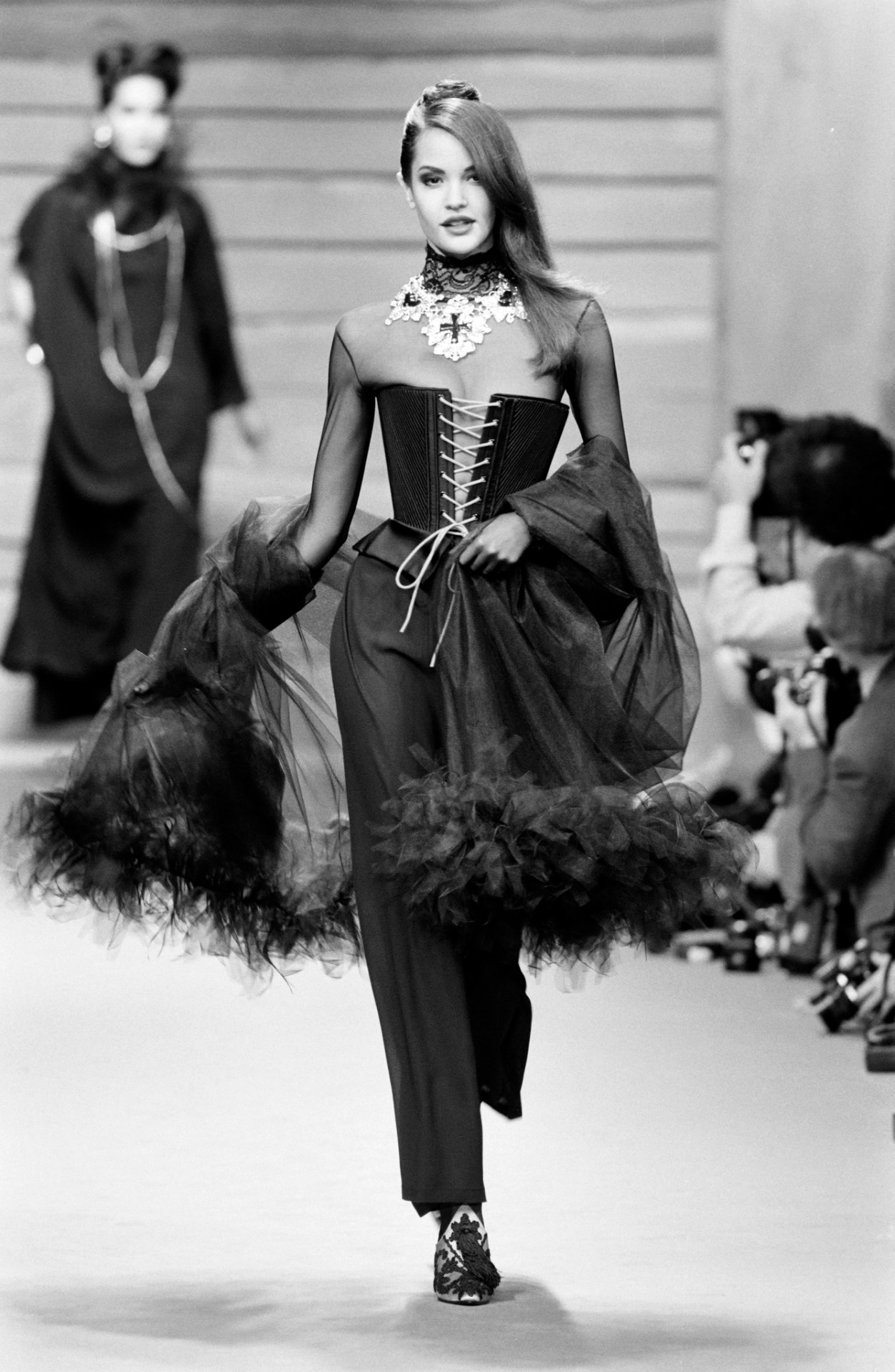
The 1980s seem a good lens to unite the aesthetics, including bright colours, big hair and bigger jewellery, harnessing all the opulence of the era to supercharge the Georgian-Victorian-Edwardian looks worn, especially by Margot Robbie’s Cathy. It’s a hodge-podge of influences but it works. Emblematic of this – and used to great effect – are the crucifixes; a nod perhaps to the book’s religious overtones and Victorian morality which produce the context for some of its bleakest moments, and its most repressed emotions. Her bejewelled cross resembles those worn by Madonna, in white wedding dress, during her Like a Virgin performance at the MTV Video Music Awards in 1984. This use of religious icons rankled the Catholic church, but inspired swathes of adoring teenage fans to adopt her look. It filtered out across the high fashion and music of the decade. Utilised in collections by Christian Lacroix, Chanel and Karl Lagerfeld, its design drew from the Baroque era to make it become synonymous with 80s fashion. Madonna wore Christian Lacroix for Like a Prayer‘s album artwork, shot by Herb Ritts, albeit more muted than his catwalk couture. Nonetheless, it echoes Margot Robbie’s historically-inspired outfits – bodices and all. In terms of costume, it’s to designers like these, and others like Mugler, Alexander McQueen and Vivienne Westwood that Fennell has looked for inspiration, and for many of the high fashion moments she orchestrates, artfully staged in their own right (but jarring with the film overall). Meanwhile, Heathcliff’s outfits simply observe the tradition of Brontë’s time. But the gold-tooth and earring are enough to give him the air of a pirate plundering his treasure.

[Scroll down to keeping reading…]

Madonna in her Like a Prayer era wearing Christian Lacroix for a Herb Ritts photoshoot - for an article by Alex Noel, writer and digital marketer.
A 1980s female model on the catwalk wears an outfit by Christian Lacroix - for an article by Alex Noel, writer and digital marketer.
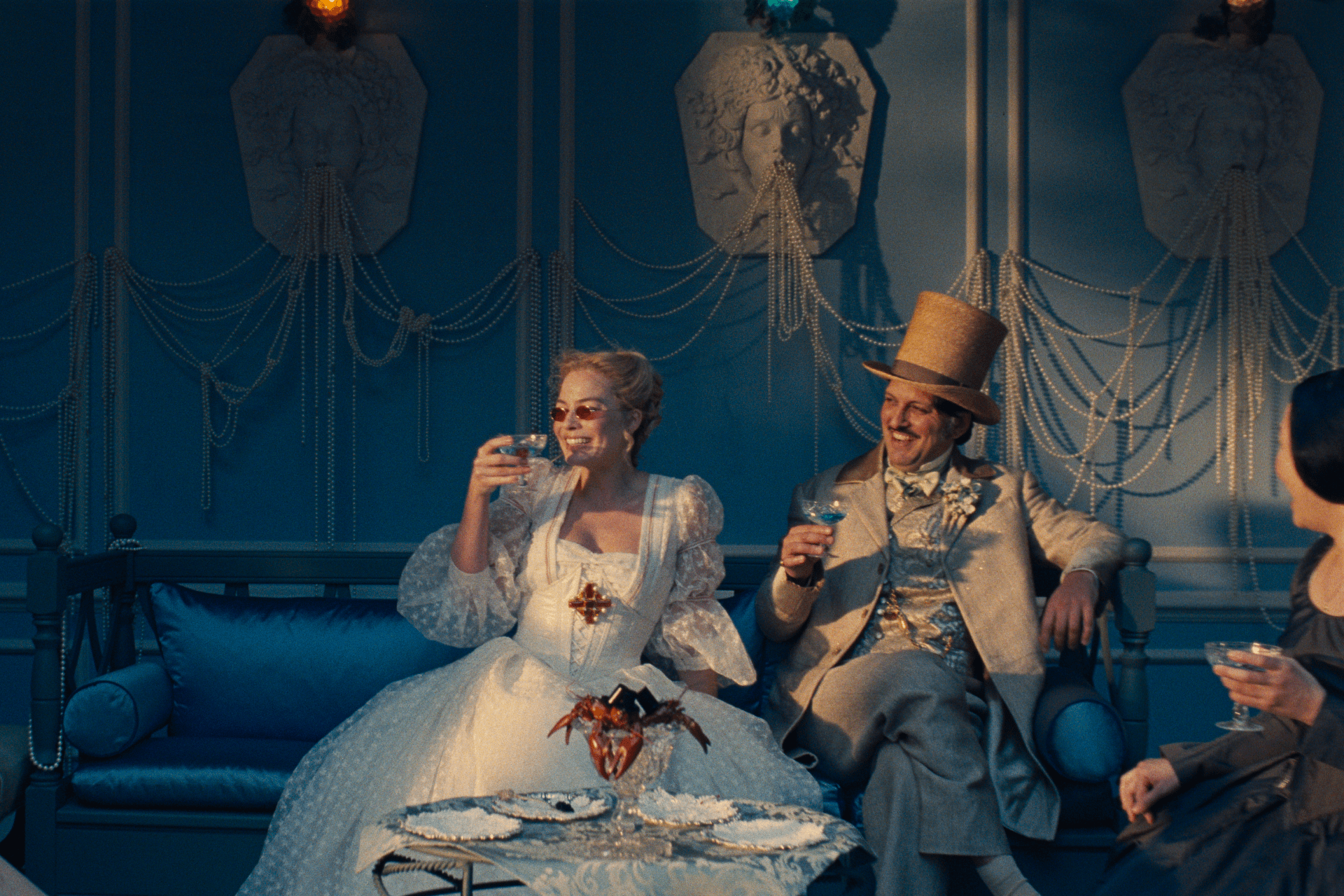
Margot Robbie wears a white dress against a blue background in a still from the film "Wuthering Heights" - for an article by Alex Noel, writer and digital marketer.

Providing further crossover with Robbie’s costumes and appearing at least, to inspire much of life in the Linton household, is the saccharine Victoriana of Tim Burton’s Alice in Wonderland. Even down to several outfits worn by Robbie which remind me of the Queen of Hearts. Cathy more than evokes Helena Bonham-Carter’s spoiled sense of entitlement in the way she treats ‘her’ Heathcliff, whom she proudly named as if he were her pet. And in much the same way that the queen treats her grovelling subjects; Cathy is screaming and petulant when she doesn’t get her way. Meanwhile, the tables at Thrushcross Grange groan under a spread of food in keeping with the boastful excesses of the Victorian era. This is told by one particular shot which slowly zooms in towards Margot Robbie seated at one end, over a banquet of confectionary including towers of sweetmeats, macarons and aspic jellies. It doesn’t miss a beat in calling to mind the Mad Hatters tea party with its exuberant colours, outlandish creations and well, madness.

Cinematic references

In amongst all this is Fennell’s obvious affection for golden-era technicolour romances, even if it does mildly poke fun at them too. Much like the Coen brothers did in their film Hail, Caesar! it sends up the style of the time – overacting and all. In that film a subplot features a group of Marxist writers who kidnap the star of the film whose screenplay they’ve written, in a conspiracy which aims to exploit the studio system. As a result, the Coen brothers critique both capitalism and communism with equal irony. In light of this, it is interesting that there have been several Marxist readings of Wuthering Heights, a candidate for this by being written just as the industrial revolution was firmly taking hold, and noticeably in West Yorkshire where the book is set. Its capitalist goals soon to change forever the agrarian community Emily Brontë writes about. 

Aside from this there are lighter moments of slapstick comedy, in the spirit of Singing in the Rain. Speaking of rain: there is an awful lot of it. As one internet commentator put it: “‘Yorkshire’ in the film looks as though it suffers from permanent monsoon. The Yorkshire tourist board must be thrilled.’’ The production designer, Suzie Davies speaking to Architectural Digest (ArchDigest) on Instagram explains how they built a composite set as “a throwback to those 40s and 50s-type films” where the whole environment was built within a studio. The ‘wet look’ they give much of the set is about more than just the weather (though wind and rain effects were going in nearly every scene, she says). The tiles on the buildings were finished in high gloss: “we wanted the whole environment to feel really wet and sweaty and moist” as if “even the walls were sweating, crying or extruding some kind of bodily fluid.” Which neatly circles back to that bathroom scene in Emerald Fennell’s previous film – Saltburn

This film does seem made more for stage than screen; so much so that I wonder if I can see the sets wobbling, especially at wind-battered Wuthering Heights, which sits in a dramatic high-sided ravine perpetually assaulted by the elements. But I also wonder if Emily Brontë herself saw her characters acting this story out, the book is a little too hyperbolic to only live on the page. But perhaps it was inspired by hyperbolic characters – I’ve heard Lord Byron’s poetry mentioned more than once as a major inspiration for her writing. And whose heroes (‘Byronic’ as they were) would likely have been on her own bedroom wall, had she lived in the 1980s. Nonetheless, under all that gloss, Emerald Fennell’s film still lacks cohesion but it is “Wuthering Heights” after all. And though it is flimsy, it does have its own sense of robustness.

© Alexandra Noel – all rights reserved 2026
A (Not So) Little Life

A Little Life, the book by author Hanya Yanagihara and now the play, directed by Ivo Van Hove, have acquired not a little notoriety. Both are sure to divide opinion and have definitely got people talking.

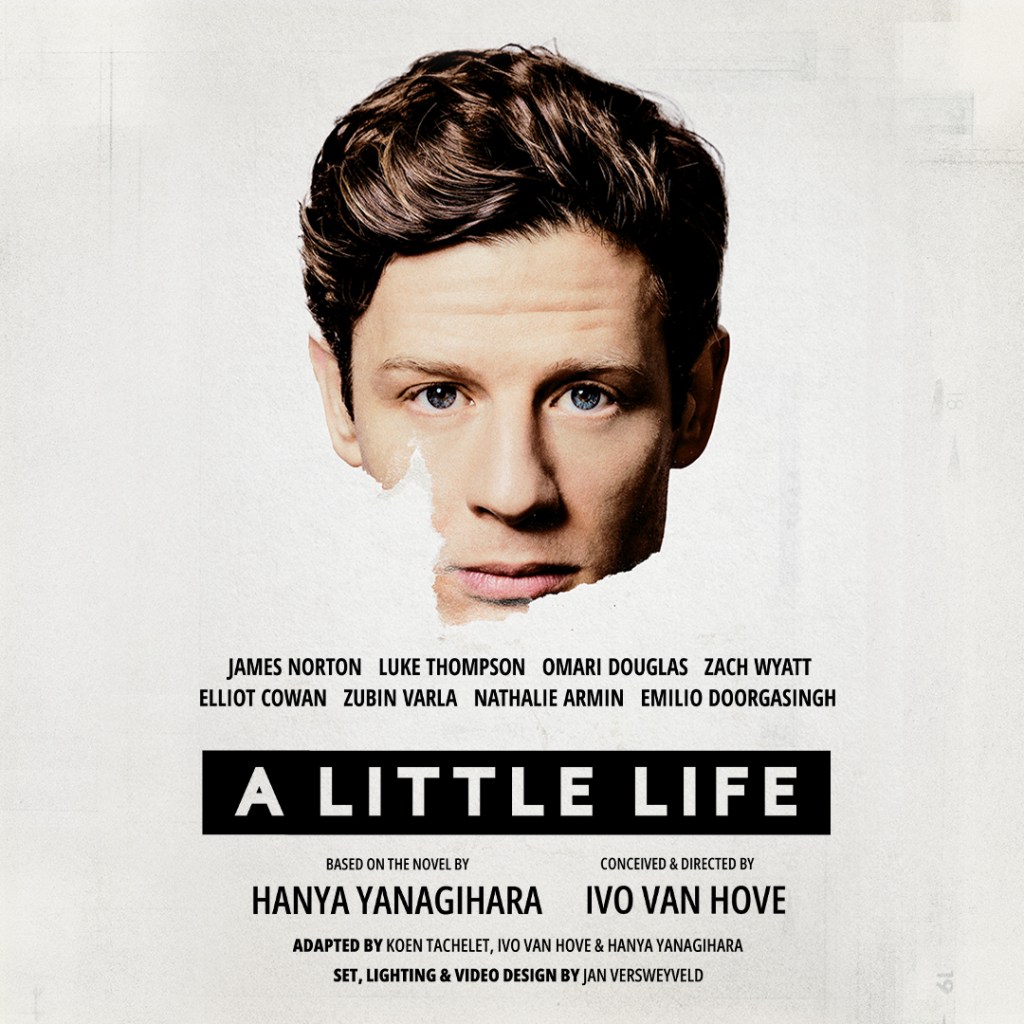
A Little Life promotional image, with James Norton.

It was with some trepidation that I agreed to go and see the play of A Little Life over Easter weekend at the Harold Pinter theatre.

The friend who invited me gave appropriate disclaimers and warnings about the content. This included the fact that the seats she’d managed to get for us would be right on the stage, front row. We would almost be part of the play ourselves.

In the name of being culturally brave I said yes. And in the face of reports of the book’s traumatising effect, which would only be heightened in the play, (plus a lot of nudity – apparently) I decided that it was All Art Anyway, and the best way to approach it was as an opportunity to have a significant life experience. Neither of us had read the book yet, so we committed ourselves to that too. We formed a book club and read the not-so-little, A Little Life. Mainly as an exercise to prepare ourselves for the play.

To my surprise I absolutely devoured the book. In spite of its size, I finished it in a little over two weeks, utterly compelled to keep reading. A Little Life is an irony; for the book is well over 700 pages long, and the story is one of enormous scope. Initially daunted I found myself skipping through the pages at pace, keenly drawn into the world of the book’s main characters; JB, Willem, Malcolm and Jude, as early 20-somethings (the book spans their lifetimes)… their flat-shares, first jobs and friendships. Seeing their lives and the self-sustaining world they are creating for themselves evolve, in a forever-noughties New York. 

The World of New York

Despite the city looming large over the book, there is nothing to anchor this story to any specific time or era as defined by the events of the wider world. These are absent and it’s only through scarce references to phones or emails (or certain expressions they have) that you have any idea as to when exactly this story is set. Even so it all feels very relatable. You can see and feel Hanya Yanagihara’s New York – as timeless as it is, thanks to the visually rich and evocative prose. In some way this insulation from the outside world reflects the insularity of the group’s story and their experience together. It sets the stage for our players. 

The narrative landscape at the outset is broad; it warmly opens windows into the lives of this circle of four young male friends. Their characters, thoughts and relationships evidencing themselves as they talk, socialise, and daydream on trains. On moving to New York, they party together, begin projects, move houses and start new jobs, all four of them firmly on a path towards success. Their lives revolve almost exclusively around each other. We see them all at various times through one another’s eyes; Jean-Baptise (JB) the painter; Willem the actor, Malcolm the architect and… Jude. 

Jude, the mystery. While his three friends are knowable – their backgrounds, ethnicities and demographies as unavoidable as open books, they in turn know nothing of Jude and his origins. It frustrates them more than it concerns them. At one point JB takes this to task saying “…we don’t know what race he is, we don’t know anything about him. Post-sexual, post-racial, post-identity, post-past…”, christening him “The Postman”. This is a postmodernist accuracy, and yet arguably wrong of Jude for whom all these are very present, as we will discover.

Jude. The ambitious and talented lawyer; working first for the US Attorney’s Office and then later ‘selling his soul’ and moving to a prestigious corporate law firm. There he develops, over time, a reputation of being both ruthless and brilliant. As notable as it is; it is not this impressive professional life that comes to matter here, but the emerging shadows and secrets from his past. And the growing dichotomy of the man he is and the man he isn’t. At one point, Harold (his adoptive father) notes that he has never known anyone so bifurcated. It is around Jude whom this story comes to revolve. Initially told from multiple perspectives, the narrative shrinks decisively as the book goes on. In concern for one very central figure, sidelining the others, it focuses its attention on one defining story. That of Jude St Francis.

Early Observers, the Artistic Eye

JB’s attention is an early portent of this. His artistic eye recognises early on the hypnotic centrality of Jude’s character to this group. He holds the role of the group’s observer, capturing and documenting the interactions between his other three friends. The photos he takes, and the paintings he makes from them, are enigmatic and wistful. While featuring his friends, they are insatiably focused on Jude. JB’s lens begins, inevitably, to expose what Jude is desperately trying to hide, much to his chagrin. Despite his ongoing attempts to keep them at bay, the shadows are creeping, and his trauma is seeping through the cracks.

Admittedly, the success these friends experience between them: Top Attorney, Celebrated Artist, A-list Actor and Brilliant Architect is rare to find in any one group alone. And yet, rather than these achievements, it is the shadows in Jude’s past that come to define them all, as it does him. He can never outrun them. Nor does he try to for his own sake, he copes, he manages. He will only attempt it for the sake of others – his best friend, Willem especially. He has imbibed his past so completely that it has become him, and despite so many good people telling him otherwise he cannot help but internalise its messages. That he is worthless and fundamentally flawed beyond redemption. The shame, and his belief that he was somehow complicit in the actions of others towards him, to the point of deserving them, have soaked him through. He is so utterly a victim of his past that he cannot separate himself from it. Not able to find even a millimetre of perspective. Or to see himself and his experiences with a modicum of self-compassion. He is subsumed and it is the trauma within him that holds everyone’s gaze, even though they don’t realise what they are looking at.

His past, we discover, is horrifying. It is relentlessly abusive. And wholly traumatising. You find yourself asking, ‘How could one person be so unlucky?’, ‘How could he attract so much malicious intent from those charged with his care?’ And ‘how could so much abuse happen to one single person’? Jude’s trauma is extreme, and dare I say it, clichéd. Yanagihara has said that Jude came to her fully formed, (and admitted that she didn’t really research his character). His trauma is equal and opposite in its extremity to the love, friendship and success he experiences with the friends around him. ‘How could one person be so fortunate in such dedicated friends?’ It would seem that this more than adequately atones for the pain and trauma in his past, but it doesn’t. Because to him it is still present – in the chronic pain and shame. And in the very identity he has formed. The resultant trauma itself is an ongoing abuse. 

The book has its share of familiar tropes, which makes it feel unreal at times. Yanagihara has commented to say that the extremes were intentional. Because of these it would almost better succeed at being a fairytale or allegory, if allowed. Good versus bad. This idea did help to reconcile what at times could feel so clumsy and far-fetched as to lack any of the nuance of real life.

Fixing Tendencies

Be warned, this story will draw out any tendencies to ‘fix’. It will simultaneously appeal to, and deeply frustrate anyone who likes tidy endings and neat closure, but isn’t that all of us? Whether a problem presents itself in the form of a person or an issue – we want to solve it. But what if it turns out to be a ‘gravity problem’ – a grander, more complex issue beyond our control? This is somehow the nature of Jude’s trauma. In truth it is beyond the experience and control of any of his friends, but somehow they keeping trying to fix it. They’re at risk of becoming enablers – his doctor, Andy, is a case in point. Stretching the boundaries of professional responsibility again and again in the name of loyalty and friendship, in the hope of being the one to offer Jude redemption.

We all long for redemption – it’s key to so many narratives. It’s so expected that sometimes we take it for granted. It is the concluding resolve we expect to hear at the end of a piece of music, or the neat conclusion at the end of a film, or a familiar bedtime story. But A Little Life has no resolution, no redemption – and this anticipation will simply not be satisfied. It is the discordant note hanging in the air. And it’s this that really makes this book get under your skin. It’s shocking and uncomfortable. As is the play – it’s exposing. I’m sure this is part of the reason for its popularity… it can’t help but divide opinion, to get people thinking and talking. Just take a look at the reviews. 

It is so tempting to think ‘If Only’. If only things could be different for the sake of Jude and his friends. If only he could make different choices, if only he could see how much he’s loved, if only he could find something worth living for. But this is not where the story is going, and as much as you try to hold it back, there is a desperate inevitability about the trajectory of Jude’s life. The reader, the viewer – this audience watching Jude’s life unfold, unwittingly find themselves colluding with his friends in their sense of defensive hope.

As much as this is a story about Jude and how his past trauma defines him, it is also about his friends. It emerges through their own stories that there are significant reasons why they are so drawn to Jude. And why they stay. This includes Harold; losing his young son due to a rare genetic condition, he has experienced a loss he has never recovered from. And in Jude he gets to make right the failures he sees in himself and attempt to change what happened. Jude himself becomes increasingly disabled as the book goes on, both because of the chronic pain he experiences and the damage done to his body by a deliberate car accident, as well as an undefined disease he lives with. And then there’s the psychological pain, and the deliberate and brutal self-harm he inflicts on himself as much as a coping mechanism as a way to act out his self-hatred. Harold holds him through all of it, never able to make it go away.

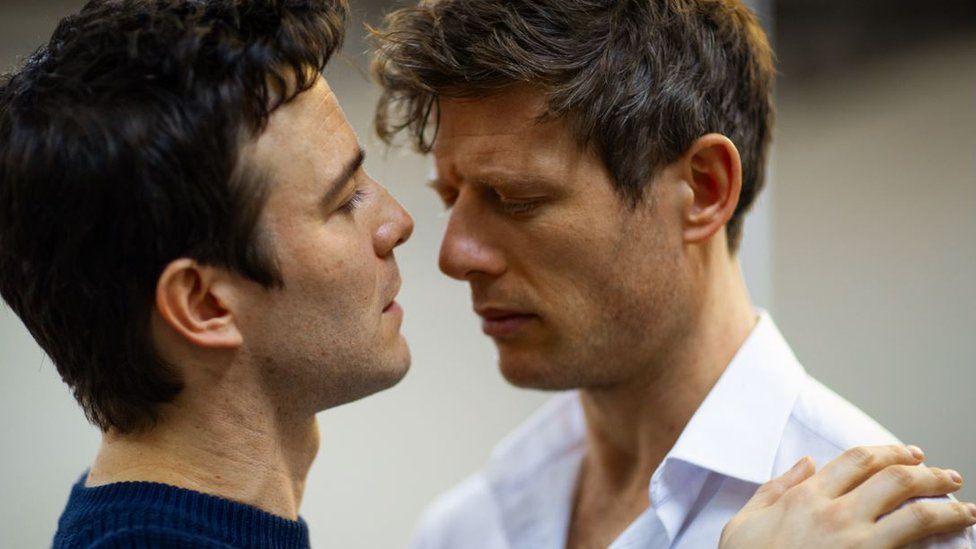
Luke Thompson and James Norton as Willem and Jude in A Little Life.

Willem, Jude’s closest friend, his confidante and later in the book, his partner, grew up with a disabled brother, who also died young. In the absence of his parents (first emotionally absent then physically) he cared for his brother, forging the strongest of bonds with him. Only to be told, tragically whilst he was away at college that he had died. It becomes clear that it was the needs of his brother that had held his family together, and linked him to his parents. Without his brother, he is cut adrift. He partly relives this connection and bond through his friendship with Jude.

We see this most poignantly in Willem and Harold, who remain closely connected to Jude’s main narrative as the book goes on, but there are other figures, always helping, always finding a way. For without the pasts they are trying to correct, there is no story. It’s a double-edged sword, they evidently love Jude and care for him, they rescue him again and again. From himself but also for themselves. He is fulfilling a need in them. How otherwise, could they have the patience or compassion to give so much to him. As he continues to reject their help and advice, while stubbornly refusing to help himself – whether unwilling or unable to do so. And so it is that the codependencies we see in this group were already formed before they met Jude. The pathways were already trodden, through other, earlier experiences that in some way they are all revisiting and attempting to resolve. 

In the end it is JB who has seen it all clearly – observing with the distance and perspective of the artist over many years, producing a vast body of work in the process. And it’s interesting that it is JB who frustrates and challenges Jude the most. He sees through him. And he won’t let Jude be a victim, he won’t pander to him. At times it seems cruel, but in doing so he just might be the one who loves Jude the most. He sees that Jude is complicit in his own suffering. Clinging to his own narratives, his own beliefs and the conclusions he has formed about himself to obscure the truth. The truth that he is valued and loved and redeemable. As a result he remains a victim and prisoner of his past. Never transitioning to become a survivor and overcomer. Either because he won’t or just can’t, and we will never know. This is the greatest tragedy of A Little Life.

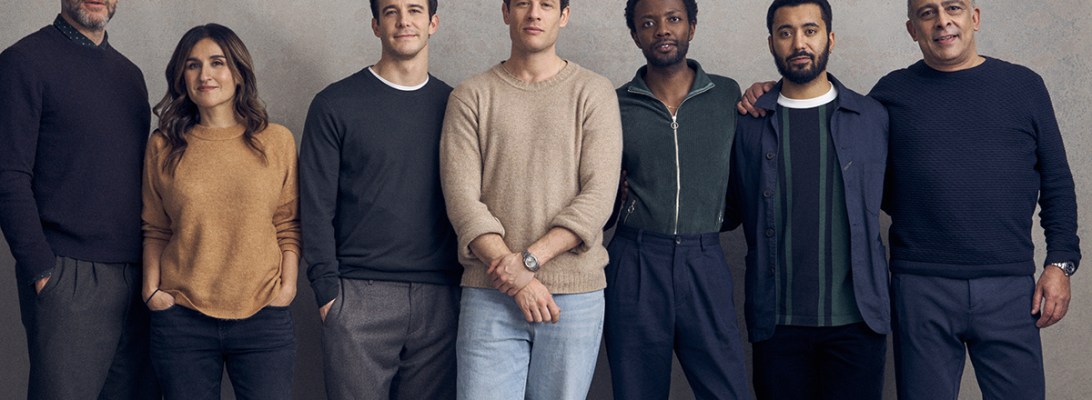
Seeing the story living and breathing on the stage added solidity and shading to the characters. Sitting on the stage brought the story to life even more and dispelled some of the extremes of the book. It brought out the subtlety and nuance. These could be real people. All with their own stories, hardships and traumas. It was invigorating to be so close and feel part of it – the action so near you could reach out and touch it. The actors’ skill in portraying these characters was unmistakable. They were captivating – incarnating and inhabiting the characters, and embodying their pain and frustrations. No more than James Norton as Jude, but also Luke Thompson as Willem and Zubin Varla as Harold. While unfortunately more peripheral, but no less present; Omari Douglas as JB and Zach Wyatt as Malcolm shone in their roles too, as did the rest of the cast. The staging, and clever touches which included cooking on stage added to the sensory nature of everything happening in front of us. Which ran to the scenes of abuse which couldn’t appear more realistic.

A Little LIfe cast members. L-R Elliot Cowan, Nathalie Armin, Luke Thompson, James Norton, Omari Douglas, Zach Wyatt and Emilio Doorgasingh.

Art and The Viewer

Here was a piece of Art. If treated as such, A Little Life becomes less about the integrity of the narrative and character arcs; or about the wondering Why and If Only. And more about the place and response of the ‘viewer’ in interacting with the story and its themes. Could the book be designed first and foremost to elicit a reaction, to unsettle and to cause the viewer to become uncomfortable, agitating those deeper questions and frustrations? To hold up a mirror.

In this it reminds me of artist, Anish Kapoor’s work. Marsyas, his 2002-2003 Tate Modern installation, monumentalised the disembodied sinews caused by self-flagellation. Stretching out across the huge space of the Turbine Hall, were taut ribbons of red resembling huge pieces of muscle and tissue. You could almost feel it in your body. Later his retrospective at the Royal Academy featuring malleable sculptures of red wax moving through the galleries in negative space, so viscerally representative of blood and tissue. They produced a strong, almost guttural reaction in the viewer. The associations were many and varied. A pellet of red wax fired periodically against a wall – evoked a sense of shock and associations of bodily suffering, war, death, atrocities and pain.

Is this the purpose of A Little Life? Primarily as Art, to evoke such a reaction, so visceral and bodily, to the painful results of a life of trauma that has no resolve, no possible redemption. Being beyond escape it leaves a desolate, empty aftermath where all efforts have counted for nothing. Are we in the place of Jude’s friends as they are reduced to powerless observers? Their good and desperate interventions only ever delaying the inevitable, never stopping it. The hopeless trajectory is set and in the end there is nothing they can do. There is no redemption.

A Little Life at Easter

Seeing the play over Easter weekend highlighted a poignant contrast for me. In the Christian faith Easter Saturday is traditionally the darkest day of all. Jesus lay dead in a tomb, all hope was lost. He had been whipped brutally and repeatedly, the skin ripped from his back. He had been ridiculed and abused, to then be nailed to a cross and left to die, hanging by his hands until his lungs were crushed under the weight of his own body. Crucifixion was reserved for the most despised and maligned in society. Jesus’ followers and disciples had been so full of hope, but they were left standing bereft in the bleak reality of his death – how could this be the end? So desolate, so empty, so pointless. 

In the case of A Little Life, that is the end. It offers us no redemption. And forces us to confront the reality that there are some things that cannot be rescued or redeemed, such is their inevitability. And that is true. It just makes the tragedy of Jude’s life even greater.

By contrast, Easter offers us hope and healing. Easter Sunday marks the day that every seemingly inevitable trajectory towards death and destruction was turned around. Jesus, who had died on the cross, was resurrected to life, transformed and renewed by God’s power. And because of that it fundamentally shifts the end point of our past pain and trauma. And the power it has to rob us of the goodness of life now and in the future. This may surprise you to hear but it was an unavoidable connection for me to make between the play’s conclusion and the good news of the Christian message being celebrated that weekend. 

The irony of Jude’s suffering – which served no ultimate purpose, was so jarring against the passionate death of Jesus. Who chose to suffer and died willingly, giving up his life for our ultimate redemption. Then against the odds, rising again, carrying us with him in his resurrection to renewed life.

© Alexandra Noel – All Rights Reserved 2023