
Curated thoughts on the nature of hope and why we will always need it
“And now these three remain: faith, hope and love.” 1 Corinthians 13v13
What’s so special about faith, hope and love and why do they – of all things – remain? It’s intriguing. The surrounding chapters of 1 Corinthians partly answer this in talking about Completion. That when completion comes – when all is resolved at the end of days – faith, hope and love will still be there, even as other things have faded away.
Somehow faith, hope and love materially endure. There’s no sell-by date on them, no need to throw them out – they will always be valid, always be needed. So much so that they will be essential to the ‘completion of all things’ to come.
So faith, hope and love are not ephemeral ideas. They’re real things, that have substance and can be evidenced; for now and the age to come. So with that in mind, let’s consider the second of these three things. Hope.
Hope is an Anchor
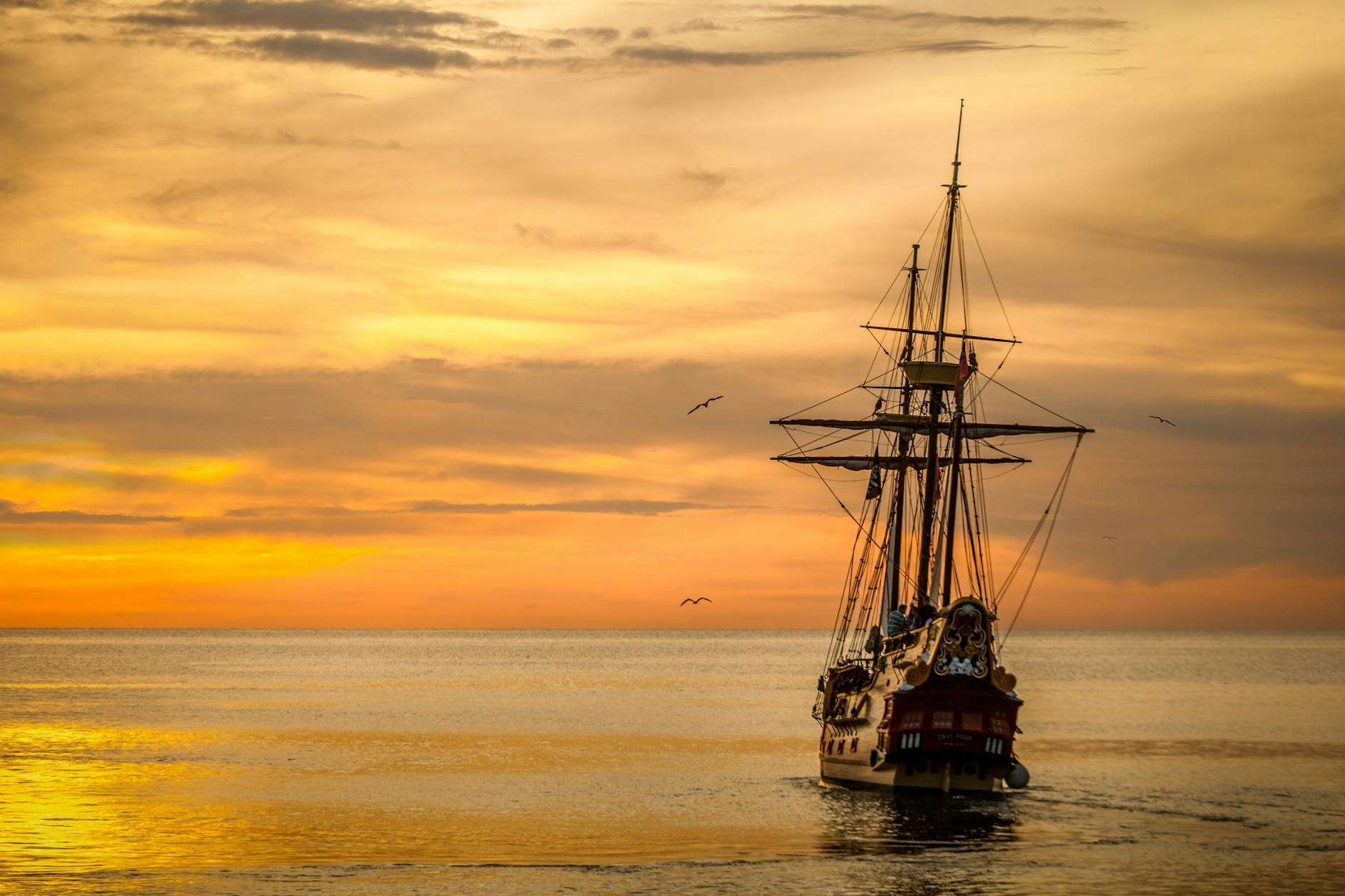
Hope and anchors have a long association. I’m sure I’m not the first to have come across a pub called the ‘Hope and Anchor’ and the reason might well be this verse from the Bible.
Hebrews 6v19 says: “We have this hope as an anchor for the soul, firm and secure.”
What’s an anchor like? It’s really weighty – often being made of iron. It’s dropped into the sea, usually on a heavy metal chain or rope, attaching to the boat or ship. The anchor hooks onto the sea bed and stops the boat drifting, making it immovable. Ships without an anchor or anything else to fasten or moor them, are in trouble – if they can’t anchor they’ll drift. In choppy waters or storms especially they could come to harm, smashing up on rocks or against the cliffs. If a boat’s engine dies, or the wind suddenly drops there’s absolutely nothing to hold them fast, leaving the stranded.
And we ourselves have an anchor – which tethers the soul, attaching us to something rock-solid, immutable and immovable.
I’ve often felt God speak to me through ships. When I moved from Bristol – which is a maritime city with a harbour and docks – back to London, it was through ships that God confirmed that I needed to move. My old flatmates even got me a small piratey-style painting – drawn like a sailor’s tattoo which said ‘Homeward Bound’. This was true of our ultimate destination – heaven, as well as my home town of London!
Hebrews 6:19 is one of my favourite verses in the Bible. I had it as the background on my old most-beloved MacBook Pro which I ended up having for 13 years! That’s 13 years of seeing that verse every time I opened my laptop – almost daily.
In this passage God is setting in stone the promise that he made to Abraham: “I will surely bless you and give you many descendants”. He had sworn an oath – swearing it by himself because there is no one higher – imagine that: “When God made his promise to Abraham, since there was no-one greater for him to swear by, he swore by himself, And so after waiting patiently, Abraham received what was promised…People swear by someone greater than themselves and the oath confirms what it said and puts an end to all argument. Because God wanted to make the unchanging nature of his purpose very clear to the heirs [that’s us too] of what was promised…he confirmed it with an oath. God did this so that, by two unchangeable things in which it is impossible for God to lie, we who have fled to take hold of the hope set before us may be greatly encouraged.” Italics mine.
Hebrews 6 goes on to explain that: “[This hope] enters the inner sanctuary behind the curtain where our forerunner Jesus has entered on our behalf. He has become a high priest forever…”
This hope is in Jesus. It is Jesus, who has accomplished all things, and ended the old covenant which required that people made atoning sacrifices for their sin. He became that himself, a once-for-all sacrifice — removing the curtain which separates us from the Holy of Holies where God. And so restoring our relationship with him. This hope anchors us fast, so that we won’t drift. Firm and secure – the confident expectation of eternal life and salvation in Jesus Christ.
I imagine standing just outside the Holy of Holies in the tabernacle, pulling that really heavy curtain aside, feeling the weight of it, never having seen what’s behind it – not knowing what to expect, but still pulling it aside with confidence to find Jesus standing right there and being welcomed in. And of course, when Jesus died on the cross we’re told in the gospels that this very same curtain was torn from top to bottom. Forever ending our separation from God. This cannot be undone.
So this hope is an anchor for our souls.
Song Inspiration – The Anchor by Crowder
Hope is Future-Oriented Faith
I find ‘Hope’ quite difficult to articulate – it’s a feeling but it’s more than a feeling. It’s a sense of wishful thinking but it’s more tangible than that. It’s optimism but that’s insufficient to describe it. It transcends circumstances and yet it’s entirely connected to them. It’s aspirational, it’s the life we dream of – that we long for. But it’s hard to quantify and understand.
A common dictionary definition is that hope is “a feeling of expectation and desire for a particular thing to happen”. But as we’ve already seen Biblical hope by contrast is more than a feeling – it is actual confidence: it’s a sense of certainty that something good will happen.
It’s hard to know where faith ends and hope begins. I had to really do some digging as to why hope is mentioned independently of faith in 1 Corinthians 13:13. Because hope is really similar to faith, but it is distinct from it. A really helpful way to think about it is that, faith is like an umbrella term. It provides the broader context relating to our belief in God, our trust in the person of Jesus and the finished work of the cross; the faith that things exist, or happened or can happen.
While hope is part of this, incorporating many of the things that faith is, it is still separate from it. Uniquely, hope points towards the future. It is future-facing. You could think of it as future-oriented faith. While faith is substantial, hope is directional. And we’d be lost without either. So we can conclude from this, that if ‘these three remain’, future-facing faith (as in hope) is of particular importance to be named alongside the broader context of what faith is. And as part of our existential reality even in eternity, it is an important orientation and posture for us to live by.
Another way to put it is that ‘biblical hope is biblical faith in the future tense’.
Hope is in the Suffering
Hope is an unseen guide as we navigate uncertainty. When all seems lost, it is hope that intervenes; to be rewarded and fulfilled in the realisation of one’s dreams. Equally there will be parts of life where hope isn’t fulfilled – yet.
Proverbs 13:12 says: “Hope deferred makes the heart sick, but a longing fulfilled is a tree of life”. God wants to fulfil our hopes, dreams and desires. And if I have faith, that’s the substance of what I’m hoping for and those things yet unseen. It’s the evidence that they will happen.

Hebrews 11 opens with “Now faith is the substance of things hoped for and the evidence of things not yet seen.” More modern translations put it like this: “Now faith is confidence in what we hope for and assurance about what we do not see. This is what the ancients were commended for.”
And in the midst of terrible suffering, illness, bereavement; or when people have been kidnapped, held hostage, or held prisoner they often talk afterwards of how important hope was to them. For those going through famine or war or any number of dreadful, painful circumstances; hope is all you have often to enable you to keep going. Hope enables us to bear suffering and to persevere through – for the promise of what’s on the other side. And when hope is lost – it’s catastrophic.
We saw amazing scenes at the end of January on International Holocaust Remembrance Day. During the holocaust, hope literally helped to keep people alive. It enabled them to keep going and not give up. In his book, ‘Man’s Search for Meaning‘, psychiatrist and holocaust survivor Victor Frankl observed the necessity of hope during his time as a prisoner in several concentration camps during WW2. He remembers in one camp how much they were hoping – however naively it proved to be (he acknowledges), that they would be home for Christmas, and it would all be over. When it became apparent that this wasn’t the case at all, their hopes were dashed. And seeing no reason at all to continue in the horrendous conditions, all hope was gone. At that point many gave up and died.
Hope is a Choice
Hope is a choice. It can sustain life in the most desperate of circumstances. As Victor Frankl discovered, and one writer commented: “While every external factor may root against you, one single act of internal defiance can counteract it all.” Hope is an act of defiance. Even though it has no bearing on the outcome per se, it is a vital internal shift and an attitude which arms you against things that could otherwise destroy you through despair.
Hope can even save you but it’s based on your disposition, not whether or when it is fulfilled. It could even be called a type of stubbornness. Making the decision to choose hope is powerful.
While hope can literally mean the difference between life and death, it can also affect all sorts of outcomes – recovering from illness or injury, or from losing someone or something, like a job. Hope is dignifying. In Victor Frankl’s own words: “Everything can be taken from a man but one thing: the last of the human freedoms—to choose one’s attitude in any given set of circumstances, to choose one’s own way.”
And though hope is fragile, it is indomitable. There are many who cite hope as a reason they survived through the worst of circumstances. Even a whisper or a glimmer – if there is still the smallest flicker of hope, God will not extinguish it.
Isaiah 42:3 says: “A bruised reed he will not break, a smouldering wick he will not snuff out.”
Emblems of Hope
This poem by Emily Dickinson conveys the fragility of hope – likening it to a bird.
Hope is the Thing with Feathers by Emily Dickinson
Hope is the thing with feathers –
That perches in the soul –
And sings the tune without the words –
And never stops – at all –
And sweetest – in the Gale – is heard –
And sore must be the storm –
That could abash the little Bird
That kept so many warm –
I’ve heard it in the chillest land –
And on the strangest Sea –
Yet – never – in Extremity,
It asked a crumb – of me.
Birds are known to be symbols of hope: as they fly freely, survive the harshest of conditions and sing as the dawn arrives day by day they signal fresh possibilities, freedom and renewal.
In her book ‘I Know Why the Caged Bird Sings’, Maya Angelou tells the first part of her own story – of growing up in an abusive home, how she was raped at a very young age and how the trauma caused her to suffer from selective mutism. But also how she found her voice and sense of agency and freedom to become a recognised writer, speaker and poet. Through that sense of Hope she burst out of the ‘cage’ to find her own voice, liberating herself and inspiring others to do the same. Her poem ‘Caged Bird’ from which the novel takes its name also captures the sense of hope that even a bird in a cage can sing of freedom can inspire others.
Caged Bird by Maya Angelou
A free bird leaps
on the back of the wind
and floats downstream
till the current ends
and dips his wing
in the orange sun rays
and dares to claim the sky.But a bird that stalks
down his narrow cage
can seldom see through
his wings are clipped and
his feet are tied
so he opens his throat to sing.The caged bird sings
with a fearful trill
of things unknown
but longed for still
and his tune is heard
on the distant hill
for the caged bird
sings of freedom.The free bird thinks of another breeze
and the trade winds soft through the sighing trees
and the fat worms waiting on a dawn bright lawn
|and he names the sky his own.But a caged bird stands on the grave of dreams
his shadow shouts on a nightmare scream
his wings are clipped and his feet are tied
so he opens his throat to sing.The caged bird sings
with a fearful trill
of things unknown
but longed for still
and his tune is heard
on the distant hill
for the caged bird
sings of freedom.
Someone else who became an emblem of hope for others was Corrie Ten Boom, a watchmaker who lived in Haarlem in the Netherlands. When WWII broke out, and Germany invaded; as a Christian, she and her family took God’s word over the word of the occupying forces. They gathered stolen ration cards and hid Jews in their home. When an informant tipped off the Nazis about their work, their home was raided and the family was taken to prison.
In prison they received word via the resistance that “all the watches in your cabinet are safe”. To their great relief, those they had been hiding had been transferred to other locations and were safe.
While imprisoned, she held worship services in the camp she and her family was held in, and shared from a Bible which had been smuggled in. Corrie Ten Boom writes about this experience in her book, ‘The Hiding Place’. She consistently spoke of the hope she had – sharing it with fellow prisoners and with numerous people through her subsequent writing and speaking after the war.
Song Inspiration – Oh Hope by Joshua Luke Smith
Hope is for the Unseen
Hope wouldn’t be hope if it we could see what we were hoping for. This is a really important aspect of what hope is. Hope is contingent on us not having what we are hoping for – yet.
Romans 8v18-35 reveals the power of hope on a cosmic scale, Paul says: “I consider that our present sufferings are not worth comparing with the glory that will be revealed in us. For the creation waits in eager expectation for the children of God to be revealed. For the creation was subjected to frustration, not by its own choice, but by the will of the one who subjected it, in hope that the creation itself will be liberated from its bondage to decay and brought into the freedom and glory of the children of God.
We know that the whole creation has been groaning as in the pains of childbirth right up to the present time. Not only so, but we ourselves, who have the first-fruits of the Spirit, groan inwardly as we wait eagerly for our adoption to sonship, the redemption of our bodies. “For in this hope we were saved. But hope that is seen is no hope at all. Who hopes for what they already have? But if we hope for what we do not yet have, we wait for it patiently.”
Hope itself is a state of anticipation. Still, it can’t be separated from waiting and expectation. It is tied to waiting, and waiting patiently for what is unseen. If you have hope you will wait patiently.
Hope in the Waiting
In the Bible there are several Hebrew words which are used to describe hope, explained in this video from the Bible Project:
- Yakhal – to wait for (as Noah waited for the waters to recede to reveal land while he was in the Ark)
- Qavar – describes a cord, or a sense of tension while you wait, followed by release.
- Elpis – describes living hope – based on Jesus resurrection, we can be reborn.
In the Old Testament, the prophet Hosea chose hope – in a time when there was nothing to be optimistic about. Israel was being oppressed by foreign empires. Like Hosea, choosing hope is part of the prophetic voice that Christians can have in society. Remembering what God had done in the past, to bring his people out of Egypt during the Exodus, Hosea applied it to the future, saying: “God could turn this valley of trouble into a door of hope.” God’s past faithfulness motivated hope for the future. We look forward by looking back – trusting in nothing other than God’s character.
Similarly, Joseph was a man of hope. For him his faith in God, translated into hope for his future. Having been sold into slavery he never gave up hope through the ups and downs, and numerous mistreatments that he suffered. And when God raised him up to be in charge of Egypt, it also had a great purpose. He had so many false starts – possibly the worst was being forgotten in prison, leaving him there even longer until – when the timing was right God had need for him. Genesis is very clear that despite his misfortune: “the Lord was with Joseph”. So hope in the waiting is also recognising that while we may not understand any of what is happening, and why, it is serving a greater purpose. Joseph saved his family, and by extrapolation, the twelves tribes of Israel.
Waiting is exhausting, both physically and emotionally. But this difference with hoping in God is that it renews our strength. And gives us supernatural strength too. It’s counterintuitive. The paradox is, as Isaiah 40: 31 says that as we hope, as we wait: “but those who hope in the Lord will renew their strength. They will soar on wings like eagles; they will run and not grow weary, they will walk and not be faint.”
Hope is in the Planning
Jeremiah 29v11: “I know the plans I have for you, says the Lord. Plans to prosper you and not to harm you, plans to give you a hope [a better life] and a future”.
A plan is a method or strategy for achieving a goal. And here Jeremiah is reassuring Israel that there a plans for a hope and a future. That hope as a tangible thing, is premeditated. It’s planned. The ball is already rolling even if nothing appears to be happening. God has a plan. Think about your last holiday – what plans did you make, to make that holiday a reality? Plans are evidence of a future reality. When you see an architects drawings, a blueprint or a business plan – that’s evidence of the future existence of the thing that you’re creating. It’s like an inheritance. There’s intention. Hope can be imagined, and imagined.
So while it’s fullest realisation exists in the future, it also exists now as the things God has planned. God has planned our future with him. In Jesus death and resurrection – our ultimate hope was planned – it had to be. It wasn’t an accident, or an afterthought that is trying to fix a botched job. It was planned. So if you hope for something, if you have faith for it you can take is as evidence of those things: “now faith is the substance of things hoped for, the evidence of things not yet seen”.
My Hope is in You
Throughout the Psalms there is a refrain: “My hope is in God” and a phrase which urges: “Put your hope in God”. The Psalms talk a lot about hope. And it’s often hope in God. David often encourages himself and others to “put your hope in God” It is for God himself that they are waiting.
Verses of hope from the Psalms
- “May your unfailing love be with us, Lord, even as we put our hope in you.” Psalms 33:22
- “My integrity and uprightness protect me, because my hope, Lord, is in you.” Psalm 25:21
- “But now, Lord, what do I look for? My hope is in you”. Psalm 39:7
- “Be strong and take heart, al you who hope in the Lord”. Psalm 31:24
- “For you have been my hope, Sovereign Lord, my confidence since my youth”. Psalm 71:5
- “As for me, I shall alway have hope; I will praise you more and more”. Psalm 71:14
- “Guide me in your truth and teach me, for you are God my saviour, and my hope is in you all day long”. Psalm 25:5
- “Why, my soul, are you downcast? Why so disturbed within me? Put your hope in God, for I will yet praise him, my Saviour and my God”. Psalm 43:5
- “Blessed are those whose help is in the God of Jacob, whose hope is in the Lord their God”. Psalm 146:3
Living Hope
And so we find that Biblical hope is based on a person. It’s different from optimism, and positive thinking. It’s not focused on circumstances and not based on things getting better.
This brings us to Living Hope – that hope is indeed built on a person, the person of Jesus.
1 Peter 1:3 says: “Praise be to the God and Father of our Lord Jesus Christ! In his great mercy he has given us new birth into a living hope through the resurrection of Jesus Christ from the dead”.
The Resurrection is central to our sense of hope as Christians. The risen Jesus is our ultimate hope through his death on the cross and his resurrection from the dead.
At the end of the day biblical hope, that which remains is established on the finished, settled work of Jesus Christ.
Song Inspiration – Living Hope by Phil Wickham
And Hope Does not Disappoint
Romans 5:4 – “we boast in the hope of the glory of God. Not only so, but we also glory in our sufferings, because we know that suffering produces perseverance; perseverance, character; and character, hope. And hope does not put us to shame [does not disappoint us], because God’s love has been poured out into our hearts through the Holy Spirit, who has been given to us.
Jesus himself suffered on the cross because of hope: “for the joy set before him [he] endured the cross”. Have you ever imagined that Jesus was a man full of hope? Hope enabled him to endure the worst suffering on the cross. In order to become hope itself – for us.
Song Inspiration – Cornerstone by Hillsong Worship
© Alexandra Noel – All Rights Reserved. February 2025
 Alex Noel